



How to Make a Muscle Relaxing Bath That Actually Works

How to Make a Muscle Relaxing Bath That Actually Works

A muscle relaxing bath works because of one thing you already have on tap: heat. Warm water widens the blood vessels near your skin, sends more blood to tired muscle, and floats the weight off your joints and spine — which is why a sore back loosens in a tub faster than it does on the couch. The salts, oils, and bath bomb you add on top are real, and each has a job. But the part doing the heavy lifting is the water temperature and how long you stay in.

  • Run the water warm, not scalding — around 100°F (38°C) — and stay in 12–20 minutes. That window is what relaxes the muscle, not the minerals.
  • Two cups of magnesium & sage bath salts (or plain Epsom) make the water feel softer and turn the soak into a ritual. The minerals aren't a proven muscle treatment — and that's fine, because the heat is.
  • For sore muscles and everyday tension, reach for heat. Save ice for a fresh injury in the first day or two.
  • Seal it with a warm-to-cool recovery oil within a few minutes of toweling off, while your skin is still warm. Worried about how much salt is safe? See how much Epsom salt is too much.

What actually relaxes a sore muscle

Heat does. When you sink into a warm bath, the water raises the temperature of your skin and the muscle underneath it. That triggers vasodilation — your blood vessels widen, blood flow to the area climbs, and the extra circulation brings oxygen in and carries metabolic waste out. Warmth also quiets the nerve signals that keep a guarded muscle clenched, which is why stiffness eases and your range of motion opens up after a soak. Harvard Health notes that heat is the right tool for ongoing muscle tension and stiffness, while ice is better for a fresh, swollen injury in its first 48 hours.

Reach for a warm bath (heat) Reach for ice (cold)
Day-after soreness, tight or stiff muscles, knots, a long day on your feet A fresh, swollen injury — a sprain, strain, or new tweak in the first 24–48 hours
Heat widens blood vessels and loosens a guarded muscle Cold narrows blood vessels and calms swelling
Most of the time, this is your muscle-relaxing bath Switch to heat once the swelling settles

This is the part most bath articles skip, so here it is plainly: the magnesium isn't what's loosening your back. Cleveland Clinic puts it directly — "there are no definitive studies showing that magnesium can be absorbed through your skin in sufficient amounts" to make up a deficiency — and what research has been done, the clinic adds, “offers skepticism.” The relief you feel in an Epsom or magnesium bath is mostly the warm water doing its job, plus the genuine calm of twenty quiet minutes. Knowing that actually makes the bath better, because it tells you where to spend your effort: get the temperature and the timing right first, then layer the nice-to-haves on top.

  • Water temperature: warm to comfortably hot — about 100°F (38°C). Hot enough to feel soothing, not so hot it spikes your heart rate.
  • Soak time: 12–20 minutes. Cleveland Clinic says a 15-minute soak is plenty; past 20 your skin starts to prune and the water cools.
  • Salts: about 2 cups (roughly 300–400 g) of Epsom or magnesium salts in a standard tub.
  • Essential oil: 5–8 drops, stirred in after the tub is full so it doesn't flash off the surface.
Muscle relaxing bath — Infographic: the muscle-bath dose — water at 100°F (38°C) warm not scalding, soak 12 to 20 minutes, 2 cups of Epsom or magnesium salts, 5 to 8 drops of essential oil stirred in last.
The muscle-bath dose at a glance: warm water, 12–20 minutes, two cups of salts, a few drops of oil.

The salt still earns its place — magnesium & sage

If the minerals aren't a muscle treatment, why add them at all? Because the salt changes the experience of the soak, and the experience is what gets you to stay in for the full twenty minutes. Dissolved salts make the water feel silkier against skin, the magnesium & sage blend gives the bath a grounded, herbal scent instead of a chemical one, and the act of measuring two cups into the tub is the small ceremony that tells your nervous system the day is over. For the deeper science of what a magnesium bath does and doesn't do, we wrote a whole piece — the short version is: lovely ritual, honest about the evidence.

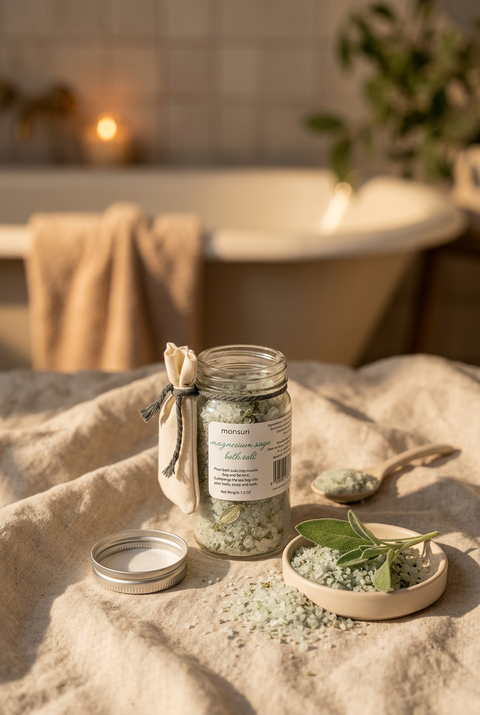
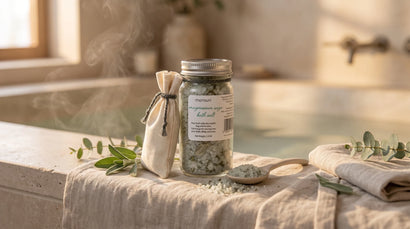
Monsuri Magnesium and Sage Bath Salts in a kraft pouch, the two-cup soak for a muscle relaxing bath
Magnesium sulfate plus Dead Sea minerals and sage — two cups per tub. Shop the Magnesium & Sage Bath Salts →

Plain drugstore Epsom salt works for the water-softening part too. The difference with a blended soak is the scent and the botanicals — sage and mineral salts read as “recovery” rather than “clinical.” As far as muscle relaxing bath salts go, magnesium and sage is simply the recovery-leaning choice for a bath soak for sore muscles; either way, two cups is the number, and you can browse the full lineup of bath soaks and salts to match the soak to the day. If you want the dosing guardrails, our guide on putting too much Epsom salt in a bath covers when more stops helping. If tonight calls for a different kind of soak — less about muscle recovery, more about a reset — our detox bath recipe covers that dose and method too.

Essential oils and a bath bomb that pull their weight

Essential oils for sore muscles get talked up a lot, but they don't penetrate muscle either — what they do is work on your senses, and for a wind-down soak that's worth a lot. Eucalyptus and peppermint give the steam a cooling, sinus-clearing lift; ginger and black pepper read as warming; lavender tips you toward sleep, which matters because most muscle repair happens while you're asleep. Five to eight drops stirred into a full tub is plenty. A eucalyptus bath bomb is the lazy version of the same idea — it carries the oil, softens the water, and gives you something to watch dissolve while the heat does the real work.

Keep the scents in one family so the bath doesn't smell like an argument. Eucalyptus-and-peppermint together is a clean, breathable pairing for a post-workout soak; lavender on its own is the better call if the bath is the last thing before bed.

Stay in long enough to matter

Here's the tip nobody sells you a product for: a bath for muscle relaxation only works if you actually stay in it. Twelve to twenty minutes is the dose, and the most common reason people climb out at six is that the tub is uncomfortable — a hard rim against your neck, nowhere to rest your head, a phone you're afraid to drop. Fixing the comfort is what fixes the soak time.

This has changed my baths dramatically! So fun, staying in a lot longer though!

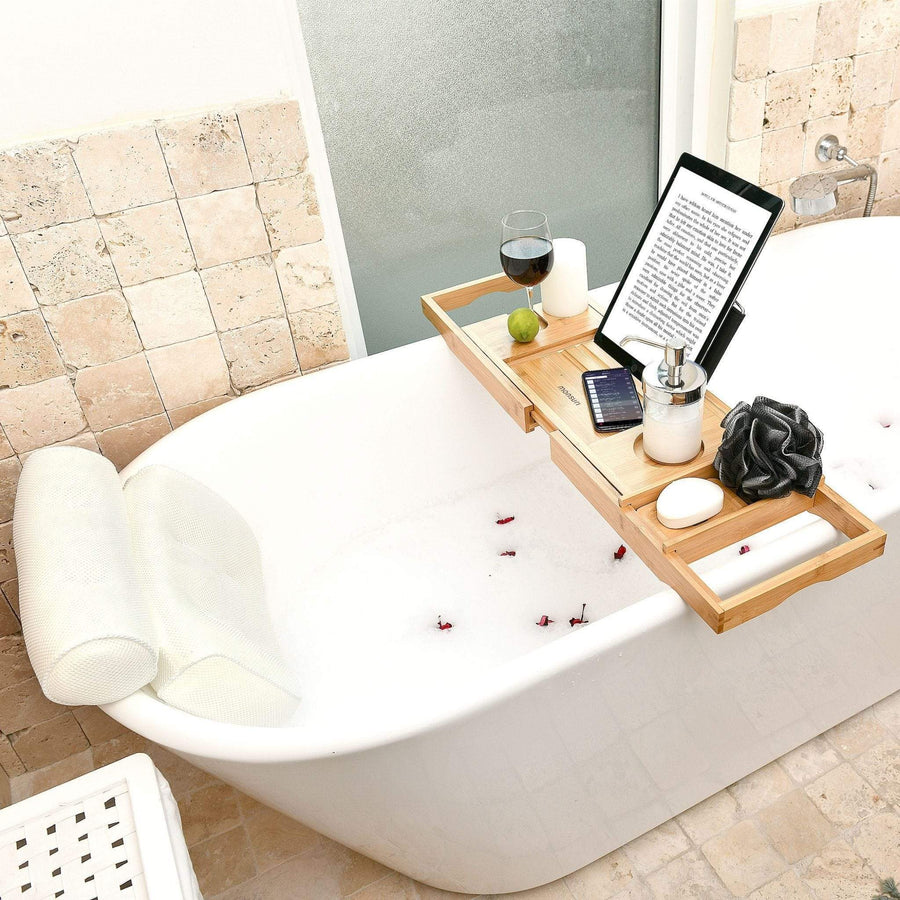
Debbie left that review on our bath pillow and tray caddy, and the throwaway “though” at the end is the whole point — she didn't plan to stay in longer, the comfort just made her. A cushioned headrest that supports your neck and a tray that holds your book or tea at arm's length are the difference between a six-minute dip and the full twenty.

Muscle relaxing bath — Monsuri full body bath pillow and bamboo tray caddy that makes a long muscle relaxing soak comfortable enough to stay in
A cushioned headrest plus a bamboo tray for your book is what gets you to the full 12–20 minutes. Shop the Bath Pillow & Tray →

Seal it while you're still warm

Get out, towel off lightly, and put something on the muscle within the first few minutes — while your skin is still warm and your pores are open from the steam, oils and balms absorb faster and spread easier. A warm-to-cool recovery oil with arnica, ginger, and menthol is built for this hand-off: the ginger and black pepper feel warming as you massage it in, then the menthol turns cooling a couple of minutes later, which is a pleasant way to tell the muscle the session is over.

Monsuri Warm-to-Cool Muscle Recovery Oil with arnica and menthol, massaged in after a muscle relaxing bath
Arnica, ginger, and menthol — warming first, then cooling. Apply within a few minutes of toweling off. Shop the Recovery Oil →

For a specific knot — the spot under the shoulder blade, a tight IT band, the side of your neck — a targeted balm stick lets you press the same warming-then-cooling blend straight onto the trigger point without getting oil on your hands. Between the bath and the seal, you've covered the whole arc: heat to relax it, comfort to stay in long enough, and a topical to carry the warmth past the tub.

None of this has to be elaborate. The honest bath for sore muscles is warm water, two cups of salt, twenty unbothered minutes, and something soothing rubbed in afterward. The products here just make those twenty minutes easier to reach and nicer to be in — the heat was always going to do the work. If your muscles have earned it, run the water. You're allowed to take the twenty minutes.

Frequently asked questions

Does an Epsom or magnesium bath actually help sore muscles?

It helps — but mostly because of the warm water, not the minerals. Cleveland Clinic notes there's no strong evidence that magnesium absorbs through skin in amounts that would make up a deficiency. Warmth widens blood vessels, raises blood flow, and relaxes muscle tension. The salts make the soak feel softer and calmer, which is a real benefit, just not a medical one.

How hot should a muscle-relaxing bath be?

Warm to comfortably hot — around 100°F (38°C). It should feel soothing, not so hot that it reddens your skin or spikes your heart rate. The heat is what relaxes the muscle; scalding water just stresses your body.

How long should I soak for sore muscles?

Twelve to twenty minutes. Cleveland Clinic says about 15 minutes is enough. Past 20 the water cools and your skin starts to prune without adding benefit. The hard part is staying in comfortably that long — a bath pillow and tray make the difference.

How much Epsom or magnesium salt should I add?

About 2 cups (roughly 300–400 g) in a standard tub. More than that doesn't relax muscles any faster and can leave skin feeling dry. For the full dosing guardrails, see our guide on putting too much Epsom salt in a bath.

Is a hot or cold bath better for sore muscles?

For everyday soreness, tension, and stiffness, choose heat — a warm bath. Save cold (ice, not a cold bath) for a fresh, swollen injury in its first day or two, when you're calming inflammation. Harvard Health draws the same line: heat for chronic tension, cold for acute injury.

Can I take a muscle-relaxing bath every day?

For most people, a warm 12–20-minute soak a few times a week — or even daily — is fine. Keep the water from getting too hot, stay hydrated, and moisturize afterward since warm water can dry the skin. If you're pregnant or have heart issues or low blood pressure, ask your doctor about hot baths first.
— The whole muscle bath in one box —

Everything for the soak your muscles earned.

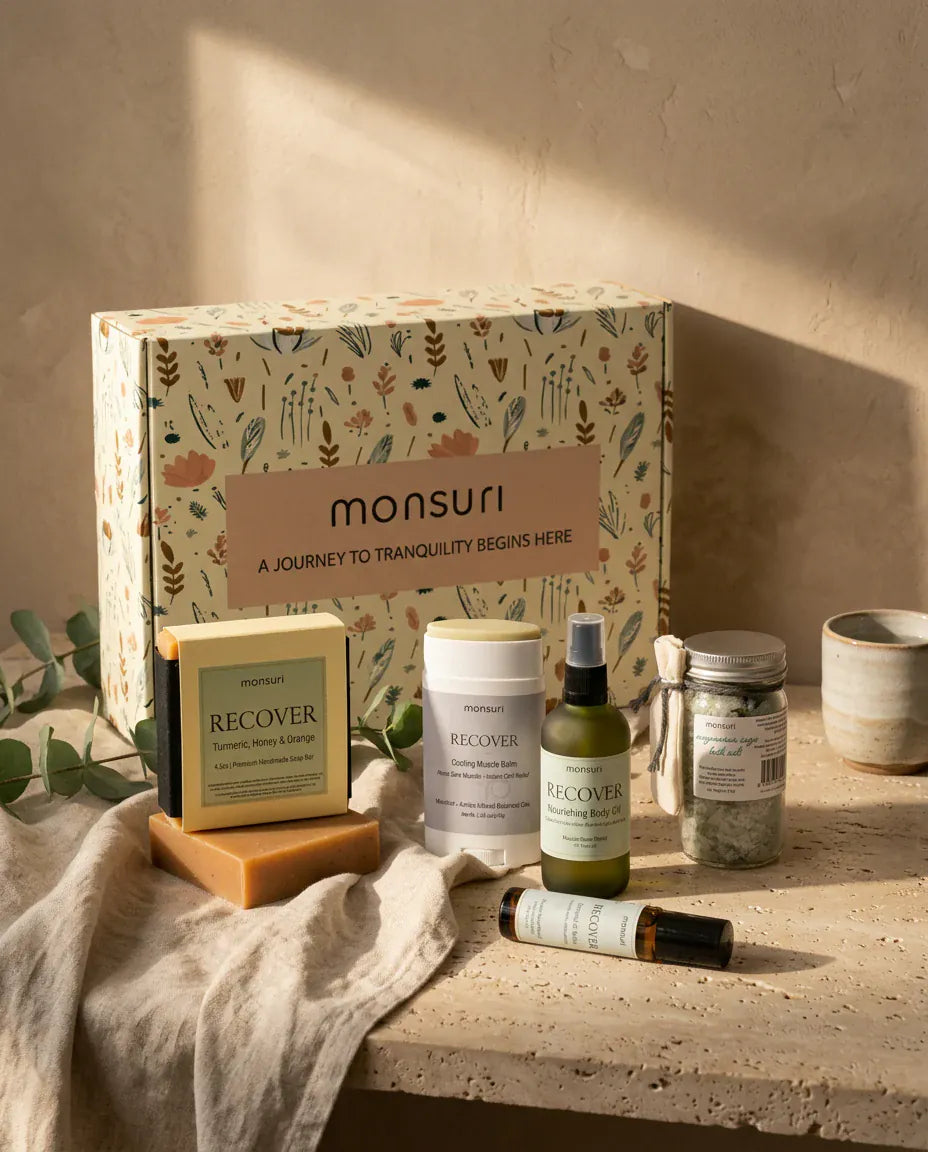
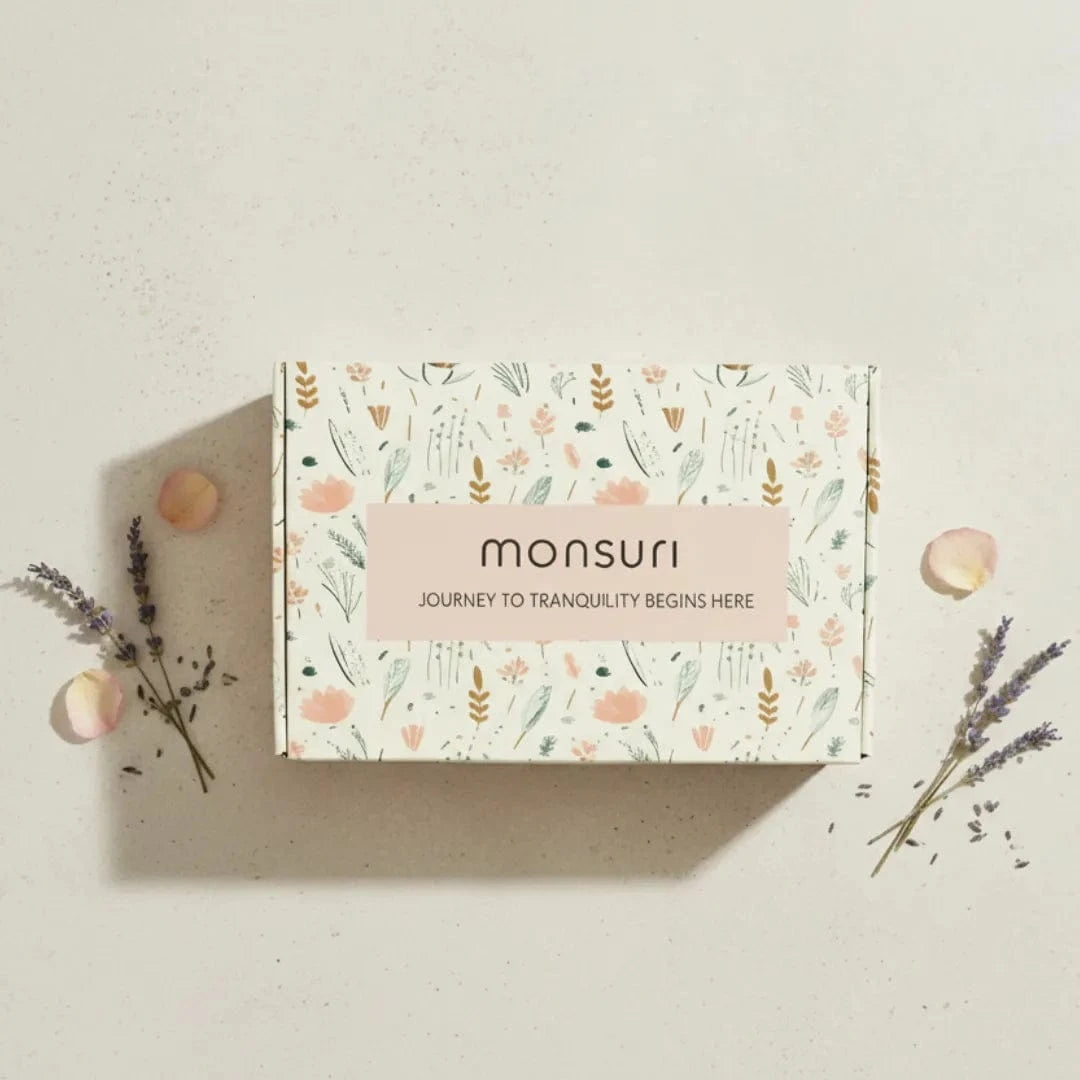
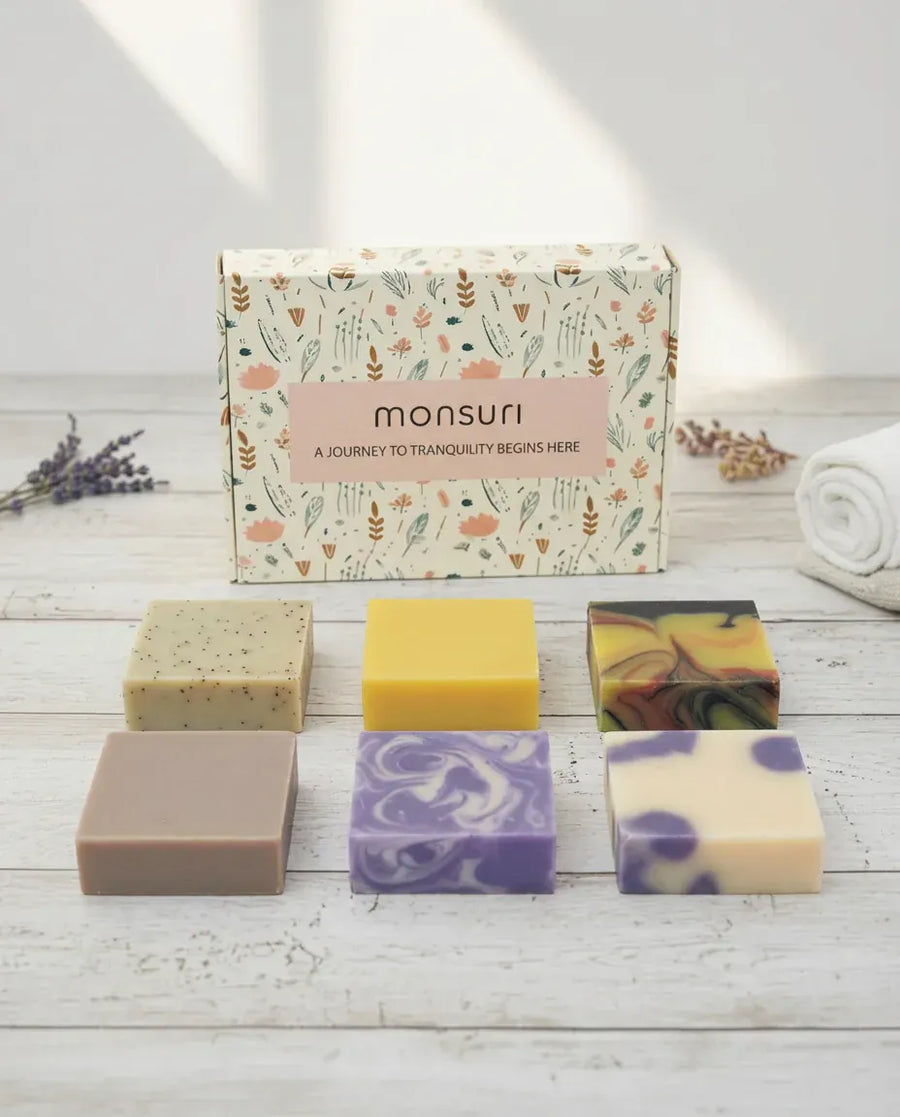
Five pieces — the roller, the magnesium salts, the body oil, the menthol-arnica balm, and a turmeric soap — around one recovery ritual. Arrives gift-ready.

—Bundle—

The Post-Workout Recovery Kit

What's inside
  • Recover essential-oil roller
  • Turmeric honey soap bar
  • Magnesium sage soaking salts
  • Muscle-Reset body oil
  • Menthol + arnica body balm
$84.70
From our workshop to your bath
By Monsuri
Small-batch, made in the USA. Written without a hurry.