Your Cart is Empty










Magnesium Bath Benefits: What the Flakes Really Do
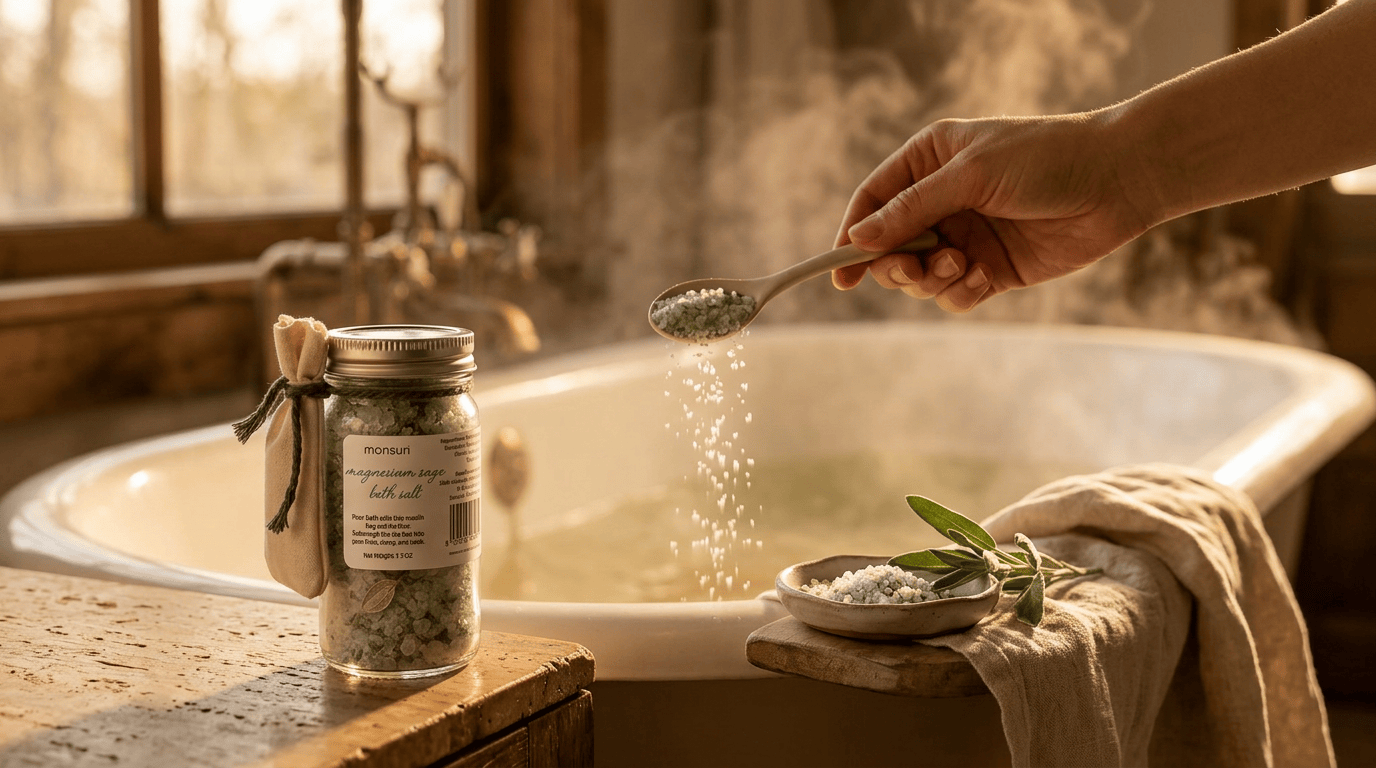
A magnesium bath is a warm soak with 1–2 cups of magnesium flakes (magnesium chloride) dissolved in the water — and its real, reliable benefit is relaxation: the warm water loosens tired muscles and the twenty quiet minutes help you wind down. You'll see bigger claims online — that the magnesium soaks through your skin to "replenish" your levels or "draw out toxins" — but the science there is thin, so the honest reason to run one is the calm, not the chemistry. Below: what magnesium flakes are, what a magnesium bath actually does, how flakes compare to Epsom salt, and exactly how to use them. If you want the wider ritual, the bath essentials guide and our bath collection are the place to start.
- The dose: 1–2 cups of magnesium flakes in a warm (not hot) bath, soak 20 minutes, pat dry — no rinse.
- The real benefit: a warm magnesium soak is relaxing and eases tired muscles. The "absorbs through skin / detoxes" claims are not well-supported — enjoy it for the wind-down.
- Flakes vs Epsom: flakes are magnesium chloride; Epsom is magnesium sulfate. Both make a lovely soak; neither is a proven supplement.
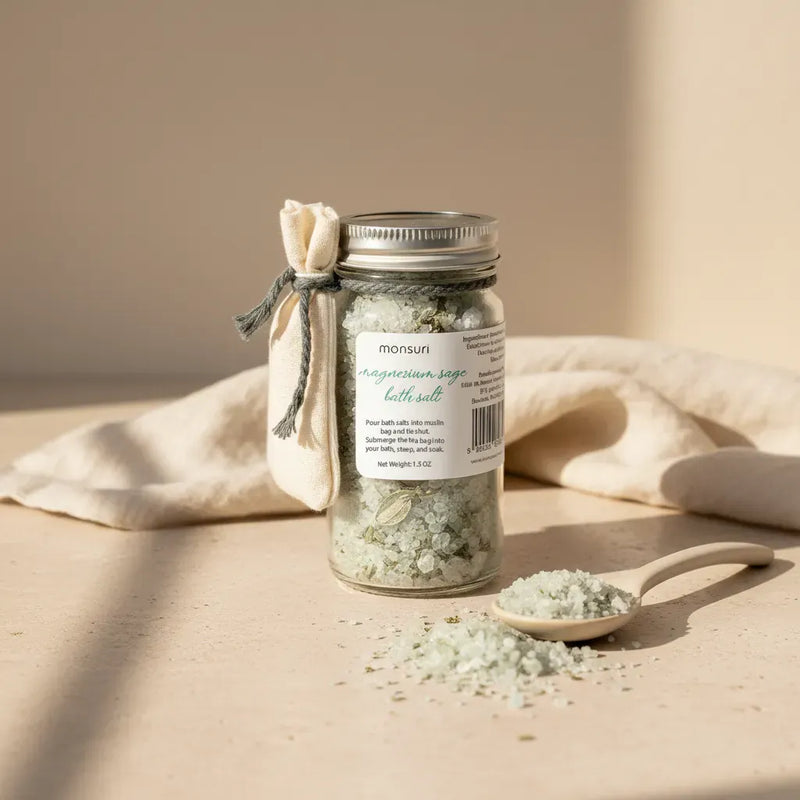
- The product: Magnesium & Sage Bath Salts ($14.95) blend magnesium flakes with Dead Sea salt and sage so you skip the measuring. Pair with the bath tray for the full soak.
- New to it? Start with the honest detox-bath recipe — same warm-soak logic.
What are magnesium flakes?
Magnesium flakes are crystallized magnesium chloride — a naturally occurring magnesium salt that dissolves quickly in warm water to make a soft, mineral-rich bath. They're the bath-additive cousin of Epsom salt (which is magnesium sulfate), and they're prized mostly for the feel of the water and the wind-down, not as a medical treatment.
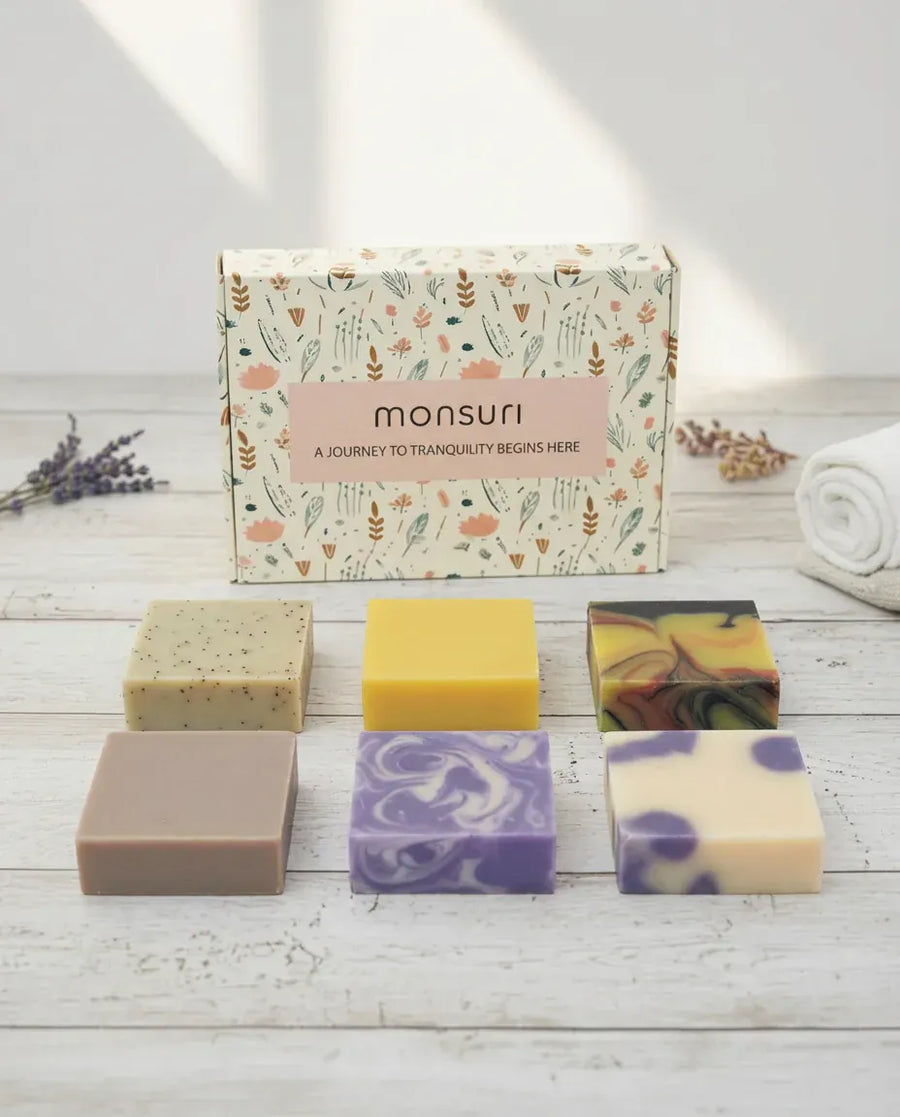
Monsuri's version skips the guesswork: the Magnesium & Sage Bath Salts ($14.95) blend magnesium flakes with Dead Sea salt and sage leaf, so you get the magnesium soak plus a calm, earthy aroma in one scoop — no DIY measuring or mixing.

The real benefits of a magnesium bath
The honest, well-supported benefit of a magnesium bath is the same as any warm soak: it relaxes you. Warm water eases tense, tired muscles and helps the body settle — Harvard Health notes that practicing relaxation for about twenty minutes helps invoke the body's relaxation response, and a warm bath is one easy way to take that quiet time. Add the earthy sage aroma and a closed door, and the bath does real work — as a ritual.
Where to be careful: the popular claims that magnesium flakes "replenish your magnesium through the skin," "draw out toxins," or "boost circulation" run ahead of the evidence. Treat a magnesium bath as a relaxing soak you'll actually look forward to, not a supplement or a detox. That framing is both more honest and, frankly, more useful — the calm is the point.
Magnesium flakes vs Epsom salt: what's the difference?
Magnesium flakes are magnesium chloride; Epsom salt is magnesium sulfate. The most-repeated claim — that chloride "absorbs better" — isn't reliably proven for bathing, so the practical differences are smaller than the internet suggests:
| Magnesium flakes | Epsom salt | |
|---|---|---|
| Compound | Magnesium chloride | Magnesium sulfate |
| Feel of the water | Silky, soft | Slightly firmer |
| Typical dose | 1–2 cups | 1–2 cups |
| Best for | A relaxing soak; people who prefer the softer water | A relaxing soak; the cheaper, more common option |
| Replenishes your magnesium? | No strong evidence | No strong evidence |

Bottom line: pick the one whose water feel and price you prefer. If you want the softer soak without measuring, the pre-blended Magnesium & Sage Salts are the easy route; if you already have Epsom in the cupboard, that works too. For the Epsom side of the story, the how-much-Epsom-salt guide covers the dose limits.
How to use magnesium flakes in a bath
Use 1–2 cups of magnesium flakes in a warm (not hot) bath and soak for about 20 minutes — that's the whole method. The full version:
- Fill the tub with warm water — comfortably warm, not steaming. Very hot water is more drying than relaxing.
- Add 1–2 cups of flakes while the water runs so they dissolve. First time? Start with ½ cup and see how your skin feels.
- Soak 20 minutes. Longer isn't better; 20 is plenty to unwind.
- Pat dry, don't rinse. Leave the softened, mineral water on your skin and moisturize while you're still slightly damp.

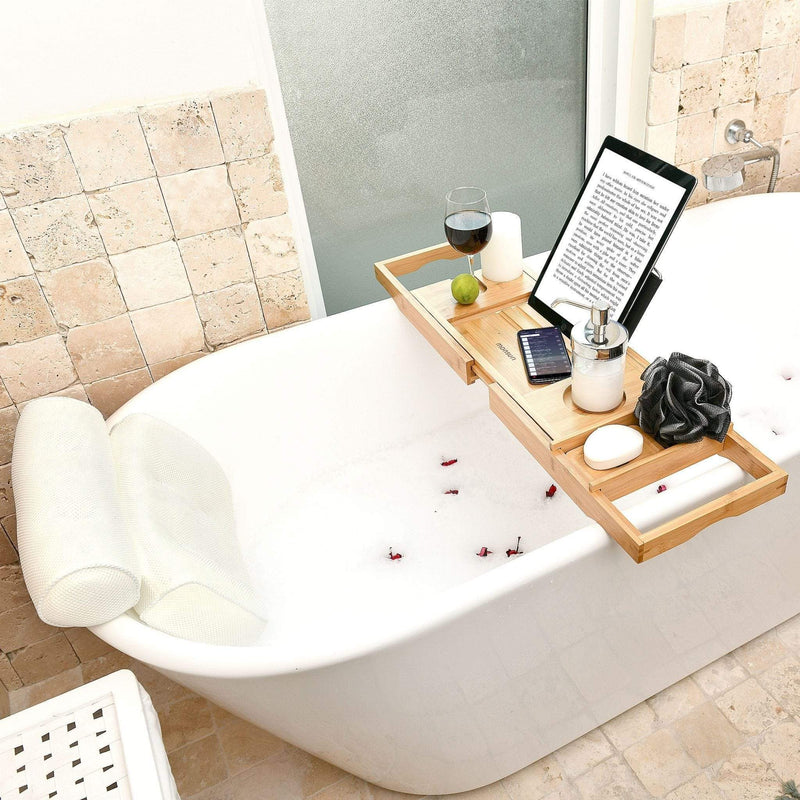
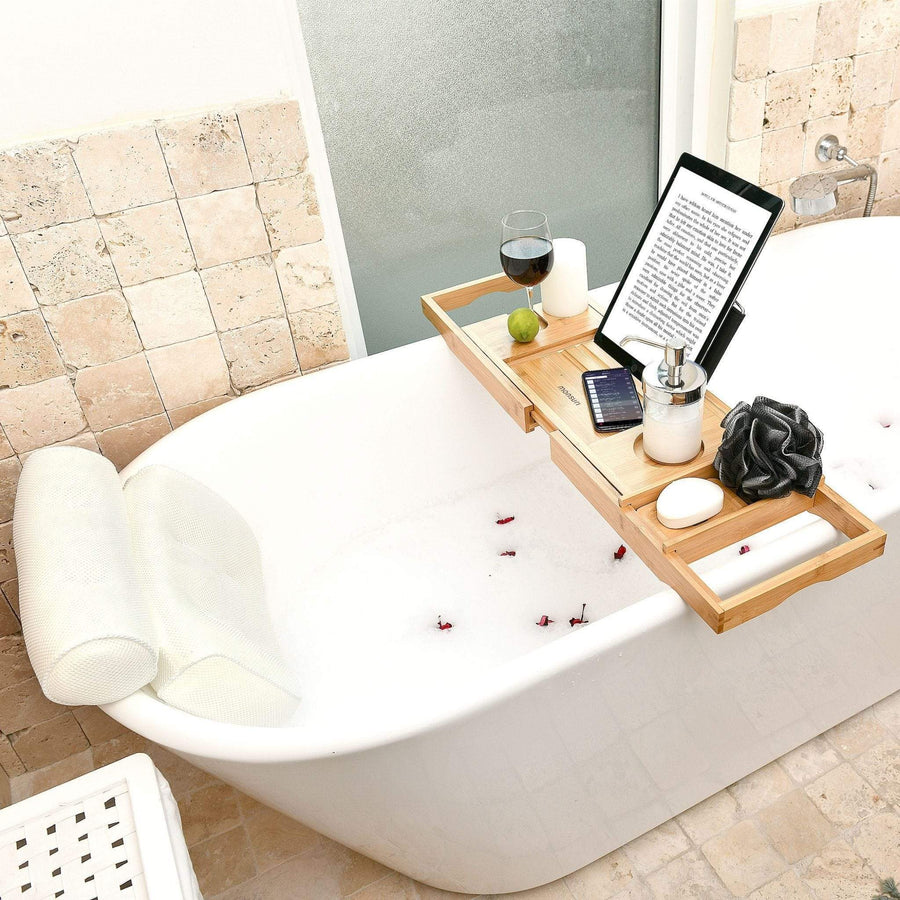
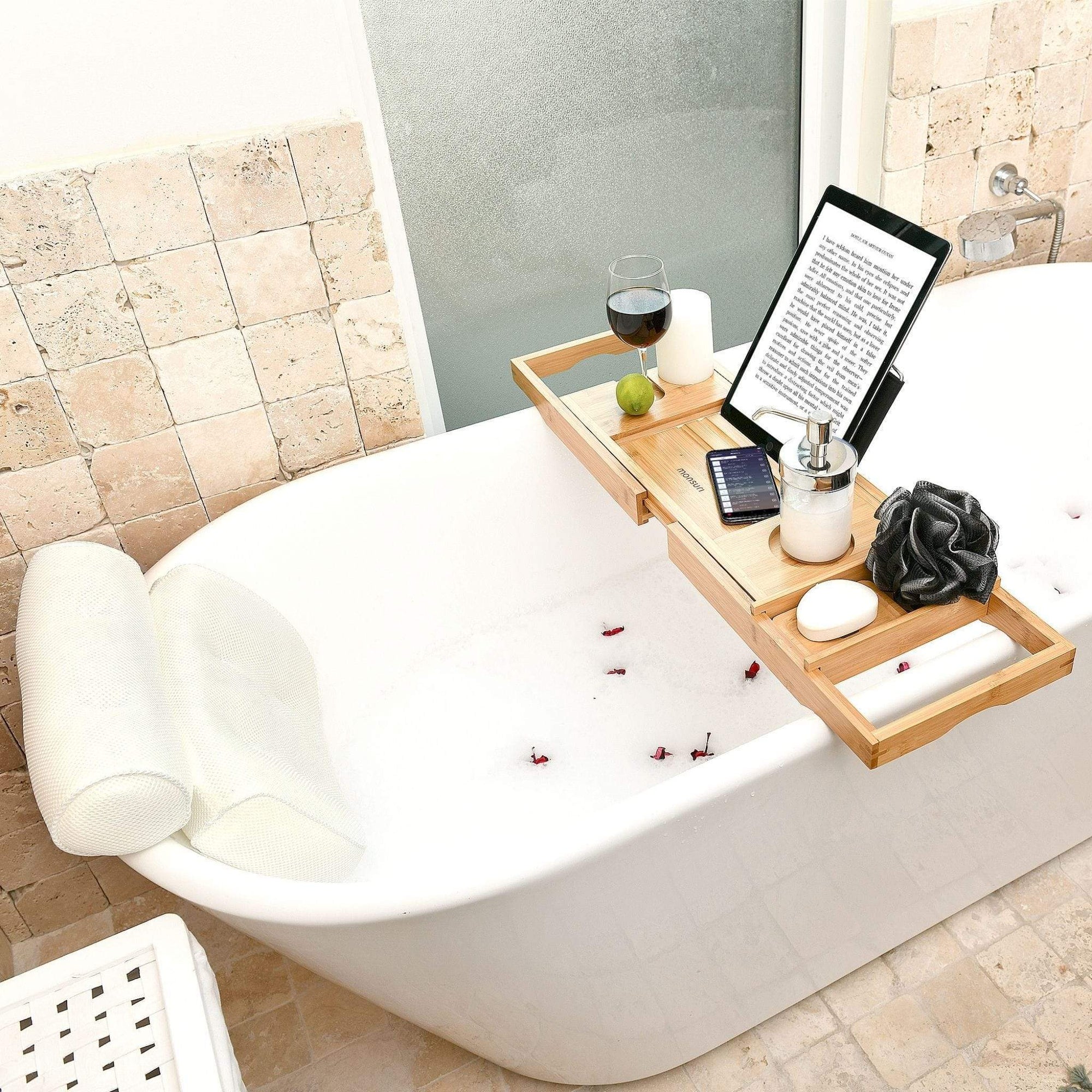
For a quick version, a foot soak uses about ½ cup in a basin for 15 minutes. The one upgrade that makes the whole thing feel like an actual ritual is somewhere to rest — the Bath Tray and Bath Pillow ($107.95) turns the 20 minutes into a place to put the tea, the book, and your head down.
Does magnesium really absorb through the skin?
Probably not in any meaningful amount — and this is the part most magnesium-bath articles get wrong. The idea of "transdermal magnesium" is popular, but the actual research is limited and mixed; a frequently-cited review titled "Myth or Reality—Transdermal Magnesium?" found the evidence for skin absorption thin and called for proper studies before anyone treats a soak like a supplement. Skin is built to keep things out, and a mineral like magnesium doesn't cross it easily.
So if you're actually low on magnesium, a bath isn't the fix — that's a conversation with your doctor about diet or an oral supplement. What a magnesium bath is good for is real and worth having: warm water, eased muscles, and twenty minutes that are yours. We'd rather tell you that than sell you a myth.
How often, and is it safe?
For most people a magnesium bath is safe a few times a week, and there's no need to overdo it. Two to three soaks a week is plenty for a wind-down routine. Keep the water warm rather than hot, hydrate after, and start with a smaller dose if your skin runs sensitive. As with any warm bath, check with a doctor first if you're pregnant or managing a condition like kidney issues, low blood pressure, or a heart condition — warm-water soaking, not the magnesium specifically, is the thing to clear.
Make it a ritual
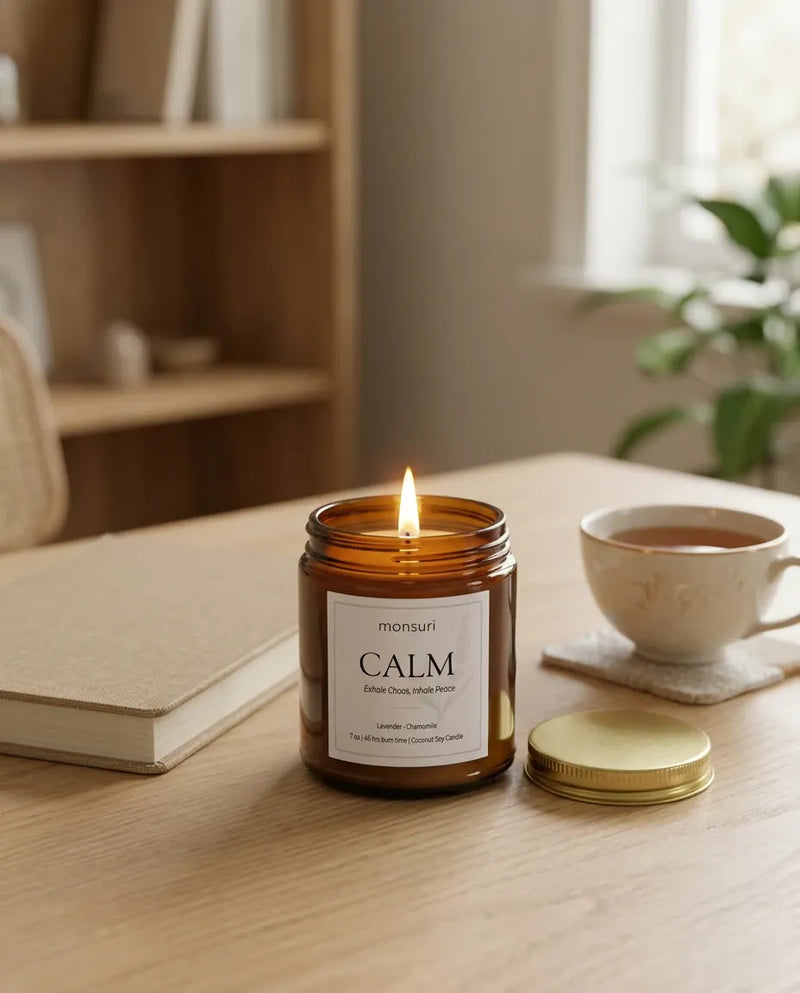
A magnesium bath is small by design: the salts, warm water, twenty minutes, a closed door. If you want to make it a habit rather than a one-off, three things carry it — the Magnesium & Sage Salts for the soak, the bath tray for somewhere to rest, and a candle for the signal that the day is over.

That's the whole ritual, and it doesn't ask much of you. Run the water warm, scoop the salts, and take the twenty minutes. You're allowed.