Your Cart is Empty






Ideal Bath Temperature: How Warm Should a Relaxing Bath Be?
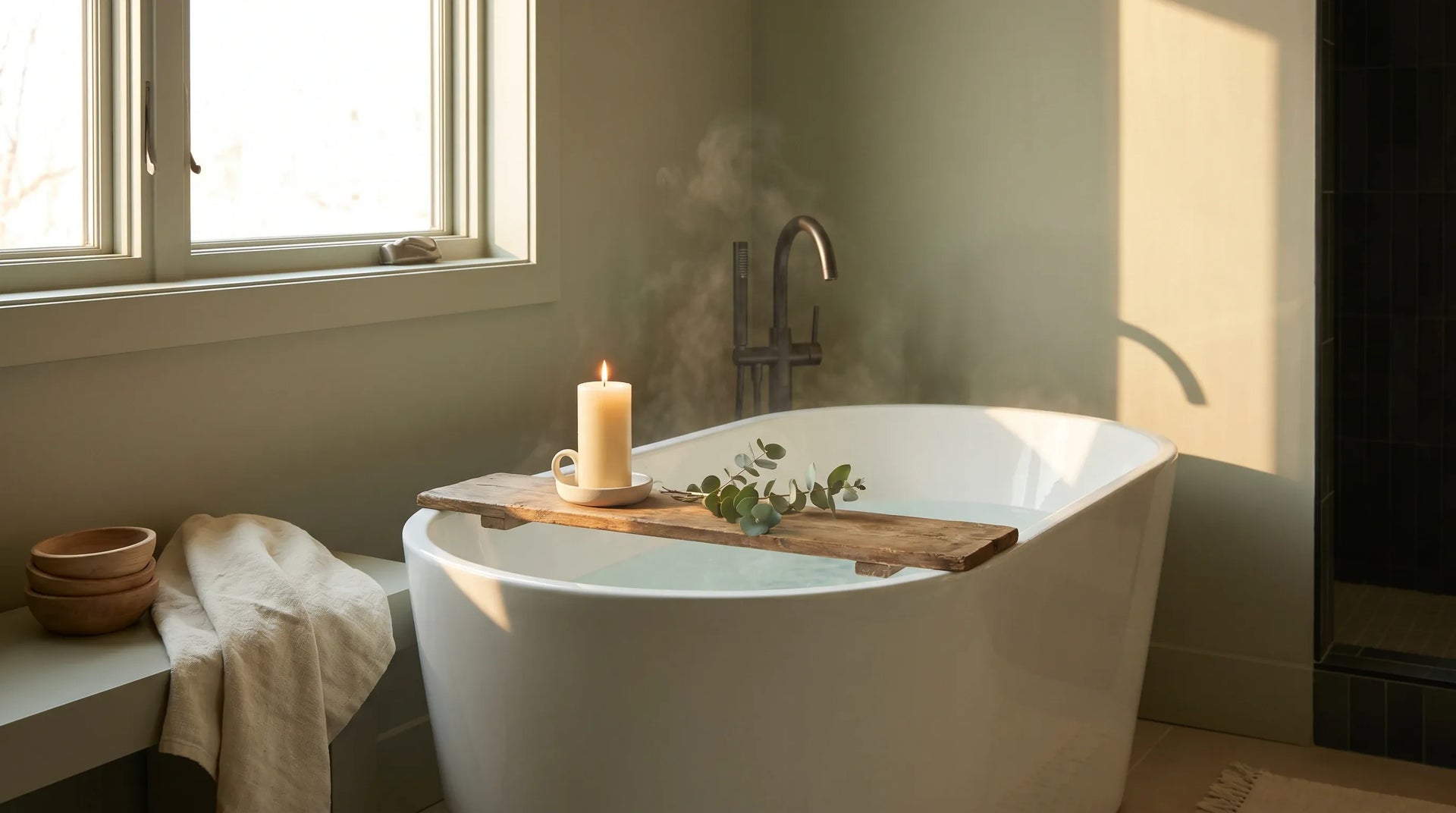
The ideal bath temperature for relaxation is 100–104°F (38–40°C) — just above your body temperature, warm enough to loosen tight muscles and open up circulation, with far less of the drying you get from very hot water. But the honest answer is that there isn’t one perfect number. The right temperature depends on what you want the bath to do: unwind you now, set you up for sleep tonight, or ease sore muscles. And running it scalding hot won’t relax you more — it does the opposite.
- To relax: 100–104°F (38–40°C) — warm, not steaming. Around 100°F is gentlest on your skin; the hotter you go, the more it dries.
- For better sleep: a short, slightly warmer soak (104–109°F) about 90 minutes before bed. The cool-down afterward is what makes you drowsy, not the heat.
- For sore muscles: warm to hot for chronic tightness; for a fresh injury, skip the hot bath.
- How long: 15–20 minutes, 2–3 times a week. Keep it under about 110°F — hotter gets drying and unsafe.
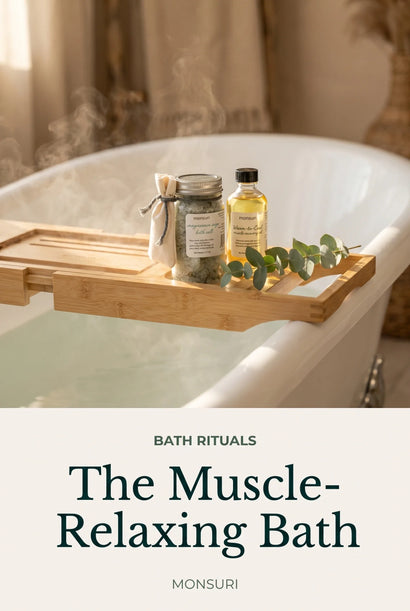
- Most people climb out early because the bath gets uncomfortable, not because the water cooled. A bath pillow and tray fixes that. For the full kit, see our bath products, or read do hot baths help sore muscles.
The short answer, by goal
“Ideal” depends on what you’re after. Here is the range for each, and the temperature to stay under no matter what.
| What you want | Temperature | Why |
|---|---|---|
| Relax and unwind | 100–104°F (38–40°C) |
Just above body heat. Vessels widen, muscles soften, skin stays comfortable. |
| Fall asleep faster | 104–109°F (40–42.5°C), short soak ~90 min before bed |
A brief warmer soak; the cool-down afterward is what cues sleep. |
| Ease sore muscles | Warm to hot, toward 104°F | Heat brings more blood flow to stiff, chronically tight muscles. |
| Stay safe | Under ~110°F (43°C) | Hotter than this risks scalding, overheating, and dizziness. |
Why 100–104°F is the sweet spot
Your core body temperature sits around 98.6°F (37°C). Water in the 100–104°F range is just warm enough to read as “enveloping” rather than shocking or tepid. At that temperature, the blood vessels near your skin widen — that’s vasodilation — which is the same reason you step out of a good bath flushed and loose instead of tense. Circulation opens up, tight muscles let go, and the warmth signals your nervous system to settle.
Where exactly in that range? Lean toward the cooler end if your skin runs dry. Cleveland Clinic considers around 100°F the sweet spot for your skin and warns that water hotter than that can dry it out and leave it irritated — the same advice applies to baths. So treat 104°F as the warm, comfortable upper end for a relaxing soak: warm enough to do the work, with the trade-off that the hotter you go, the more drying it gets.
Warm enough to soften you. Not so hot it dries you out.
How to hit it without a thermometer
You don’t need a gadget. Three quick checks get you within a couple of degrees of ideal:
- The wrist test. Run the inside of your wrist under the tap. It should feel pleasantly warm — the way you’d test a baby’s bottle — not hot enough to flinch.
- The steam test. A little steam rising off the surface is right. Billowing clouds of it means the water is too hot.
- The skin test. Step in slowly. If your skin turns bright red within a minute, the water is hotter than your relaxing range. Pink and warm is good; lobster-red is too hot.
A simple floating bath thermometer takes the guesswork out. Fill to about 102°F and you’ve got a couple of degrees of cooling room for a 20-minute soak before it drops below the comfortable range.
The three temperatures, by what you need tonight
This is where most guides stop at one number and miss the point. The bath you take to unwind is not quite the bath you take to sleep, which is not quite the bath you take for a sore back.

To relax right now
Stay in the 100–104°F window. This is the everyday “I need to put the day down” bath. Warm, soft, 15–20 minutes. You’re not trying to sweat — you’re trying to feel your shoulders drop.
For better sleep
Run it a touch warmer — 104–109°F — for a shorter soak, and time it for about 90 minutes before bed. A widely cited 2019 systematic review in Sleep Medicine Reviews (summarized in this University of Texas at Austin write-up) found that a warm bath of 104–109°F, one to two hours before bed, helped people fall asleep about ten minutes faster on average. The mechanism is counterintuitive: the warm water pulls blood to your hands and feet, and as that heat dissipates afterward, your core body temperature drops. That drop is the same signal your body uses to start sleep. The heat sets it up; the cool-down closes the deal. Because this end of the range is more drying, keep the sleep soak short and save the hotter water for nights you want it — not every night.
For sore muscles
Warm to hot, toward the top of the comfortable range. Heat brings more circulation to chronically tight, achy muscles — the stiff lower back, the desk-bound neck. For a fresh injury, though (a rolled ankle, a new strain), skip the hot bath and check with a clinician about what actually helps in the first day or two. We go deeper in how to make a muscle-relaxing bath and do hot baths help sore muscles.
Why hotter isn’t better
It’s tempting to run the water as hot as you can stand it — it feels like more relaxation. It isn’t. Past about 104°F, every extra degree trades comfort for dryness, and once you push toward 110°F it tips from calming to taxing:
- Your skin pays for it. The hotter the water, the more it strips the oils that keep your skin soft, so you can step out drier than you went in.
- Your heart works harder. Very hot water raises your heart rate and can leave you lightheaded when you stand up.
- You overheat instead of unwinding. Sweating in the tub is the opposite of the loose, settled feeling you got in for.
Very hot baths aren’t for everyone. If you’re pregnant, or you have diabetes, heart disease, low or high blood pressure, or reduced skin sensitivity, talk to your doctor about a safe temperature and keep the water on the cooler, milder end. This article is general information, not medical advice.
How long, how often — and the real reason you get out early
Aim for 15 to 20 minutes, two to three times a week. Long enough for the warmth to do its work; not so long or so frequent that you dry your skin out. Soaking daily in hot water is one of the quieter causes of tight, flaky skin in winter.
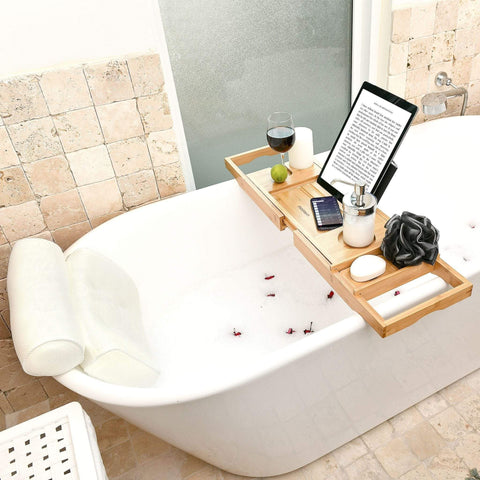
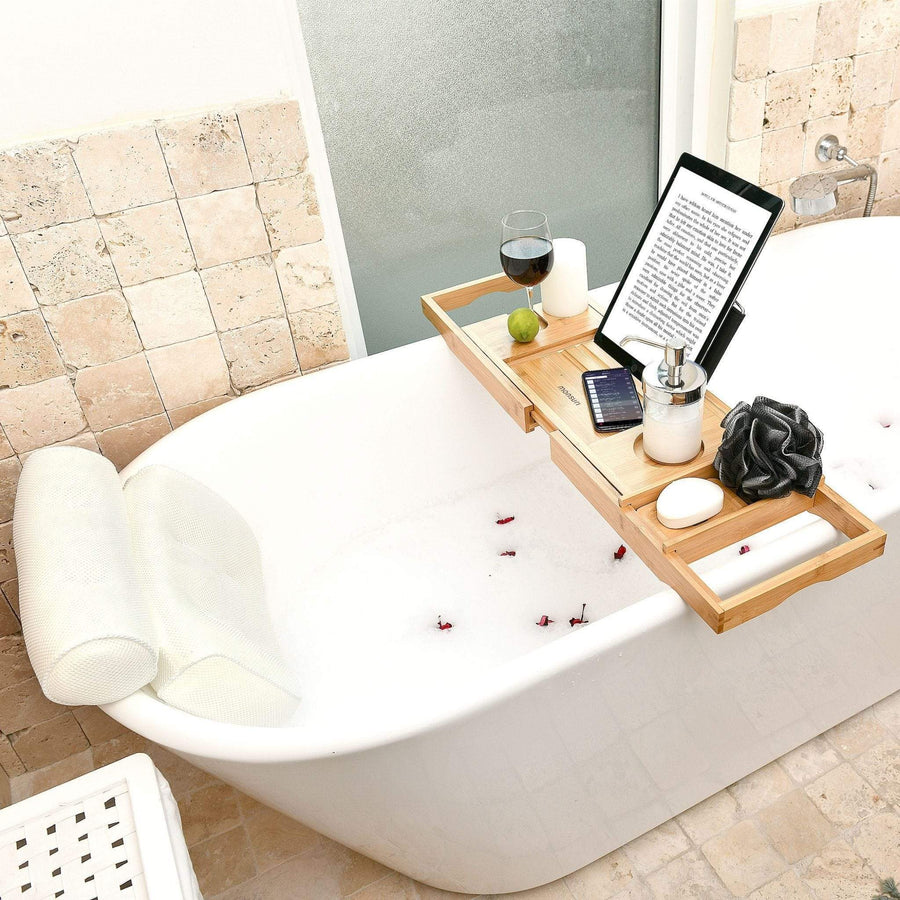
Here’s the part nobody mentions: most people don’t leave a bath because the water cooled. They leave because it got uncomfortable — a hard tub edge against the neck, nowhere to rest a cup of tea or a book, an awkward angle that turns a soak into a slouch. The temperature was fine. The seating wasn’t.

That’s the case for a bath pillow and tray. The pillow (quick-dry 3D mesh, 17 suction cups, neck-to-tailbone support) gives you somewhere to actually rest your head. The bamboo tray adjusts from 29.4 to 41.3 inches to span most tubs, with a neoprene sleeve for a book or tablet and a slot for a glass. It sounds like a small thing. It’s the difference between a five-minute dip and a real soak.
It’s wonderful. This has changed my baths dramatically — staying in a lot longer now.
Match your bath to the goal
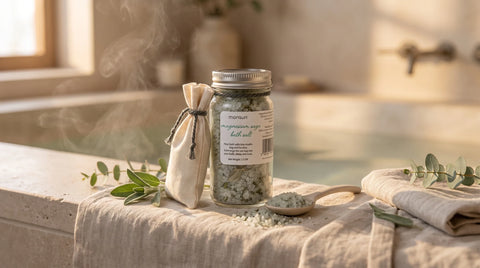
Once the temperature and the comfort are handled, what you add to the water is how you point the bath at a mood. The same warm soak can wind you down, clear your head, or just soften a hard day, depending on what’s steeping in it.

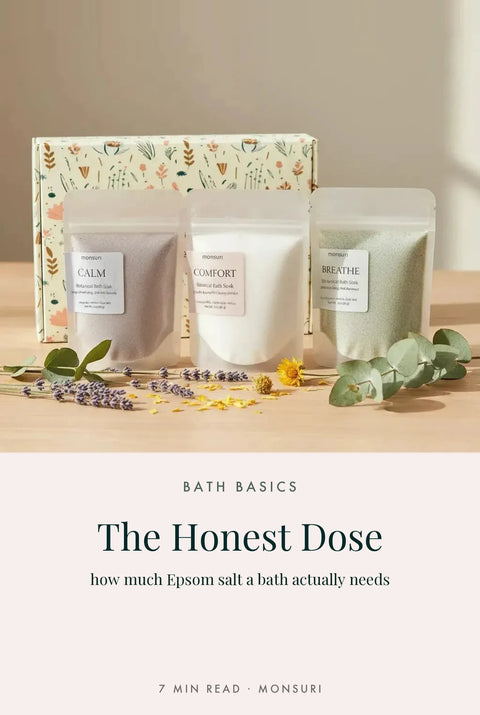
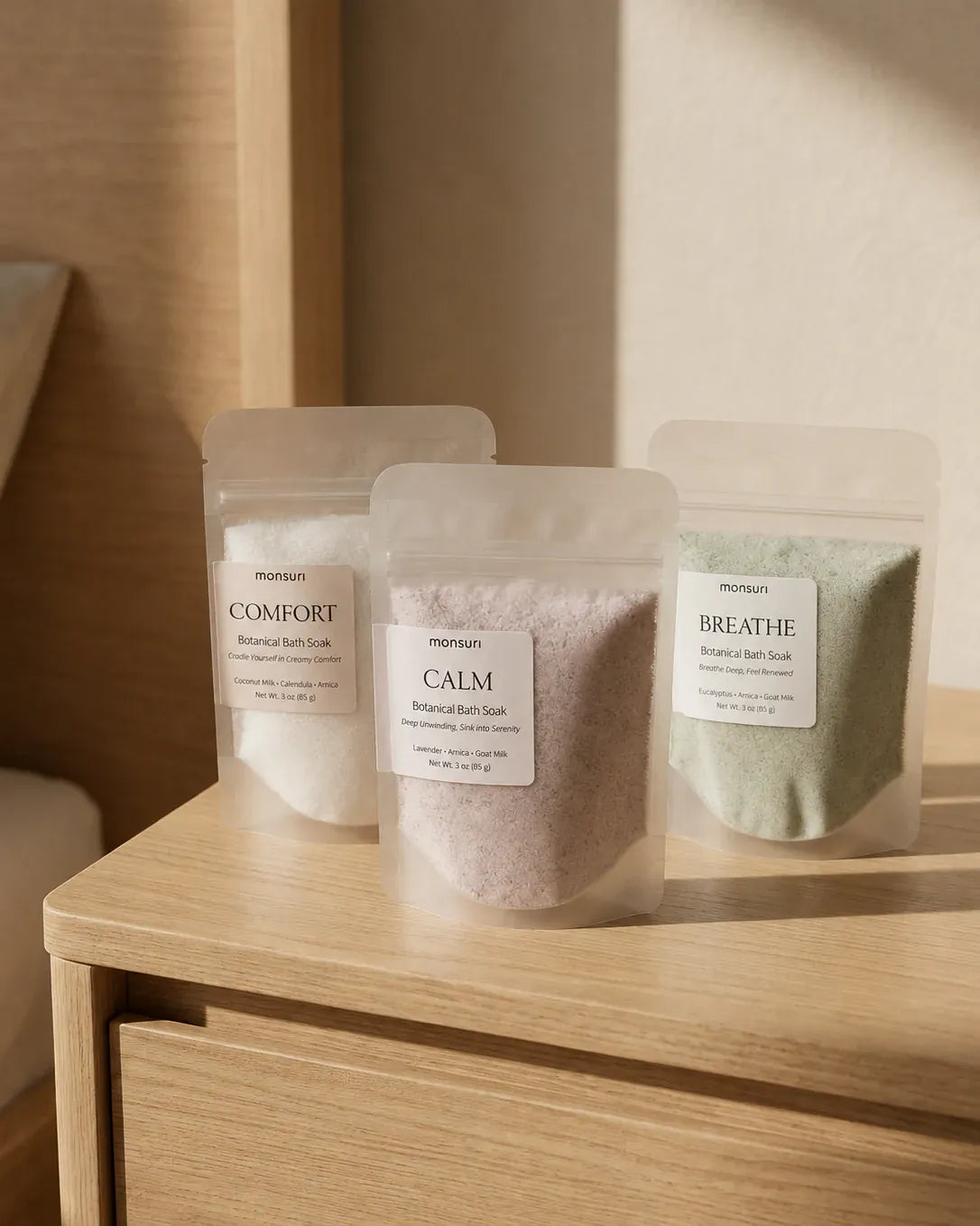
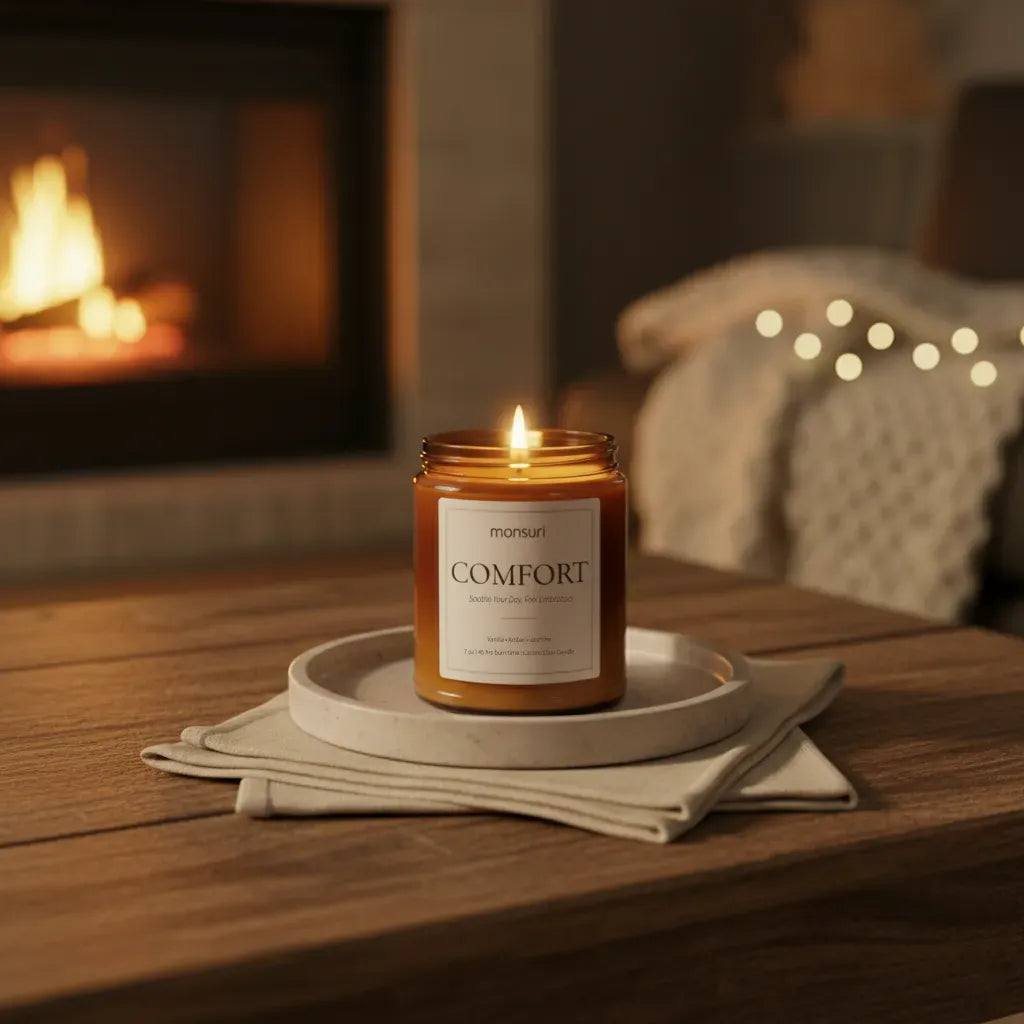
- To unwind or sleep: reach for lavender. Our Calm lavender soak is the wind-down pick — pair it with a lavender-chamomile candle for the before-bed soak, since lighting the candle is the signal that the day is over.
- For a stuffy head or tight muscles: eucalyptus, where the steam does double duty.
- For a soft, cozy finish: coconut, which leaves the water feeling gentler on the skin.
Whichever you choose, two cups of soak in a standard tub is plenty. You’re after a sensory reset, not a science experiment. And if you’re picking one of these as a gift instead of a home soak, see our self-care gift picks for more bath-and-body sets worth giving.

Putting it together
Run the water to 100–104°F for an everyday soak, a touch warmer and 90 minutes before bed if you’re chasing sleep, and keep it under 110°F either way. Give yourself 15 to 20 minutes, somewhere comfortable to put your head, and something in the water that matches the kind of day you had. That’s the whole recipe — warm, not scalding, with the twenty minutes you keep promising yourself. Take the bath. You’re allowed to.