Your Cart is Empty








Do Hot Baths Help Sore Muscles? Yes — Here's When Heat Works (and When to Reach for Cold)
Do hot baths help sore muscles? Yes — a warm bath helps sore, stiff, tired muscles. Warm water raises blood flow and relaxes muscle tension, which is why a hot bath for sore muscles eases the delayed soreness (DOMS) that shows up a day or two after a hard workout. But there’s an honest catch most articles skip: for a fresh injury, new swelling, or active inflammation, cold comes first — heat can make that worse. So the real answer isn’t “hot baths are good for muscles.” It’s “heat for soreness, cold for a fresh injury,” and the trick is knowing which one you’re dealing with.
- Sore, stiff, or tired muscles? Warmth helps — run the bath about 100–104°F (38–40°C) and soak 15–20 minutes.
- Fresh injury, sprain, or new swelling? Reach for cold first, not heat — usually for the first two to three days.
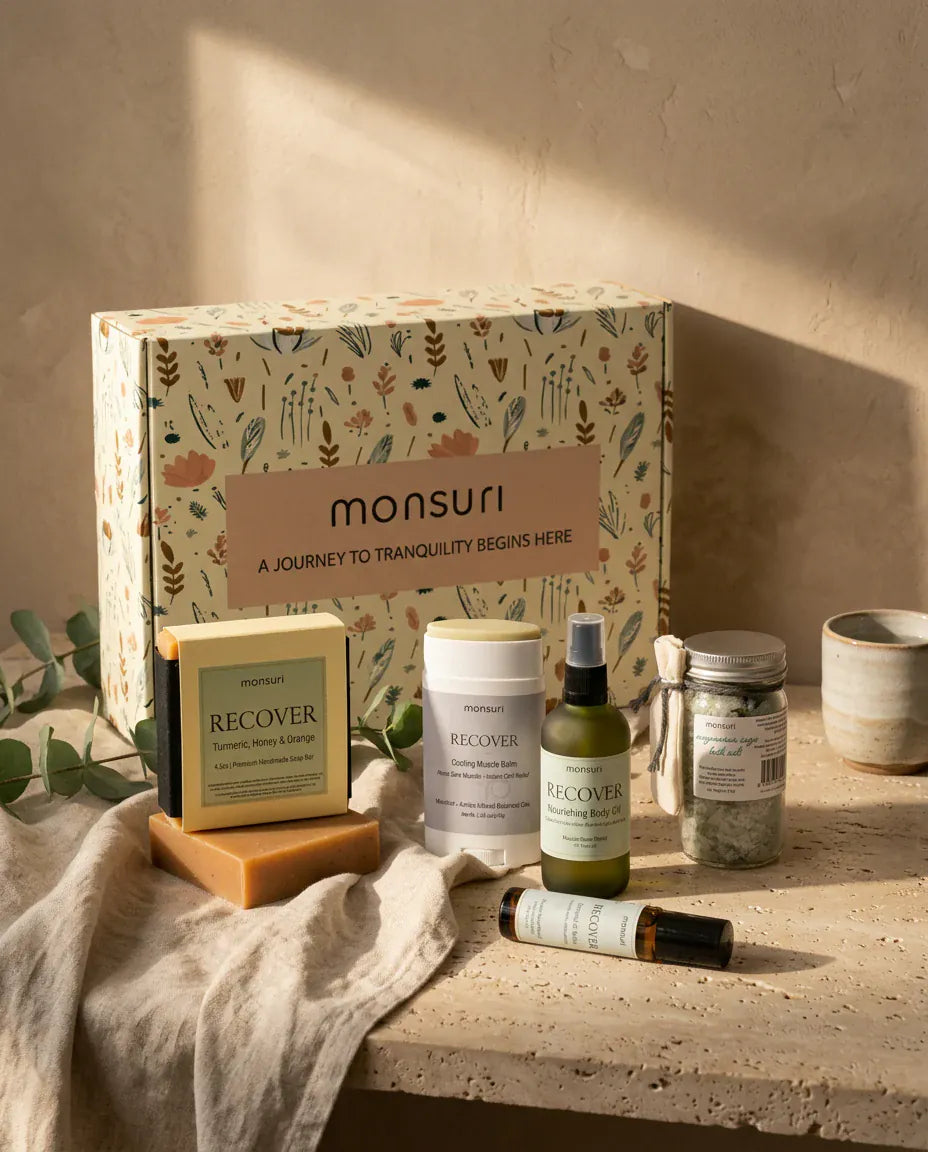
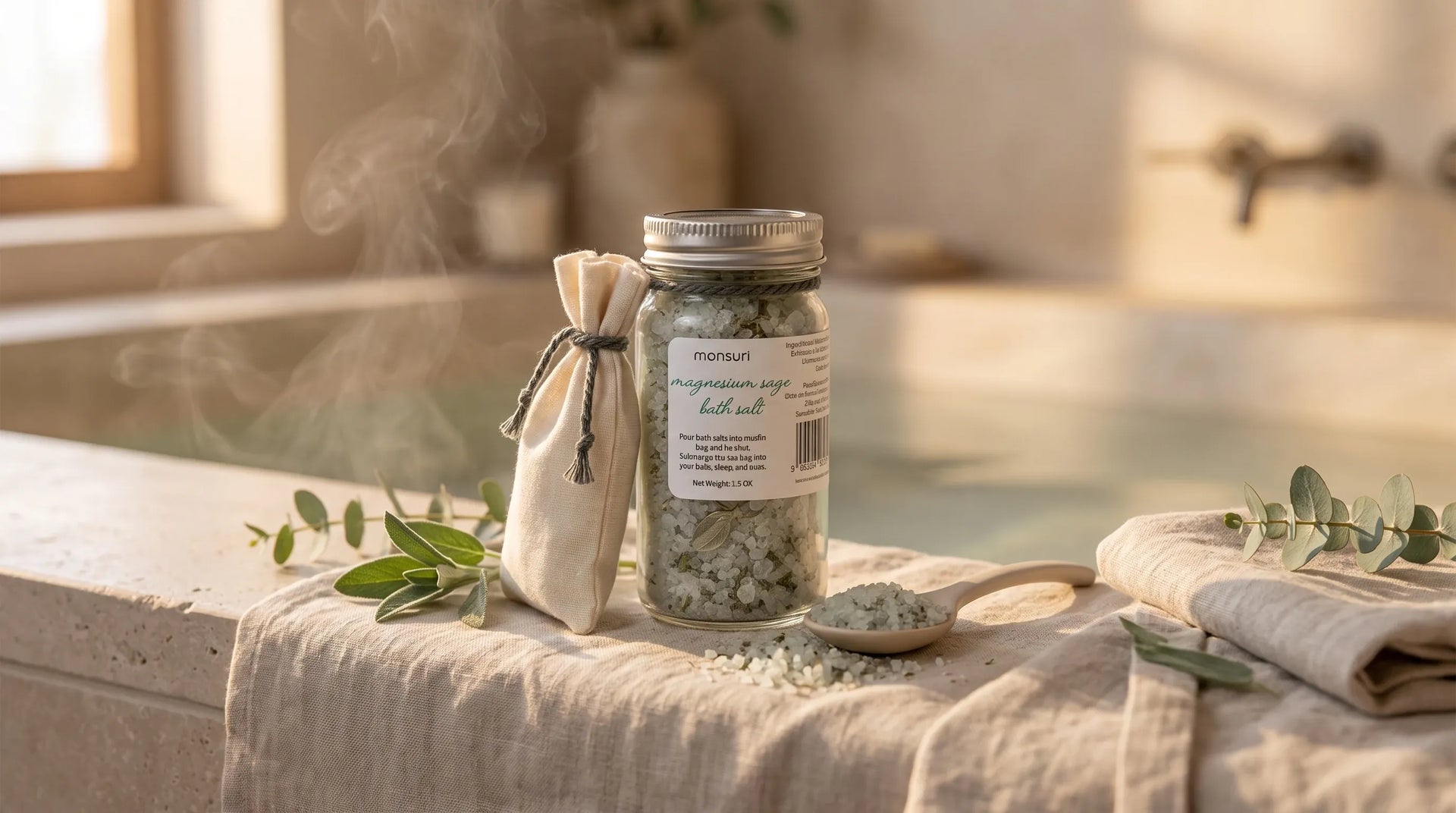
- What to add: a warm magnesium-and-sage soak for the wind-down, then a recovery oil massaged in after. Add the Magnesium & Sage Bath Salts from our bath salts, and read the ideal bath temperature guide for the numbers.
- Honest note: the warmth does the soothing — not magnesium “absorbing” through your skin (more on that below).
Most post-workout soreness shows up in the shoulders, lower back, quads, and calves — and it usually peaks 24 to 72 hours after the effort, not the same night.

Where muscles go tight after a hard effort: the shoulders and upper back, the lower back, the quads and thighs, and the calves. The soreness you feel isn’t usually immediate. Delayed-onset muscle soreness — DOMS — tends to set in around 24 hours after a workout and can linger for three to seven days, peaking somewhere in the 24-to-72-hour window. That timing matters, because it tells you when a warm bath helps most: not in the first raw hours, but in the recovery days that follow, once the dull, all-over ache has settled in. If the pain is instead sharp, sudden, and in one specific spot, that’s a sign you’re dealing with an injury rather than ordinary soreness — a different situation that calls for cold, not heat.
Yes, heat helps sore and stiff muscles — here’s why
The reason a warm bath feels so good on tired muscles isn’t in your head. Heat widens the blood vessels near your skin and in the tissue underneath — and as Cleveland Clinic puts it, “heat increases blood flow,” which “helps to loosen tense muscles.” More blood flow means more oxygen and nutrients reaching muscle that’s been worked, and the warmth itself signals tense, guarded muscle fibers to let go. That’s why you climb out of a good soak loose and a little flushed instead of clenched.
There’s a second, quieter mechanism: buoyancy. Floating takes the load off your joints and the muscles bracing around them, so they get a break from holding you upright. Put the two together — warmth opening up circulation, water taking the weight — and a warm bath becomes one of the simplest ways to help tight muscles feel looser after a long day or a hard effort.
This is most useful for the ache that shows up late. That next-day (or two-days-later) stiffness after a tough workout has a name: delayed-onset muscle soreness, or DOMS. According to NASM, the soreness “doesn’t occur until 24 hours following exercise and persists for up to 3–7 days.” That recovery window — once the worst is a day or two behind you — is exactly where a warm soak earns its place.
Heat is for the soreness and stiffness — the dull, all-over ache of muscles that worked hard. It’s not first aid for a fresh injury. That distinction is the whole game, and it’s next.
Hot vs. cold: which is better for sore muscles?
Use heat for everyday soreness, stiffness, and muscle tension; use cold for a fresh injury, new swelling, or active inflammation in the first couple of days.

Reach for heat when muscles are sore, stiff, tired, or tense — the dull ache the day after a hard workout, the desk-bound neck, the heavy legs after a long day. Warm water raises blood flow and helps worked muscles relax during the recovery phase. Reach for cold instead when the problem is a fresh injury: a new sprain, active swelling, a tender twist, or a hot, inflamed spot. For those, skip heat for roughly the first two to three days — cold helps a new, angry injury settle, while heat can make early swelling worse. Once that acute phase passes, you can switch to heat to help the area recover and the muscles around it loosen. The simplest test: dull and symmetrical means soreness (use heat); sharp, sudden, and one-sided means injury (use cold first).
This is the question the search results dance around, so here is the plain version. The split isn’t about which feels nicer — it’s about timing. Henry Ford Health draws the line clearly: if you have a fresh injury or active inflammation, “steer clear of heat therapy for at least two to three days,” and only “after the acute phase of the injury” should you switch to heat to help with recovery and relax muscles. Cold is what calms a new, angry, swollen spot; heat is what loosens the stiff, achy aftermath. If you’re weighing the two more broadly, our ice baths vs hot water baths piece goes deeper.
| Your situation | Reach for… | Why |
|---|---|---|
| Sore after a workout (DOMS, the next day or two) | Heat — a warm bath | Warmth raises blood flow and helps worked muscles relax during recovery. |
| General stiffness or muscle tension | Heat | Heat eases tight, guarded muscles and helps them feel looser. |
| Tired, heavy legs after a long day on your feet | Heat | Buoyancy plus warmth takes the load off and settles the muscles. |
| Fresh injury, new sprain, or a tender twist | Cold first | Cold helps a new, swollen injury settle; heat can make early swelling worse. |
| Active swelling or a hot, inflamed spot | Cold | Skip heat for the first two to three days, then switch over for recovery. |
How do I know if it’s soreness or an injury?
A rough rule of thumb: soreness is dull, symmetrical, and predictable — both legs ache after leg day, it builds over a day, it eases with movement and warmth. An injury tends to be sharp, sudden, and one-sided — a specific spot that hurts when you press or move it, sometimes with swelling, bruising, or heat coming off the skin. If it’s the sharp-and-swollen kind, handle it like an injury: cold first, and see a clinician if it doesn’t settle. When in doubt, don’t pour heat on something that’s actively swelling.
Can you do both? A note on contrast bathing
You’ll see “contrast bathing” recommended — alternating warm and cold to push circulation back and forth. Some people who train hard swear by it for tired legs. The evidence is modest rather than conclusive, so see it as something to try, not a guaranteed fix. The simplest at-home version: finish a warm soak, then a cooler rinse on the legs. If you’ve got a fresh injury, though, this isn’t the moment — stay with cold until the acute phase passes.
How hot, how long? The numbers
Run the bath warm — about 100–104°F (38–40°C) — soak 15–20 minutes, and drink some water before and after.

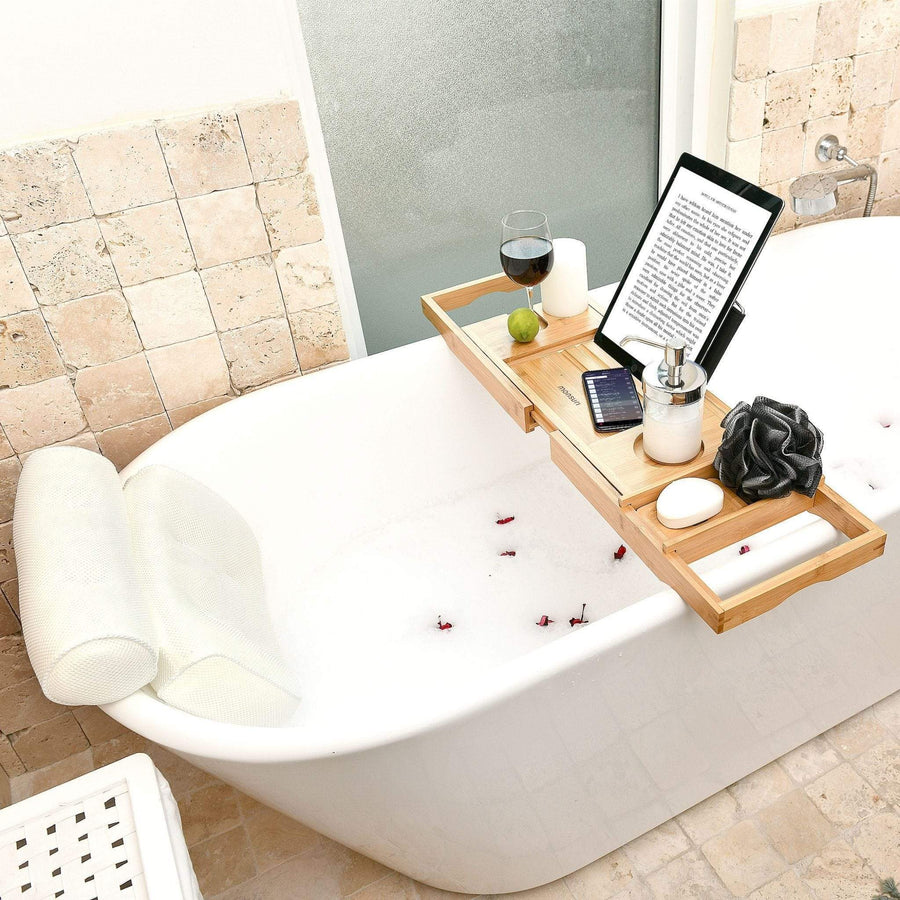
The muscle-soothing soak in four steps. One: run the bath warm, about 100 to 104°F (38 to 40°C) — just above body temperature, and under 110°F. Two: add a scoop of a magnesium-and-sage soak for the warmth and the aroma. Three: soak for 15 to 20 minutes — long enough for the warmth to work, not so long that you come out dried-out or lightheaded. Four: pat dry and, while your skin is still warm, massage a recovery oil into the spots that feel tight. Drink a glass of water before you get in and another when you climb out, since a warm bath makes you sweat more than it feels like. No thermometer needed — if the water feels pleasantly warm on the inside of your wrist, you’re in range.
Warmer isn’t better here, and scalding water actively works against you. The comfortable, effective range for a muscle-soothing soak sits around 100–104°F (38–40°C) — just above your body’s own temperature, warm enough to open up circulation without drying your skin or leaving you lightheaded. We break this down by goal in the ideal bath temperature guide, but for sore muscles, aim toward the top of that range and keep the water under about 110°F.
Soak for 15 to 20 minutes. That’s long enough for the warmth to do its work; much past 30 minutes and you’re more likely to come out dried-out or a little dizzy than extra-relaxed. And hydrate — a warm bath makes you sweat more than it feels like, so have a glass of water before you get in and another when you climb out. None of this needs a thermometer: if the water feels pleasantly warm on the inside of your wrist and you’re not flinching as you step in, you’re in range.
What to add: the soak ritual
Plain warm water already does most of the work. What you add to it is how you turn a quick rinse into the kind of soak you actually stay in — and where a couple of Monsuri products genuinely belong. The honest framing first, then the ritual.
A warm magnesium-and-sage soak
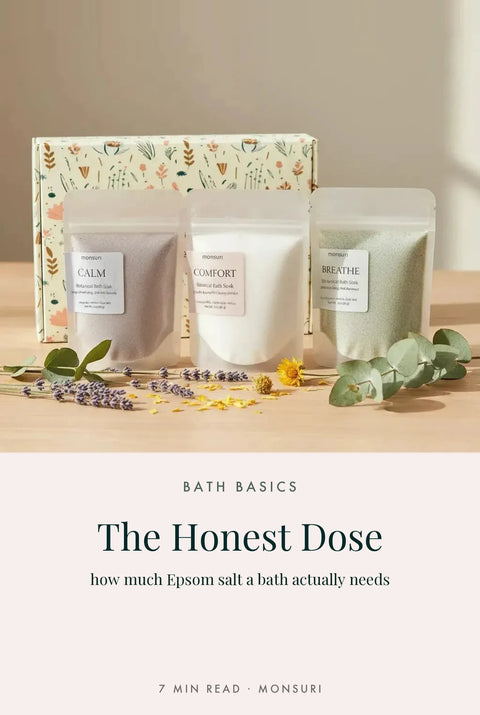
The first thing to pour in is a mineral soak. Our Magnesium & Sage Bath Salts are Mediterranean Dead Sea salt and magnesium flakes with earthy sage — a warm aromatherapy soak that makes the bath feel deeper and gives you twenty quiet minutes to let your shoulders drop. One verified buyer of our lavender salts put the appeal plainly: “so decadent.”
Here’s the honest part most brands skip. You’ll read everywhere that magnesium “absorbs through your skin” to relax muscles. The actual research is thin: a frequently-cited review titled “Myth or Reality—Transdermal Magnesium?” (Nutrients, 2017) concluded the authors “cannot yet recommend the application of transdermal magnesium” — skin is built to keep things out, and magnesium doesn’t cross it easily. So we won’t sell you that. What a magnesium-sage soak is good for is real: warm water, an earthy-calm scent, and a soak you’ll actually stay in long enough to feel looser. If you want the full breakdown, we wrote about magnesium flakes separately. Enjoy it for the wind-down — not as a supplement you bathe in.

Finish with a recovery oil
Step two is the one people forget: what you do on the way out. While your skin is still warm from the bath, massage a recovery oil into the spots that feel tight — the desk-bound neck, the stiff lower back, the worked legs. Our Warm-to-Cool Muscle Recovery Oil is built on a house-infused base of arnica, calendula, comfrey root, and St. John’s wort steeped into coconut oil, with menthol, ginger, and warming spices for the warm-then-cool sensation the name describes. Arnica is the post-exertion classic across the herbal tradition; here it’s a comforting after-bath ritual, not a painkiller.
It’s the same body-oil base our customers reach for after a shower or bath. One buyer, Lynn, wrote that it “works for my muscle aches.” Another, JennLu, described “reduced aches from working out” after a workout. And TM captured the exact sequence this article is teaching: “I use it after I… bathe, my skin feels so soft.” Warm soak, then the oil while you’re still warm — that’s the ritual.
This oil is very nice, it works for my muscle aches. Will buy again.

Other add-ins people use
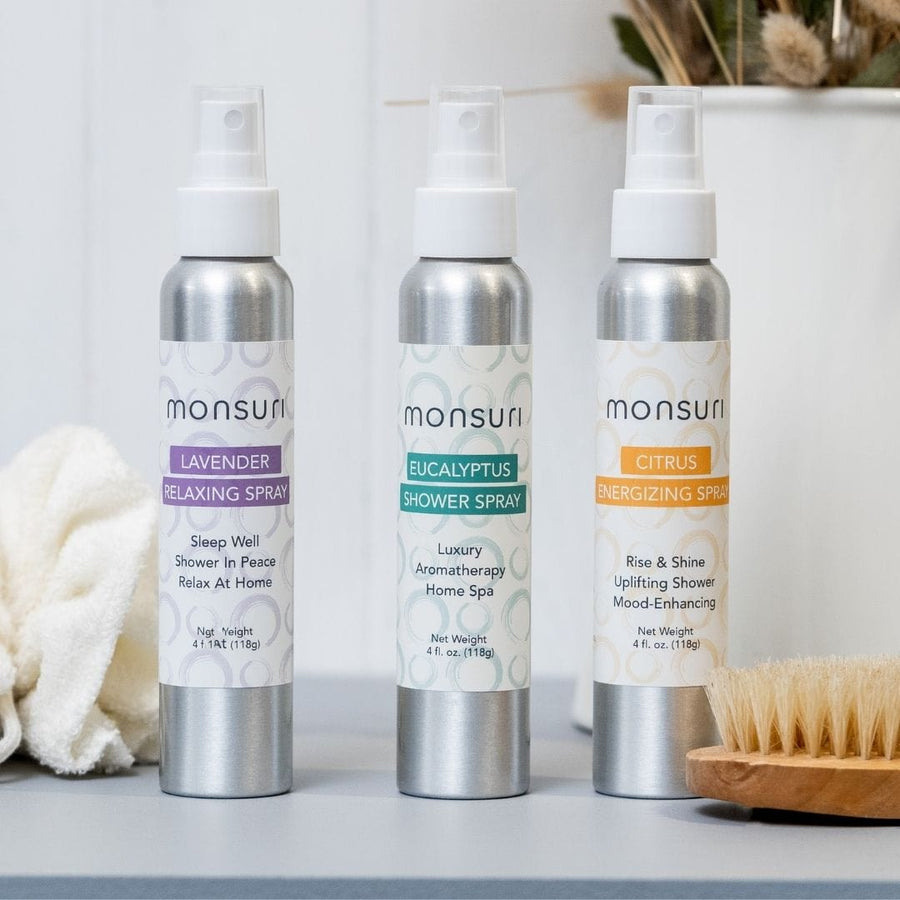
If you’re building your own, the usual suspects are Epsom salts (the warmth, again, is the active part), and a few drops of a comforting essential oil — eucalyptus if your head’s stuffy, lavender if you’re winding down for the night. Keep it simple: a couple of cups of soak in a standard tub is plenty. You’re after a sensory reset, not a recipe — though if you want exact ratios and a dosed method, our detox bath recipe guide lays it out step by step.
Can a hot bath make sore muscles worse?
Yes — in two specific cases, which is why the hot-vs-cold rule matters so much.
First, a fresh injury or active swelling. If you’ve rolled an ankle, pulled something, or have a spot that’s swollen, hot, or sharply painful, a hot bath can make the swelling worse, not better. That’s the situation where cold comes first — usually for the first two to three days — before heat has any business being involved. When you’re not sure whether it’s soreness or an injury, handle it like an injury and skip the heat.
Second, water that’s too hot or a soak that’s too long. Pushing the temperature toward scalding doesn’t relax you more — it dries your skin, raises your heart rate, and can leave you lightheaded standing up. Staying in well past 20–30 minutes does the same. Keep it warm (under about 110°F), keep it to 15–20 minutes, and hydrate.
Warm baths aren’t right for everyone. If you’re pregnant, or you have diabetes, heart disease, low or high blood pressure, or reduced skin sensitivity, ask your doctor about a safe temperature and keep the water on the cooler, milder end. And if a muscle problem is sharp, swelling, or not settling after a few days, see a clinician — this article is general information, not medical advice.
So: a warm bath is one of the kindest things you can do for sore, stiff, tired muscles — run it warm, soak fifteen or twenty minutes, add a magnesium soak, and finish with the oil while you’re still warm. Just save it for the soreness, not the fresh injury. You’ve got the rule now. Go run the water.