Your Cart is Empty







What Happens If You Put Too Much Epsom Salt In A Bath?
Epsom salt has long been a trusted go-to for everything from easing sore muscles to promoting a sense of calm. For centuries, people have turned to this magnesium sulfate to soak the day off — but how much is too much, and what actually happens if you go past it?
This guide breaks down the fine line between therapeutic and excessive use of Epsom salt, so you can get the most out of your soak without any side effects. We'll also pair the science with botanical bath soaks that work alongside Epsom salt to keep skin from drying out — the way it does after a long, plain-Epsom soak.
A "therapeutic bath" is one to two cups of Epsom salt in a standard tub of warm water, soaked for fifteen to twenty minutes. Anything more than that is preference, not science.
Why Epsom salt works
Epsom salt is magnesium sulfate — mineral crystals that dissolve in your bathwater. When they dissolve, they release magnesium and sulfate ions that your skin can absorb during a long, warm soak.
Why magnesium matters: it's involved in over 300 enzyme functions in your body — muscle contraction and relaxation, nerve function, energy production, stress response regulation. Most people don't get enough from food alone.
What an Epsom salt bath does: the warm water plus magnesium combination helps relax tight muscles, reduces the wound-up feeling in your nervous system, and softens rough skin (elbows, heels, all of it).
What it doesn't do: pull toxins out through your skin. Your liver and kidneys handle detox. The bath helps you relax — which indirectly supports your body's natural processes — but it's not a magical detox treatment.
The honest dose
Most labels will say "add 2 cups." Most people add three, then look up worried questions at midnight. Here's what the actual research — and our own bath therapist — recommends.
For a standard tub (40 gallons / 150 L), filled to a comfortable submerge.
Therapeutic
2 cups ~ 480 g
Generous
3 cups ~ 720 g
Maximum
4 cups ~ 960 g
Children (8+)
½ cup ~ 120 g
Past four cups, you stop noticing more benefit and start noticing the opposite — the water gets stiff, the skin gets thirsty, and the bath asks something of you instead of giving.
What "too much" actually means
The internet has two settings on this question: "Epsom salt cannot hurt you" and "Epsom salt will hospitalize you." Both are wrong.
Used at the dose above, in a healthy adult, on intact skin, Epsom salt baths are remarkably safe. The two genuine concerns are dehydration (the salt pulls water out of the skin during very long soaks) and, very rarely, magnesium sensitivity in people with reduced kidney function.
Reduced kidney function, severe heart disease, open wounds, severe burns, pregnancy without your provider's blessing, or children under three. When in doubt, ask your doctor — not us, and certainly not a forum.
If your skin feels tight or itchy, you're using too much or soaking too long. Cut the dose, shorten the bath, and moisturize while still damp.
How long, how warm, how often
Three numbers do most of the work. Twenty minutes is the sweet spot — long enough for the magnesium to absorb, short enough that the skin keeps its oils. 98 to 100 degrees Fahrenheit is comfortable-warm, not strip-the-paint hot. Two to three times a week is plenty.
More than that and the bath becomes a habit you owe rather than a ritual you keep.
- Duration: 15–20 minutes is the therapeutic window. 30 is the ceiling.
- Temperature: 98–100°F (37–38°C). If you can read in it, it's the right temperature.
- Frequency: 2–3 times a week. Daily is the body asking for something else.
- Hydration: A glass of water before, a glass after. Not optional.
Customizing your bath for what you need
Plain Epsom salt is medicine. Botanically infused soak is the bath you actually want to take. The difference is small in chemistry and enormous in feeling.
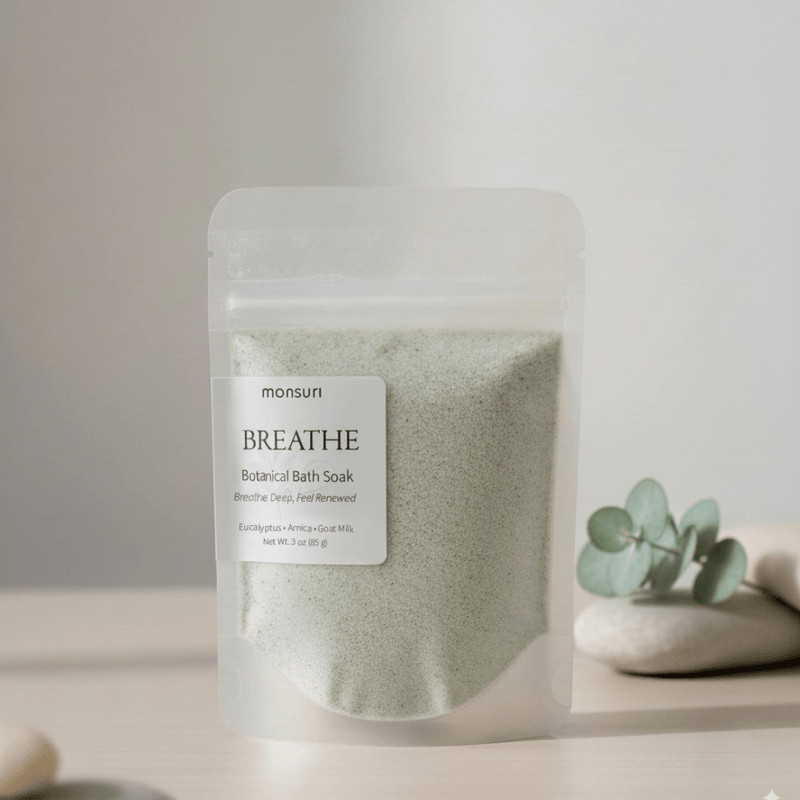
For muscle recovery — combine Epsom salt with eucalyptus or peppermint to ease soreness post-workout. The magnesium relaxes tight muscles; the aroma extends the recovery.
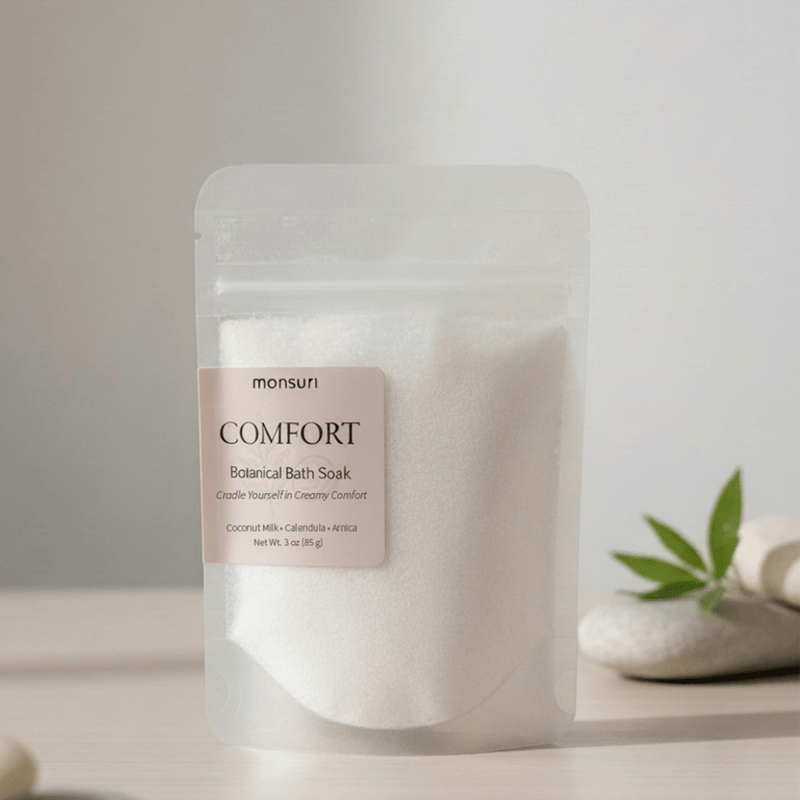
For skin soothing — if your skin feels dry or irritated, use a soak that pairs Epsom with botanicals like calendula and St. John's wort. Follow up with body oil while still damp.
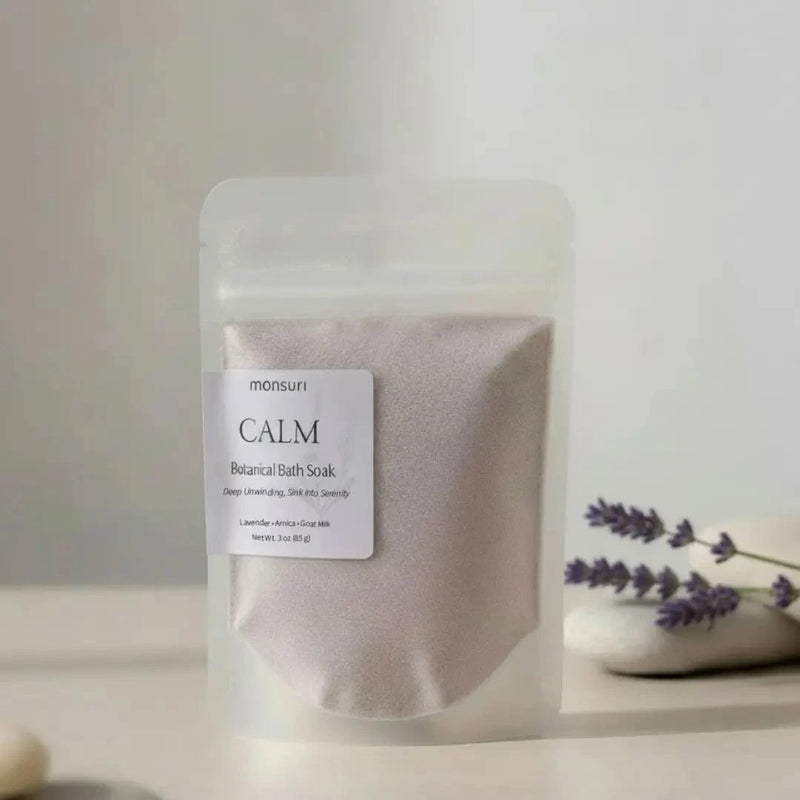
For stress relief — recreate the calming vibe of a spa with lavender, a dim lamp, and the agreement to put your phone in the other room. The magnesium helps the muscles let go; the warm water settles the nervous system.
Side effects to watch for
While most people enjoy Epsom salt baths without issue, soaking with too much salt or for too long can lead to discomfort. Here's what your body might say if you've gone past the dose:
- Dry or itchy skin: the most common signal. Especially if you skip moisturizing afterward.
- Mild irritation: redness or a tight feeling, usually from soaking with the salt undiluted.
- Lightheadedness on standing: dehydration. Drink water before and after the bath.
If any of these show up, the answer is simple: cut the dose in half next time, shorten the soak by ten minutes, and moisturize while skin is still damp. The bath should leave you feeling better — not like you owe your skin an apology.
The 20-minute version
If you only remember one paragraph from this entire article, make it this one.
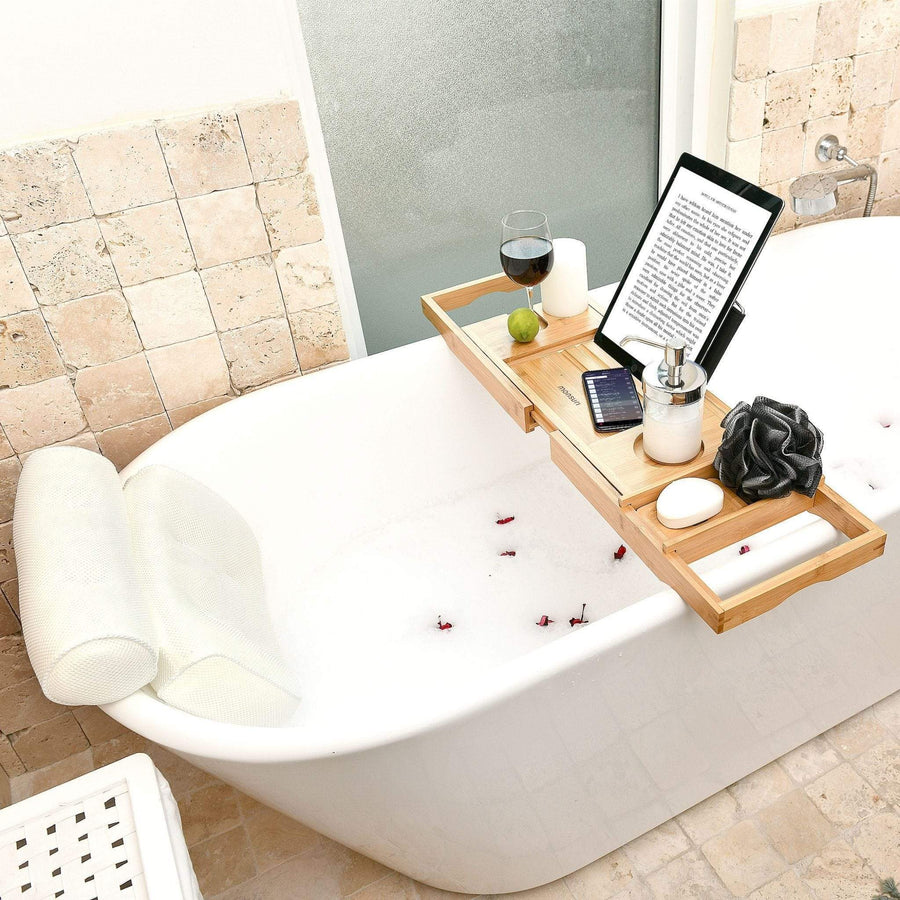
Run the bath warm — comfortable, not hot. Add two cups of Epsom salt as the tub fills, so it dissolves with the current. Step in. Settle. Drink the water you brought with you. Read, or don't. Step out at twenty minutes, pat dry, do not rinse the salt off — let it keep working through the night. Apply body oil while skin is still damp.
That's the whole thing. The rest of the article was just permission to do less.
A word from our workshop
Plain Epsom is medicine. Botanically infused Epsom is the bath you actually want to take. The botanicals we infuse — dried lavender, eucalyptus, chamomile, calendula, St. John's wort — are steeped into the salt before packing, so the oils dissolve when the water hits. Nothing floats, nothing clogs the drain, nothing feels like a science experiment.
Start with the Magnesium & Sage Bath Salts if you want the pharmaceutical-grade Epsom in therapeutic ratios with sage botanicals layered in. Or move to the soak that matches what your body's asking for — Lavender for stress, Eucalyptus for muscle recovery, Coconut Milk for hydration. The bath, in our small opinion, is the last private thing left. We're trying to make it worth the twenty minutes.