


The Best Nourishing Body Oil for Dry Skin: What to Look for and What Actually Works

The Best Nourishing Body Oil for Dry Skin: What to Look for and What Actually Works

Body oil is one of the best things you can put on dry skin, but only if you get two things right: when you apply it and what is in it. It is an occlusive, so it seals moisture in rather than letting it evaporate the way the water in a lotion does. Apply a nourishing body oil to damp skin within two or three minutes of stepping out of the shower, use just a few drops per limb, and do it daily. On bone-dry skin, oil traps the dryness instead of sealing in hydration, which is why so many people decide oil "doesn't work" when the timing was the only thing off.

  • Apply to damp skin, not dry. Within 2–3 minutes of the shower, while skin still holds water. Oil seals that water in.
  • Choose a nourishing botanical oil, not a fast-flashing dry oil. A jojoba and avocado base sits in the rich, emollient lane. Compare scents across our nourishing body oils.
  • Use a little — 3–5 drops per limb. On damp skin it spreads far. Warm it between your palms and press it in — don't scrub.
  • Lotion first, then oil, if your skin is very dry. The order matters; here's when to apply oil in your routine.

Dry skin shows up first at the elbows, forearms, knees and shins — the zones with the fewest oil glands.

The four body zones that go dry first — elbows, forearms, knees, shins — where body oil for dry skin matters most.
Where dry skin shows up first — and where sealing it matters most.

The four body zones that go dry first are the elbows, forearms, knees and shins. These spots carry fewer oil glands than the rest of the body, so they make less of the skin's own sebum and lose surface water faster. That is why they start to feel tight, look rough, or flake before anywhere else, and why they are usually the first place cold weather or dry indoor heat shows up by evening. They are also where a body oil for dry skin works fastest: pressing three to five drops into damp elbows, forearms, knees and shins after a shower seals the water already in the skin and keeps those zones comfortable. If you only have time to oil a few areas, start here — the parts that tighten first benefit most from a daily seal.

Is body oil good for dry skin? (The short answer)

Yes. Dry skin loses water faster than it can hold it, and body oil works by sealing the surface so that water stays put. Dermatologists call that an occlusive effect: instead of adding water to the skin, the oil forms a thin breathable layer over it that slows evaporation. That is exactly what tight, flaky-feeling skin is missing.

The catch is that not every oil and not every method gives you that seal. A rich, botanically-blended oil applied to damp skin does. A quick-absorbing "dry oil" rubbed into bone-dry skin at bedtime mostly does not. If you want the on-intent pick, a jojoba and avocado base like our Lavender Body Oil sits squarely in the rich, emollient lane that dry skin needs.

Where this matters most is winter, and skin that has spent the day outdoors or in dry indoor heat. Cold air holds less moisture, heated rooms pull water out of the skin, and both leave the surface tight and flaky-feeling by evening. Sealing that skin daily — especially after a warm shower — is the difference between skin that feels comfortable through a dry season and skin that stays tight no matter how much water you drink. The oil is not doing anything exotic. It is just stopping the moisture you already have from escaping.

Why body oil beats lotion on dry skin

Most lotions are mostly water held together with a little oil and an emulsifier. That water feels cooling and absorbs fast, which is why lotion is pleasant in the moment. But water on the surface of dry skin evaporates, and it can take some of your own moisture with it. Two hours later the tightness is back.

Oil does the opposite job. It is a humectant's bodyguard, not a humectant itself. It does not add water; it keeps water from leaving. That is why the most reliable result on dry skin is to give the skin water first (a damp body, or a light lotion) and then lock it under oil. The oil is the lid on the jar.

This is also why oil tends to last longer between applications. A water-based lotion does its work in the first hour or two and then it is gone. A thin layer of botanical oil keeps sealing for the rest of the day, which is what reviewers mean when they say a single morning application carried them through. For genuinely dry skin you are not choosing between lotion and oil so much as deciding whether to use oil alone (on damp skin) or oil over lotion (on the driest days). Either way, the oil is the part that makes the result hold.

Lotion adds water. Oil seals it. On dry skin, you want both — water on the skin, oil over the top — not one instead of the other.

The reason oil outlasts lotion on dry skin: lotion's water absorbs and then evaporates, while oil forms an occlusive film that locks water in.

Body oil for dry skin — Why body oil beats lotion on dry skin: a skin cross-section showing the water in lotion evaporating vs body oil sealing water in.
Same skin, different jobs — lotion adds water, body oil locks it in.

On the same patch of dry skin, a lotion and a body oil do two different jobs. A lotion is mostly water held together with a little oil: it absorbs quickly and feels cooling, but then that surface water evaporates — and it can carry some of the skin's own moisture off with it, so the tightness is usually back within a couple of hours. A body oil does not add water at all. It forms a thin, breathable, occlusive film over the skin that slows evaporation and locks the moisture already there underneath it. That seal is the whole point of using body oil for dry skin, and it is why oil keeps working for hours where a water-based lotion fades fast. The most reliable result is to give skin water first, then seal it under oil.

Which oil is best for dry skin

For dry skin you want the richer, more emollient oils — the ones high in the fatty acids that help skin feel cushioned rather than the light, fast-flashing oils marketed for slip. Here is how the common ones compare.

Oil Best for Feel & absorption The pick for dry skin
Jojoba All skin types; closest to skin's own sebum Medium; sinks in without a heavy film Yes — a workhorse base
Avocado Very dry, tight skin Rich; deeply emollient, more cushion Yes — pairs well with jojoba
Almond Sensitive, dry skin Light-to-medium; softens quickly Good
Argan Dry skin wanting fast absorption Light; absorbs cleanly Good
Coconut Body, not acne-prone faces Heavy; can feel greasy on some Patch-test first
Quick-flash "dry oils" Humid climates, a no-residue finish Very fast; minimal seal Skip for very dry skin

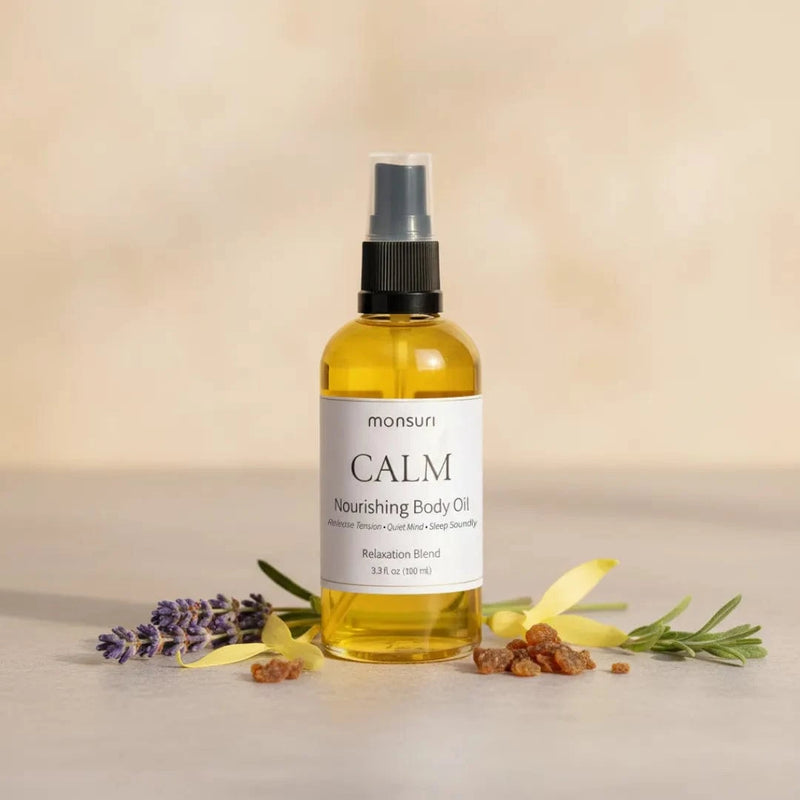
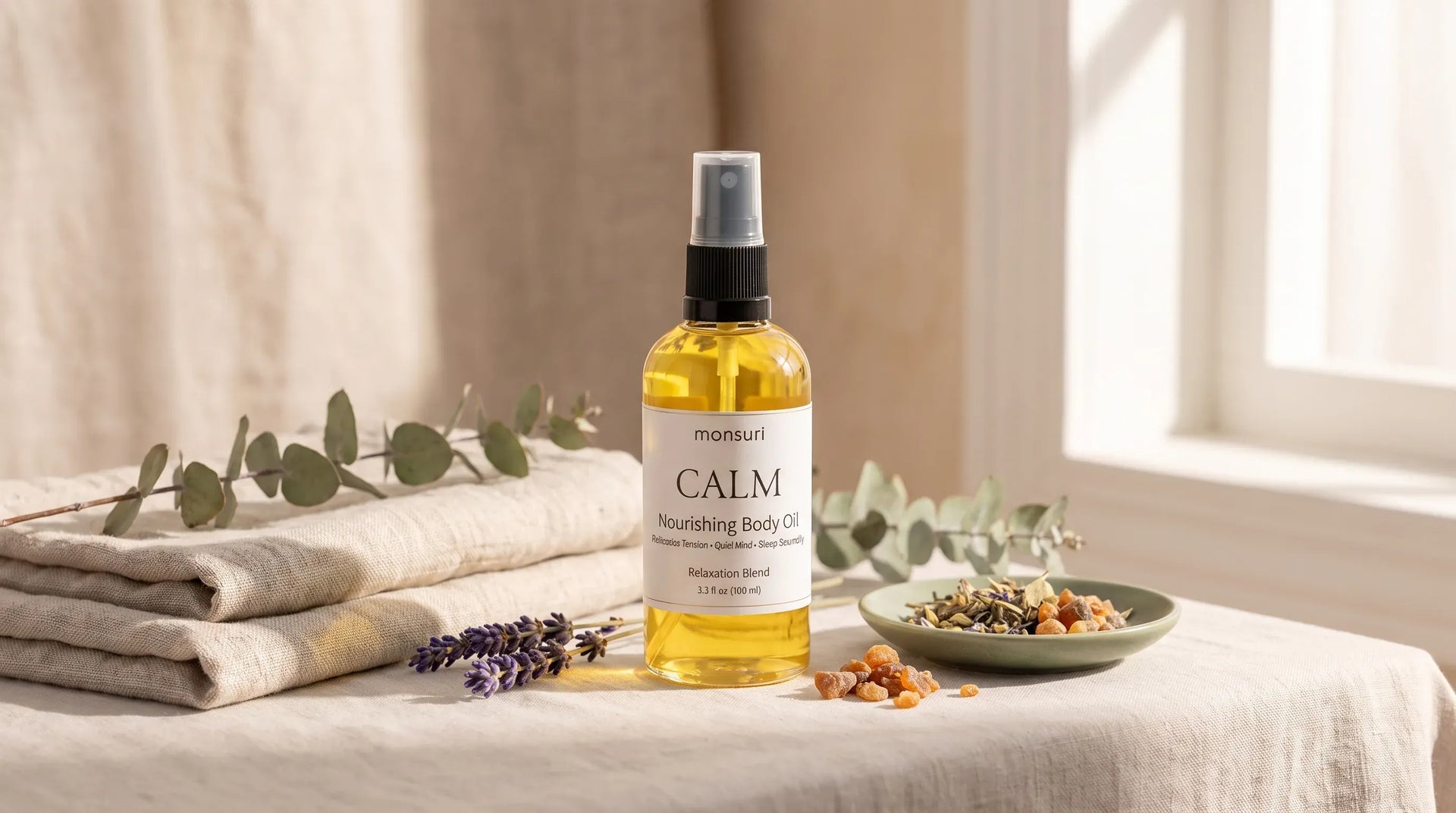
Our pick for the body is a jojoba-and-avocado blend, because the two together give you the cushion of a rich oil and the sink-in feel of a lighter one. That is the base under the Lavender Nourishing Body Oil — cold-pressed jojoba and avocado, enriched with vitamins A, D and E, in a 3.3oz bottle that travels. Its French-lavender, myrrh and ylang-ylang blend means it doubles as an evening wind-down, not just a moisturizer.

Monsuri CALM Nourishing Body Oil, 3.3oz jojoba and avocado base — the body oil for dry skin.
The CALM Nourishing Body Oil — jojoba and avocado, the dry-skin pick. Shop the Nourishing Body Oil →

What to skip: heavily fragranced "fragrance oil" blends and the lightest dry oils, which feel nice for thirty seconds and leave dry skin where it started. (A recovery oil like an arnica blend is built for tired muscles, not for sealing dry skin — a different job entirely.)

For dry skin, a rich jojoba-and-avocado oil is the pick; almond and argan are good, coconut needs a patch test, and light "dry oils" are best skipped.

Body oil for dry skin — Which oil is best for dry skin: jojoba and avocado are the pick, compared with almond, argan, coconut and light dry oils.
Which oil for dry skin, ranked at a glance. Compare our nourishing body oils →

Which oil is best for dry skin? A jojoba-and-avocado blend is the pick, and it is the base of the CALM Nourishing Body Oil: jojoba sinks in much like the skin's own sebum, while avocado is richer and more emollient, so together they cushion and seal without feeling heavy. Almond oil is a good choice for sensitive, easily-irritated dry skin because it softens quickly and stays light. Argan suits anyone who wants fast, clean absorption with less of a film. Coconut oil is heavier and sits on the surface for some people, so patch-test it before using it widely. Light, quick-flash "dry oils" feel pleasant for about thirty seconds but barely form a seal, so skip them for genuinely dry skin — they leave the surface roughly where it started.

How to apply body oil so it actually absorbs

This is the part that decides whether oil works for you. The single most important rule is the three-minute window: get out of the shower or bath, pat yourself so you are damp rather than dripping, and press the oil in before the water on your skin has a chance to evaporate. It is the same timing dermatology guidance gives for moisturizing dry skin — while the skin is still damp from the shower. Inside that window the oil traps the water against your skin. Outside it, you are sealing dry skin against the air.

How much: about three to five drops per limb. On damp skin a concentrated oil spreads further than you would expect, so start small. Warm it between your palms first, then press and smooth it over the skin instead of rubbing hard. You are spreading a thin layer and helping it sink in, not buffing it away. A little goes a long way; if your skin still feels slick after a minute, you used too much, not too little.

My second order of this non-sticky, quick absorbing body oil that has changed my winter. It started as a moisturizer after showering, left skin refreshed… and no more dry skin after spending time outdoors.

Two real worries come up over and over with body oil, and both have the same answer. The first is greasiness. A heavy oil rubbed onto dry skin sits on the surface and feels slick, which is where the "oils are greasy" reputation comes from. The same oil pressed into damp skin in the right amount sinks in — one reviewer's whole verdict was simply "non greasy and love it." The second is the worry that oil will not do anything on its own. It will, as long as there is water underneath it to seal. That is the entire trick: damp skin, small amount, pressed not rubbed.

Do you apply body oil to wet or dry skin?

Damp skin, every time. Pat down after the shower so you are no longer dripping but skin still feels slightly wet, then apply within two to three minutes. The thin film of water on damp skin is what the oil seals in. On fully dry skin the oil has nothing to lock down, so it sits on top and the skin stays tight.

Do you use body oil before or after lotion?

If your skin is very dry, lotion first and oil second. The lotion lays down water; the oil seals it under a breathable layer so it does not evaporate. Oil before lotion would block the lotion from sinking in. For the full order-of-operations, including the days you can skip the lotion entirely, here is the routine breakdown on when to apply oil in your routine.

Can you use body oil every day?

For dry skin, yes — daily, right after the shower, is the point. That is when skin is dampest and the seal works best, and dry skin loses moisture every day, so it benefits from being sealed every day. The exception is if your skin runs oily or acne-prone, or you live somewhere humid: two to three times a week is plenty there, since your skin is holding moisture better on its own. Listen to how your skin feels rather than the calendar. Tight and flaky in the morning means seal more often; never tight means you can ease off.

How much body oil should you use?

About three to five drops per limb — a small puddle in the palm, not a handful. On damp skin a concentrated botanical oil spreads further than you would expect, so you are using less than you think, which is part of why a single 3.3oz bottle lasts roughly six to eight weeks of daily use. If you finish a shower and your skin still feels coated rather than soft a couple of minutes later, scale back next time. The goal is a thin sealing layer, not a slick.

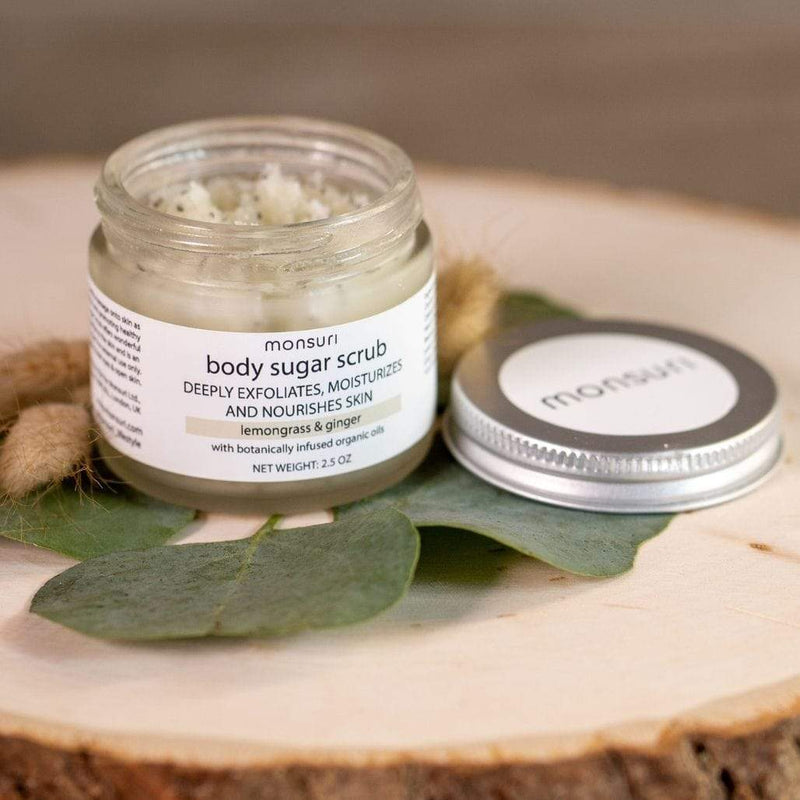
Once or twice a week, exfoliate before you seal. Clearing the dull, flaky top layer with a gentle sugar scrub lets the oil reach skin instead of sitting on dead cells — the difference between an oil that absorbs and one that just sits there.

The 2-minute rule, in order: pat skin damp, add lotion first if it's very dry, wait 2–3 minutes, then warm 3–5 drops of body oil and press them in.

How to apply body oil for dry skin: pat skin damp, warm 3-5 drops, press in within 2-3 minutes so it seals.
The 2-minute rule — the application window that decides whether oil works.

The 2-minute rule for applying body oil to dry skin runs in five steps. First, pat skin damp after the shower so it is no longer dripping but still feels slightly wet — that thin film of water is what the oil will seal in. Second, if your skin is very dry, smooth on a light lotion to lay down extra water. Third, wait two to three minutes, staying inside the window before the water evaporates. Fourth, warm three to five drops of body oil between your palms. Fifth, press — not rub — the oil onto the still-damp skin so it traps the moisture against the surface. Applied to dry skin outside that window, the same oil just sits on top; applied damp and in the right amount, it sinks in and holds.

A simple daily routine for soft, comfortable skin

You do not need a shelf of products for this. Dry skin responds to three steps, and only the last one is daily.

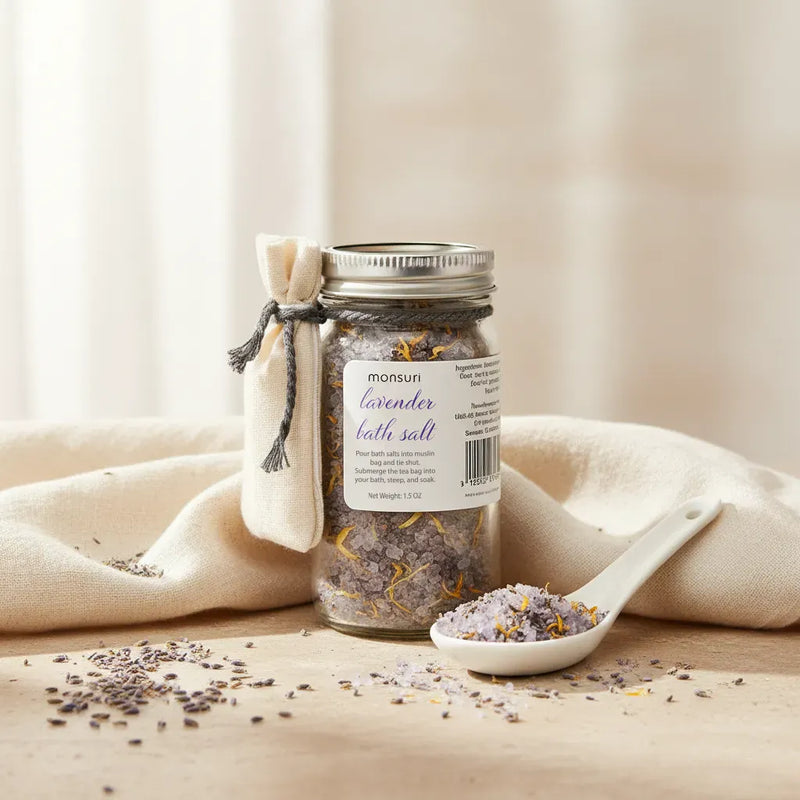
Soak, if you have the time. A warm bath softens the skin before you seal it. A handful of lavender bath salts turns it into the kind of pause that is easy to keep coming back to.

Exfoliate once or twice a week. The sugar scrub clears the flaky layer so the oil can do its job. This is the step most people skip, and it is the one that makes the oil feel like it finally started working.

Seal every day. This is the move that matters. Press a few drops per limb of the Nourishing Body Oil into damp skin right after the shower. Daily, while skin is still holding water. That is the whole routine — the soak and scrub are the upgrades, the oil is the habit.

If you would rather build the full set in one go, you can put together a dry-skin routine from our natural skincare collection. But if you only change one thing this week, change the timing: oil on damp skin, within three minutes. Most people who thought body oil did nothing were applying it to dry skin at the wrong moment. Move it inside the window, and the same bottle starts behaving like a different product.

Frequently asked questions

Is body oil good for dry skin?

Yes. Body oil is occlusive — it forms a thin, breathable layer that slows the water loss dry skin struggles with, sealing moisture in rather than adding it. Dermatologists recommend occlusives for dry, tight-feeling skin. The result depends on using a rich botanical oil and applying it to damp skin, not bone-dry skin.

Which oil is best for very dry skin?

Richer, ultra-emollient oils high in fatty acids work best — jojoba, avocado, almond and argan. A jojoba-and-avocado blend gives both cushion and a clean sink-in feel, which is why it is the base of our Nourishing Body Oil. Skip the lightest quick-flash dry oils for very dry skin; they leave little seal behind.

Do you apply body oil on wet or dry skin?

Damp skin. Pat down after the shower so you are no longer dripping but skin still feels slightly wet, then apply within two to three minutes. That thin film of water is what the oil seals in. On fully dry skin the oil has nothing to lock down, so it sits on top and the skin stays tight.

Can I use body oil every day?

For dry skin, yes — daily, right after the shower, is the point, since dry skin loses moisture every day and benefits from being sealed every day. If your skin is oily or acne-prone, or you live somewhere humid, two to three times a week is enough. Let how your skin feels guide the frequency, not the calendar.

Do you use body oil before or after lotion?

If your skin is very dry, lotion first and oil second. The lotion lays down water; the oil seals it under a breathable layer so it does not evaporate. Applying oil before lotion would block the lotion from sinking in. On less-dry days you can skip the lotion and seal damp skin with oil alone.

How much body oil should I use?

About three to five drops per limb. On damp skin a concentrated oil spreads further than you expect, so warm it between your palms, then press and smooth it in rather than rubbing hard. You need less than you think — if skin still feels slick a minute or two later, scale back next time.
— SOAK · EXFOLIATE · SEAL —

The three-step dry-skin routine

Warm soak, weekly scrub, daily oil on damp skin. Only the oil is the everyday habit — the salts and scrub are the upgrades.

—Bundle—

The Dry-Skin Rescue Ritual

$57.95
From our workshop to your bath
By Monsuri
Small-batch, made in the USA. Written without a hurry.