



Calendula Oil Benefits, Honestly — and Which Format to Buy

Calendula Oil Benefits, Honestly — and Which Format to Buy

Calendula is the marigold-family flower that skincare keeps coming back to, and most of what you will read about it online is overclaimed. Here is the honest version: it has centuries of traditional use for comforting and softening skin, modern research on it is still early, and the practical question is not whether calendula is magic — it is which format suits your skin's actual dry spots. We infuse the flowers in-house into three finished products; the everyday answer is the Recover Nourishing Body Oil ($36.00) — the same in-house infusion in an oil that warms, then settles cool — with a balm for targeted patches and a butter for richer evening moisture.

That honesty matters here because this corner of the internet is crowded with pages promising that one flower can fix your complexion, repair your skin and replace half of dermatology. We sell calendula products and we will not tell you that. What we can tell you is exactly what is in ours, where each format earns its keep, and what our own customers say after using them — which turns out to be plenty. (If what you actually want is the massage those oils were made for, that lives in our at-home massage guide.)

  • What it is: Calendula officinalis (pot marigold), used traditionally in skin preparations for comfort and moisture.
  • The honest evidence line: research on topical calendula is early and mixed — treat it as a well-loved botanical in a good moisturizer, not medicine.
  • The real decision is format: oil for all-over, balm for spots, butter for rich evenings.
  • Our infusion, from the label: calendula, arnica, comfrey and St. John’s wort, steeped in organic coconut oil, in-house.
  • Patch-test anything new on a small area first, and keep any botanical oil to intact skin.
The bottle behind the calendula oil benefits in this guide — the Monsuri Recover Nourishing Body Oil beside fresh calendula flowers and ginger, its label reading soothe aches, ease muscles, cool relief
The calendula format most people should start with: a light layer of body oil on damp skin. Shop the Recover Body Oil — $36.00 →

Calendula oil benefits — the honest version

Strip away the miracle language and calendula's genuine reputation stands on two legs. The first is history: the petals have been steeped into oils and salves for skin comfort for centuries, which is why the flower appears in everything from European pharmacopoeias to your grandmother's garden. The second is the carrier: calendula is almost always delivered in an oil base — coconut, olive, jojoba — and those oils are unambiguously good at what a moisturizer does: softening skin, holding moisture in, and making dry, tight-feeling skin comfortable again.

What the research says is more modest than the blogosphere suggests. Reviews of topical calendula describe promising but early-stage evidence, and the NIH's herb references are consistently careful about distinguishing traditional use from proven effect. So we will say it plainly: nothing on this page treats, cures or prevents anything. If you have a skin condition, that conversation belongs with a dermatologist, not a flower.

Why write about it at all, then? Because "comforting, well-tolerated botanical in a genuinely good moisturizer" is exactly what most people are actually shopping for — and because we make three of them and can tell you precisely what is inside.

Oil, balm or butter — the decision that actually matters

Every calendula product we make starts the same way: the flowers — along with arnica, comfrey and St. John’s wort — steeped in organic coconut oil, in-house. (That phrase is straight off our labels.) What changes between formats is the vehicle, and the vehicle decides where each one shines. The card below is the whole decision; the sections after it add the detail.

Calendula oil benefits by format — comparison infographic of the body oil for all-over moisture after a shower, the balm for targeted spots like lips and elbows, and the body butter for rich evening moisture
Pick by job, not by calendula content: the oil covers everything, the balm covers spots, the butter covers evenings.
What the format card says: All three are finished products, not DIY infusions — the decision is where on your body the dryness lives, not which has more calendula. The Recover Oil, $36.00 for 2 fl oz: best for all-over use after a shower, the oil format; a light oil that warms first, then settles cool; used on damp skin, where a light layer goes far; choose another if the dryness is one small spot — that is balm work. The Balm, $26.00 in a tin: best for targeted spots — lips, elbows, heels, dry patches; a firm beeswax salve that softens on skin; used as needed, and the tin travels well; choose another if you are moisturizing everything — use the oil. The Body Butter, $18.00 in a jar: best for rich evening moisture, with lavender; whipped, the richest of the three; used in the evenings on the zones that need most; choose another if you want scent-light and lighter feel — the oil. From the labels: the Recover oil and the balm share the in-house infusion — calendula, arnica, comfrey and St. John’s wort in organic coconut oil; the butter pairs calendula with lavender and arnica.

The oil: all-over, after the shower

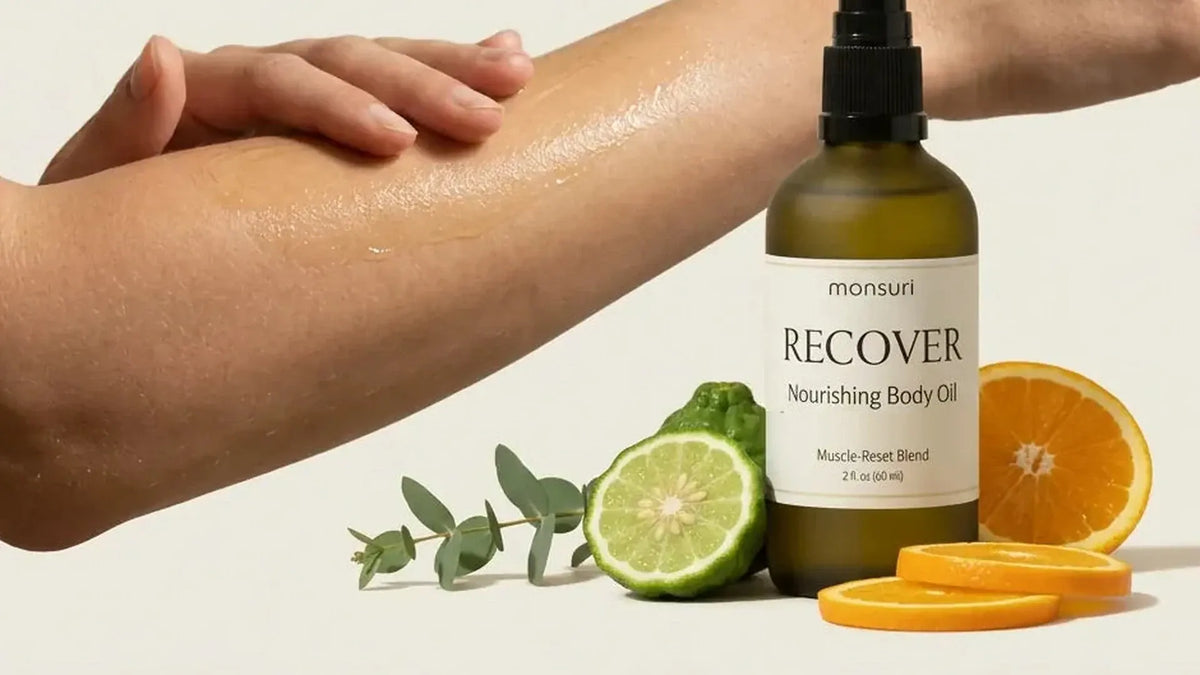
The oil format in the line is the Recover Nourishing Body Oil — the same in-house infusion carried in slow-infused coconut oil, with one party trick the tin and the jar don’t have: it works in two steps you can feel. Warming ginger and black pepper come first, then menthol settles in cool and quiet. The use pattern is the classic one: a light layer on damp skin, right after a shower.

The facts worth knowing before buying: it is a 2 fl oz (60 ml) spray bottle at $36.00, a light layer goes a long way — the label puts one bottle at roughly 50–60 uses, which works out under fifty cents a session — and the scent is bergamot, eucalyptus, sweet orange and lavender rather than anything clinical. If you would rather smell of lemongrass in the shower first, that is a different product and a different guide.

Calendula oil benefits in practice — hands smoothing the Recover body oil onto a forearm with a light sheen absorbing in, the green bottle on the linen beside
The use pattern, visible: a light layer smoothed on, warm first, then cool — the bottle within reach. Browse the body oils & balms →

Two habits make any body oil work better. Apply it to damp skin — straight after a shower, or after a proper soak (our guide to the benefits of a hot bath pairs naturally with this one; and if lotion is already in the routine, the body-oil-before-or-after question has one honest answer — oil goes on last). And treat it like any botanical product: patch-test on a small area first, keep it to intact skin, and if you are pregnant, breastfeeding or managing a skin condition, ask your clinician before adding new botanicals.

Calendula salve benefits — when the balm is the right call

If you searched for calendula salve or balm benefits, you are usually solving a different problem than all-over dryness: one stubborn spot. Lips in winter. Elbows. Heels. The patch of skin that a lotion visits and leaves. A salve is simply the calendula infusion held in beeswax so it stays where you put it — and that staying power is the whole benefit.

Ours is the All-Natural Nourishing Balm ($26.00) — the label reads "lip & body balm," and our reviewers use it exactly that way: "Really like this as a lip balm. Keeps my lips hydrated in a dry environment." Another puts it less practically: "Awesome natural products that feel silky smooth on the skin and have divine scents! Beware…you will get addicted!"

Calendula salve benefits in a tin — the Monsuri multi-purpose lip and body balm open on a wooden board with eucalyptus leaves
The same infusion as the oil, held in beeswax so it stays on the spot that needs it. Shop the Nourishing Balm — $26.00 →

Which one to buy

Four ways into the same flowers, in price order. The short version: the oil is the default; everything else answers a more specific situation.

Product Price Buy it when
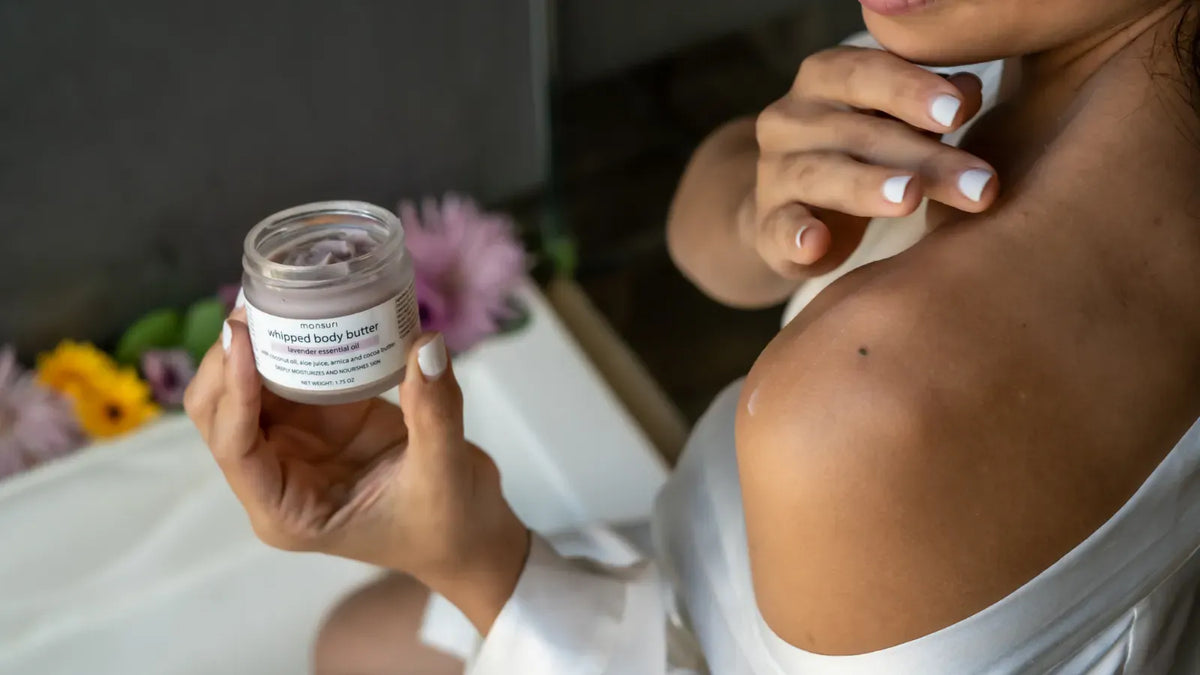
Lavender body butter jar thumbnail with lavender sprigs Lavender Body Butter $18.00 Rich evening moisture with a lavender scent — calendula paired with lavender and arnica. One reviewer’s verdict: "I just love the Lavender Body Butter - but it’s too expensive to share‼️"
The Monsuri all-natural nourishing balm tin thumbnail — calendula lip and body salve All-Natural Nourishing Balm $26.00 One stubborn spot — lips, elbows, heels. The infusion in beeswax, in a tin that travels.
Recover body oil thumbnail — the labelled olive-green spray bottle with arnica flowers Recover Body Oil $36.00 The default. All-over use on damp skin — warms, then cools; a 2 fl oz bottle covers roughly 50–60 uses. Also the massage oil in our at-home massage guide.
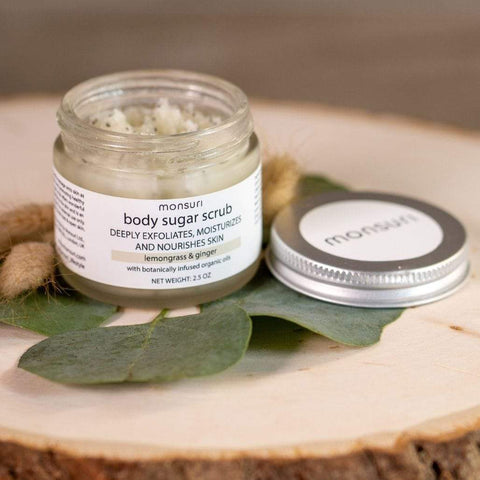
Lemongrass and ginger sugar scrub thumbnail Lemongrass & Ginger Sugar Scrub $18.00 The same infusion in an exfoliating format — sugar and poppy seeds to polish, the calendula coconut oil to leave skin soft after.

The point of the thing

Calendula does not need to be a miracle to be worth having around. It needs to be a flower your skin gets along with, delivered in an oil, a balm or a butter that genuinely does its job — and made by someone willing to show you the label. That is the whole pitch. Start with the format that matches where your skin runs dry, and let the flowers be flowers.

The easiest way to the benefits of calendula oil — a woman resting on a linen sofa after applying the Recover body oil, the green bottle on the side table
The end state: oil on, feet up, the bottle back on the side table until tomorrow. Start with the Recover Body Oil — $36.00 →

And if the person you are really shopping for is a new mom running on no sleep, the same oil family stars in our guide to a gentle at-home postpartum massage — ten minutes, one supply.

Frequently asked questions

What is calendula oil good for?

Honestly: comfort and moisture. Calendula has centuries of traditional use in skin preparations, and it is usually delivered in carrier oils — coconut, jojoba, olive — that are genuinely good at softening skin and holding moisture in. Research beyond that is still early, so be wary of pages promising it treats skin conditions; that conversation belongs with a dermatologist.

What is the difference between calendula oil, salve and butter?

The vehicle, not the flower. An oil spreads far and suits all-over use on damp skin; a salve holds the same infusion in beeswax so it stays on one spot — lips, elbows, heels; a body butter is whipped and rich, best for evening use on the zones that need most. Pick by where your skin runs dry.

How do you use a calendula body oil?

A light layer on damp skin, right after a shower or bath, smoothed in until it absorbs — the Recover oil warms briefly, then settles cool. Apply it on its own rather than mixing it into other products, patch-test anything new on a small area first, and keep botanical oils to intact skin.

Is calendula safe for sensitive skin?

Calendula is generally well tolerated, but any botanical can disagree with any skin — ours also carries arnica and St. John's wort in the infusion. Patch-test on a small area first, keep botanical oils to intact skin, and skip it if you know you react to plants in the daisy family.

Does calendula oil actually work?

As a moisturizing, skin-comforting botanical oil — yes: the carrier oils do the moisturizing work, and the calendula infusion is the comfort tradition on top. As a treatment for acne, wounds or skin conditions — the research does not support those claims, and we will not make them.

What is in Monsuri's calendula infusion?

Straight from the labels: calendula flowers, arnica flowers, comfrey root and St. John's wort herb, steeped in organic coconut oil in-house. The body oil and the balm share that infusion; the body butter pairs calendula with lavender and arnica in a whipped coconut-and-cocoa-butter base.
From our workshop to your bath
By Monsuri
Small-batch, made in the USA. Written without a hurry.