Your Cart is Empty








Self Care Sunday: A 5-Stage Routine That Holds Up
A self care sunday (or self-care Sunday — both spellings appear in Google) is one day a week protected from errands, screens, and the inbox. The routine works when the day has structure, not when it has thirty ideas. The five-stage version below takes about eight hours, costs roughly two hours of actual effort, and centers on a twenty-minute bath that holds up because the bath tray and pillow keep your stuff dry and your shoulders down. See also our detox bath recipe for the deeper bath protocol and our body oil routine guide for the 60-second seal step.
- Five stages, not thirty ideas. Slow morning · outside hour · the bath · after-bath wind-down · early evening. Each has a defined start, a defined end, and a single action.
- The bath is the anchor. Water at 37–39 °C, two cups Epsom, twenty minutes, phone in the other room. The tray + pillow is what makes the twenty minutes physically possible.
- Seal within sixty seconds. A body oil applied on half-dry skin locks in what the warm soak softened.
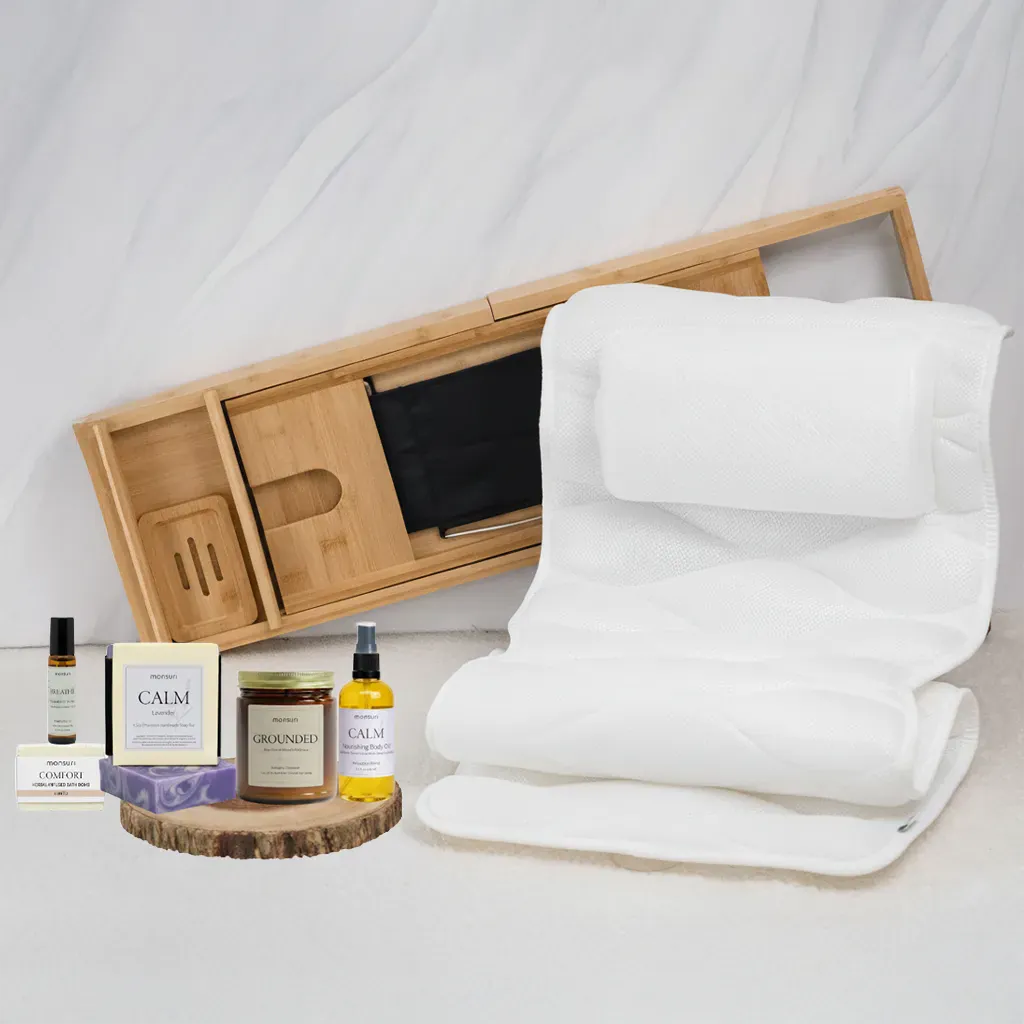
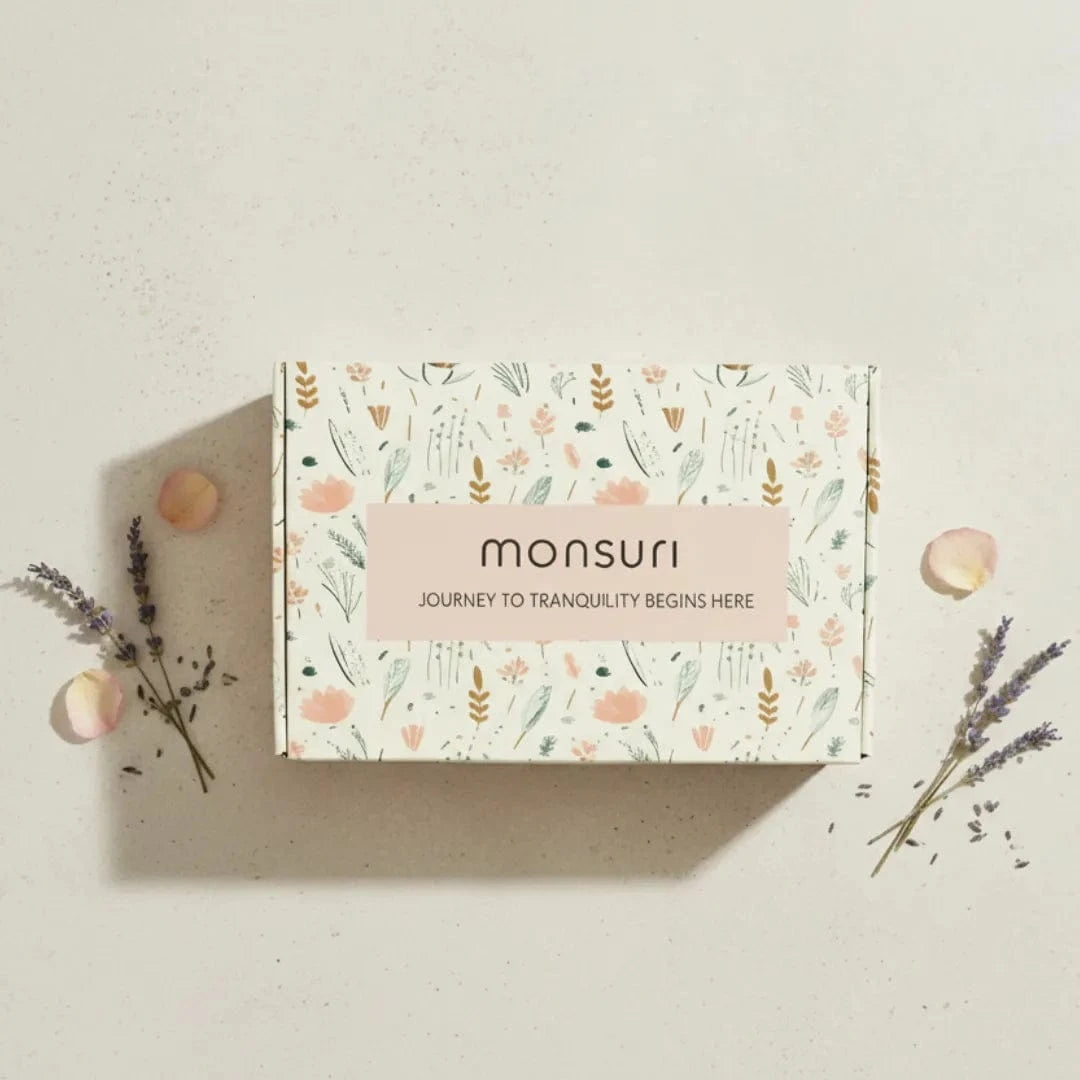
- If you want the whole kit in one box: the Home Spa Day Kit packs all seven pieces — bamboo bath tray, full-body pillow, mahogany teakwood candle, vanilla bath bomb, calm body oil, lavender soap, eucalyptus clarity roller. For the deeper bath protocol: our bath essentials guide.

What self-care Sunday actually is (and isn't)
Self-care Sunday is the practice of protecting one day a week from labor — paid work, errands, social obligation, screen-driven attention — and using the recovered hours on rest, light movement, a meal you cook slowly, and one anchored ritual that signals the day is different. It's not a thirty-item Pinterest checklist. It's one day a week where the question "what's next?" has a quiet answer.
What it isn't: a guilt prompt, a productivity hack disguised as rest, or a single bath bomb on a Tuesday. The choice on a self-care Sunday is to spend the day's recovered hours on four kinds of input that return energy (rest, light movement, food made deliberately, a sensory break) instead of folding them into the weekend's bigger inbox-and-laundry catch-up.
The five-stage routine (a Sunday in eight hours)
Most "self care sunday ideas" articles list thirty items as if more is better. The five-stage self care sunday routine below works because it has fewer items, not more — five is what fits in one Sunday between waking and bed, and each stage carries a specific dose of time and a single anchor action.

- Slow morning — wake without an alarm, light breakfast, thirty minutes of unscheduled stillness. The morning candle goes on the kitchen counter, not the nightstand.
- Outside hour — one walk between 10 AM and 12 PM. Twenty to forty minutes. Coffee or tea optional, phone in a pocket on Do Not Disturb.
- The bath — twenty minutes, 37–39 °C, two cups of bath salts, the bath tray and pillow bridging the tub. No phone. (Section §05 below.)
- After-bath wind-down — within sixty seconds of stepping out, seal the heat-softened skin with body oil. Put on a soft layer. Drink water with lemon or a magnesium-mint tea.
- Early evening — light dinner, no screens after 8 PM, lay out tomorrow's clothes, in bed by 10. The wind-down is the protection — it carries Monday morning's tone.
The whole routine takes roughly eight clock-hours and about two hours of active effort. Everything else is allowed to be quiet.
Stage 1: Slow morning (no alarm, no inbox)
Wake when you wake. The Sleep Foundation's circadian-rhythm guidance and the broader circadian-rhythm research on Wikipedia cover how light cycles regulate sleep — the editorial takeaway for Sunday is the same: an unscheduled-wake morning is a small reset against the sleep-debt that accumulates across a work week. We won't claim a clinical effect; reviewers describe it as the morning that doesn't feel like work.
Make a small breakfast (oats, eggs, fruit — whatever feels light), eat it sitting down, and spend thirty minutes after eating doing nothing in particular. Reading is fine. Looking out a window is fine. The phone stays face-down. The rule is: no inbox before the bath. If you read the inbox before the rest of the day starts, the rest of the day is just the inbox.
The Sunday isn't a list of things to do. It's a list of things you've agreed not to do.
Stage 2: Outside hour (the walk, not the workout)
Between 10 AM and noon, leave the house for a walk. Twenty to forty minutes. Pace is the conversational kind, not the cardio kind. Daylight on the skin and lateral movement in the body do most of the work that a "morning workout" claims to do, without the cortisol bump that would undo what the bath later in the day is supposed to reduce.
The Cleveland Clinic's circadian-rhythm overview describes morning light as one of the strongest cues for circadian regulation. A 20-40 minute walk in that window does what a "morning workout" claims to do — daylight plus low-effort movement — without the high-intensity load that would compete with the bath's wind-down later in the day.
If the weather refuses, an open window in a chair counts. Sit there with the coffee. The point is the light and the air, not the steps.
Stage 3: The bath (twenty minutes that hold up)
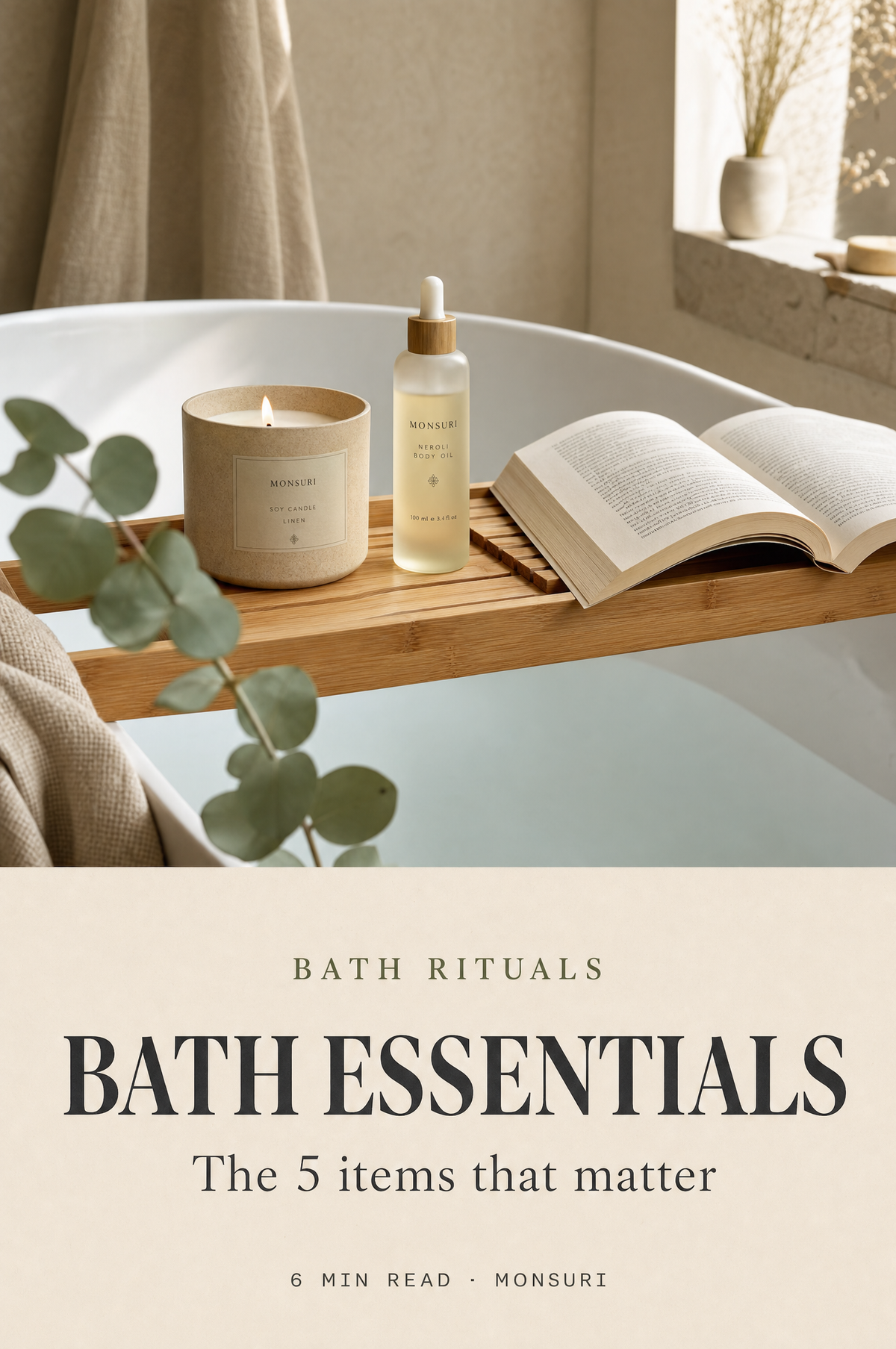
This is the centerpiece. The bath is what turns "Sunday" from a slow day into a routine you can actually keep — because once the bath is on the calendar, the rest of the day arranges itself around it. The full protocol lives in our bath essentials guide; the Sunday-specific version is this:

- Fill to 37–39 °C (98–102 °F). The Sleep Foundation's showering-before-bed guidance covers how warm water before bed supports the body-temperature drop linked to sleep onset; the 37-39 °C window is the editorial range Monsuri uses across our bath articles for the same effect.
- Add 2 cups Epsom salt — or one cup Epsom plus one cup Magnesium & Sage Bath Salts for the after-effort variant. Follow the package label for dosing — most brands cap a standard tub at 2-4 cups.
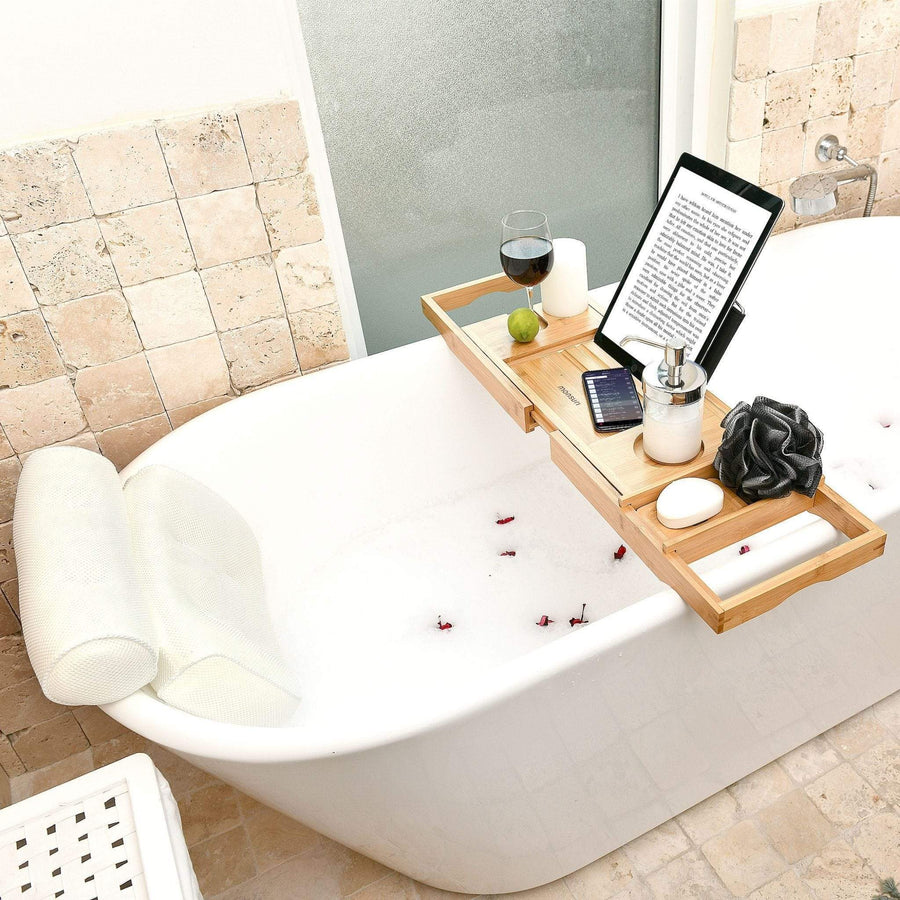
- Set the bath tray across the tub. Candle in the candle slot, book in the stainless-steel stand, water in the drink slot, body oil in reach. Phone stays on the other side of the door.
- Anchor the bath pillow against the tub wall. Seven suction cups; wipe the back of the pillow dry first or they slip. The neck supported = the difference between a 10-minute soak (sore, you climb out) and a 20-minute soak (shoulders dropped, you stay until the candle has thrown the room).
- Twenty minutes. Eyes closed or open — the work is the temperature plus the magnesium, not the entertainment.
The reviewer pattern across 50 bath tray + pillow buyers is consistent. From Aaron: "Great design." From Andrew: "Wife loved it." From Mark: "My wife loves them." The phrases are short; the buying behavior is gift-purchase. Section §09 below picks this up.
Stage 4: After-bath wind-down (the 60-second seal)
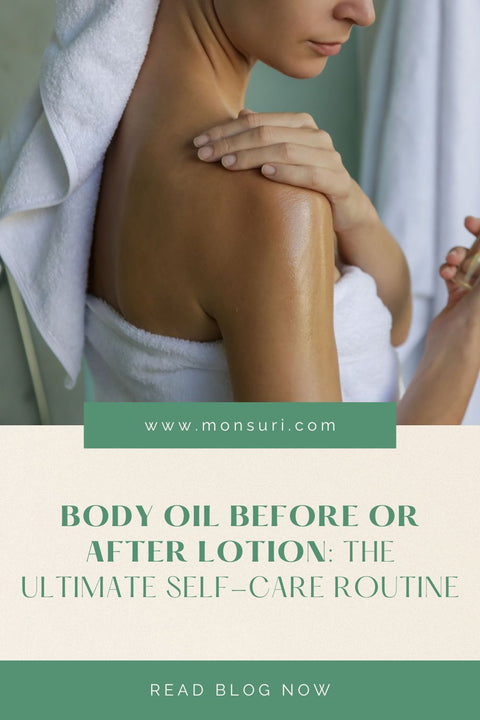
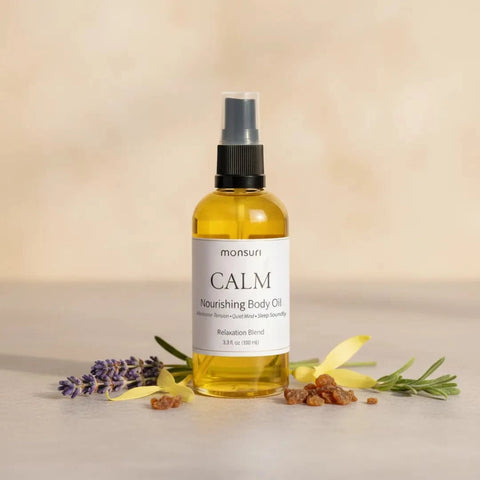
The first sixty seconds after stepping out of the tub are the seal window. Pat — don't rub — the skin half-dry. The skin is still warm; the pores still slightly open; transepidermal water loss (the evaporation that happens in the first minute) hasn't undone the soak yet. Apply body oil on the damp skin so it emulsifies with the remaining water and layers instead of beading.

Then: a soft layer (a robe, an oversized cotton tee, or pajamas), a glass of water with a slice of lemon or a warm mug of mint tea, and the rest of the afternoon set to "low." Reading, a long phone call with someone you actually want to talk to, a slow meal prep for dinner. The pattern is consistent across our reviews: "makes bath time easier and more enjoyable" tracks because the bath, plus the seal, plus the layer, is what carries the calmed-down state into the evening. Without the seal, the bath wears off faster than people expect — usually within an hour.
Stage 5: Early evening (the wind-down protects Monday)
Light dinner — something you can cook in 30 minutes that doesn't need cleanup later. Eat it before 7. No screens after 8 (which sounds austere; it's the single highest-leverage piece of the whole routine per the Sleep Foundation's blue-light guidance). Set out tomorrow's clothes — five minutes, removes one decision from Monday morning. In bed by 10.

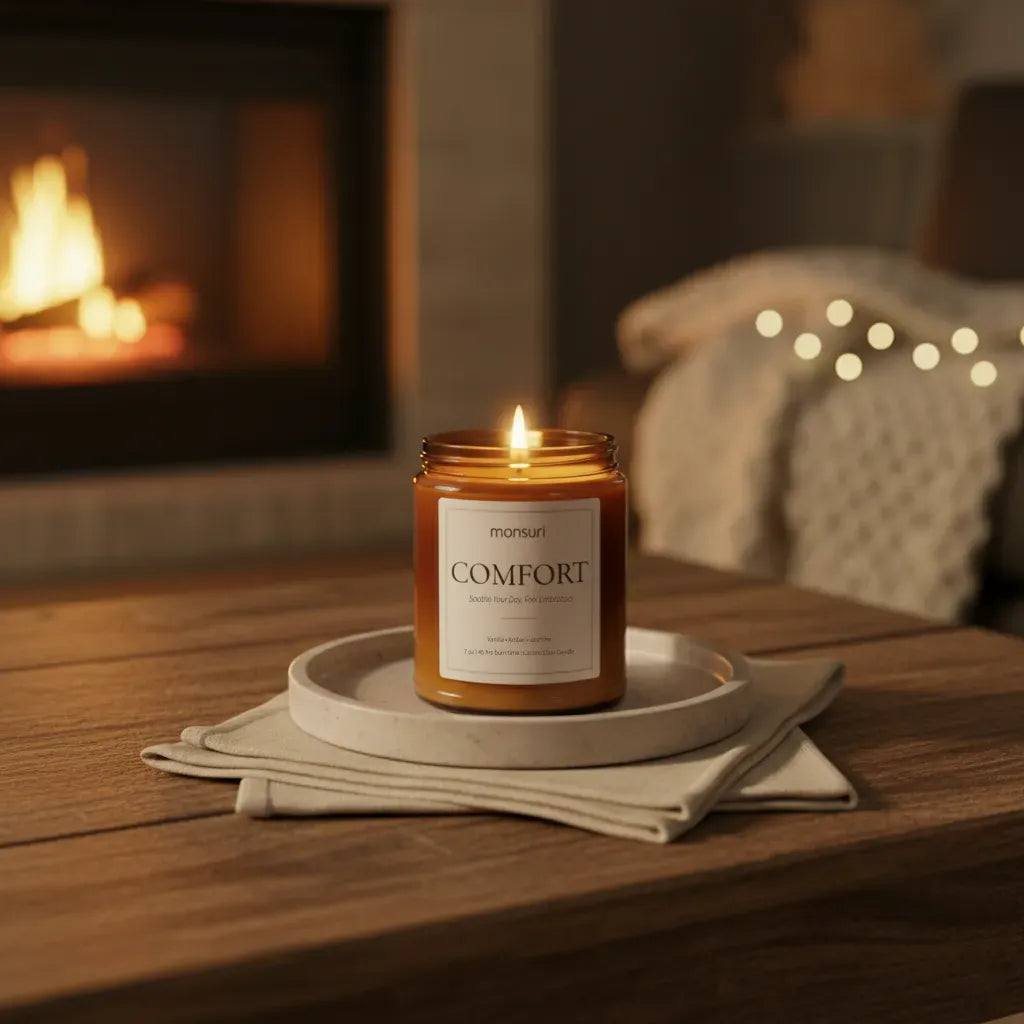
The evening candle does a small specific job — it pulls the room's scent register from "house" to "rest" without effort. A clean-burning coconut-soy with a cotton wick (about 40-50 hours on the candle, so most of a season of Sundays) is the kind of small piece that compounds: by the third Sunday, the smell IS the signal.
When Sunday isn't a day you can take
Sunday self care is a structural pattern, not a literal Sunday for everyone. Shift workers, parents of young kids, healthcare staff, restaurant workers, anyone in a Saturday-as-busiest-day industry — the day name is movable. What's not movable: the protected eight-hour window once a week with the five stages, in roughly that order, with the bath in the middle.
If Sunday is your busiest day, pick the day that's the slowest. Tuesday evenings work for restaurant staff. Wednesday afternoons work for new parents during nap windows. Saturday mornings work for shift workers on Friday-overnight rotations. The point is the cadence — one day in seven, every week, the same pattern — not the calendar day.
What does NOT work: spreading the five stages across the week (a bath Thursday, a slow morning Saturday, a walk Tuesday). The compounding effect is the result of doing them together in one block. The day is the unit.
Self-care Sunday as a gift (the recipient builds the routine, not you)
The most-cited gift-buyer pattern in our reviews: "My wife loved it" · "My wife absolutely loved the bath set along with the tub pillow" · "It was a gift for our son, who absolutely loves it". Sunday-self-care kits work as gifts because they hand the recipient a ready-made Sunday — not the responsibility of building one. The buyer doesn't have to guess which scent, the recipient doesn't have to assemble a kit, and by the third Sunday the routine is the gift, not the items.
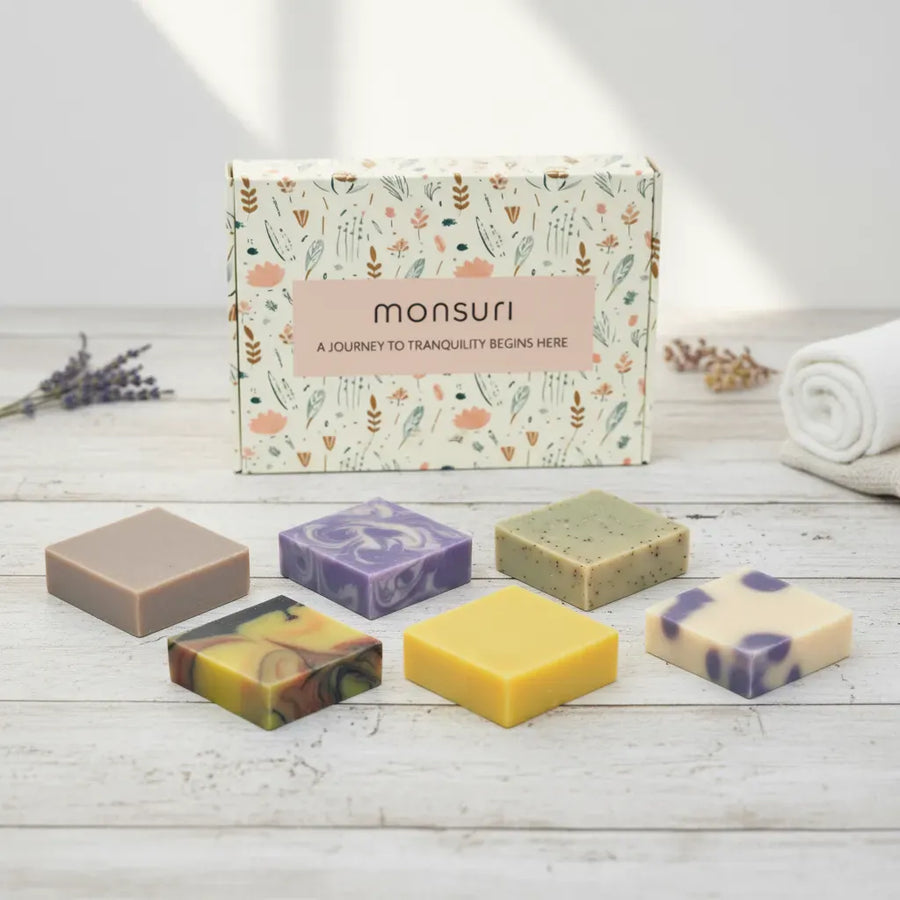
If you're shopping for someone whose Sundays have been hard to protect — the partner running a small business, the postdoc grinding a deadline, the friend mid-divorce — the Home Spa Day Kit ($224.50) ships the seven-piece routine in one box (bamboo bath tray, full-body pillow, mahogany teakwood candle, vanilla bath bomb, calm body oil, lavender soap, eucalyptus clarity roller). The Luxurious Bath Lover's Set ($215.65) is the six-piece bath-first variant (bath tray, deluxe pillow, palo santo candle, plus lavender, rose, and magnesium-sage salts).
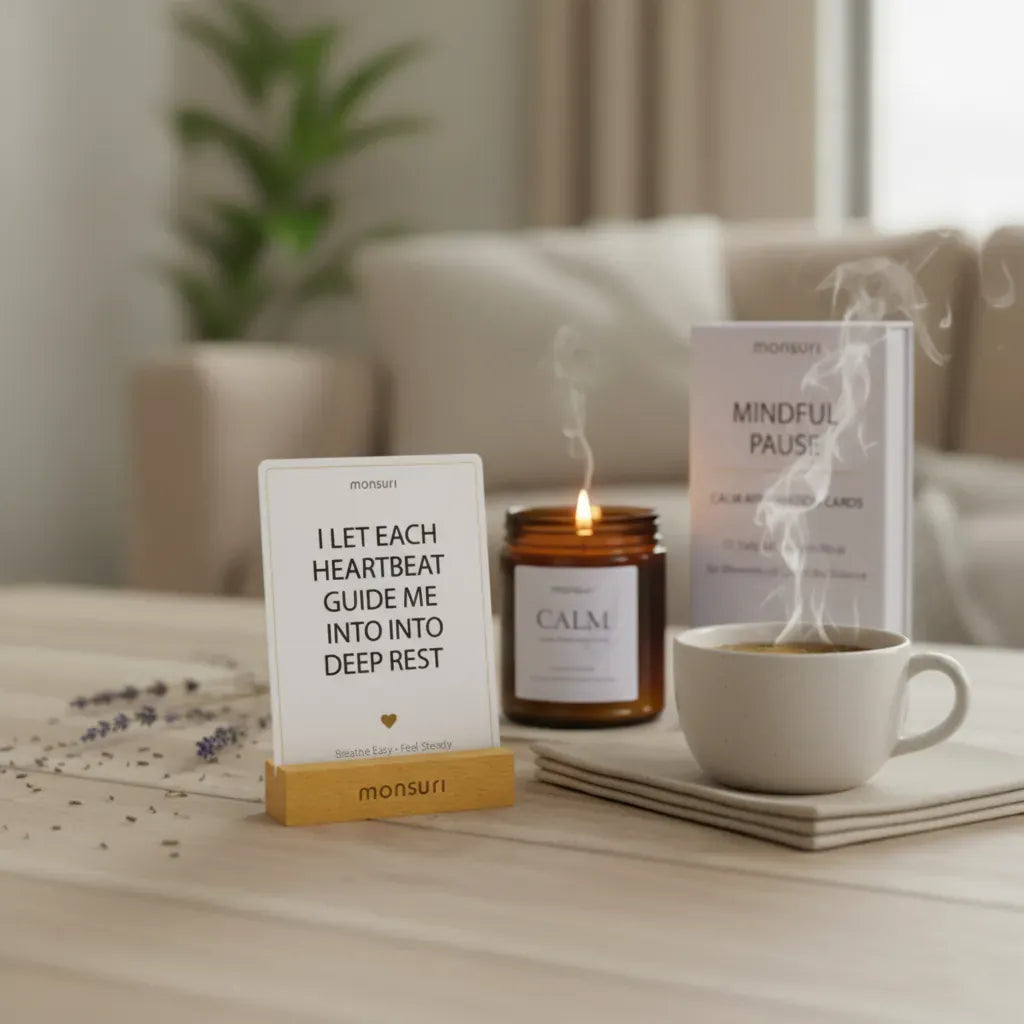
For a new-mother-specific gift, consider the Mama Glow Pregnancy & Postpartum Care Set ($57.90). It's not a "Sunday" kit, but it carries the same logic: ready-made micro-rituals (31 affirmation cards, a soy candle, oatmeal milk + honey soap) for the recipient whose hours rarely belong to her. A newer Monsuri SKU — earlier customer feedback is still being collected.
Why protecting one day a week holds up
Three measurable effects back the practice. None are dramatic on their own — the combination is what holds up.
- Habit formation needs a fixed anchor. The American Psychological Association's behavioral-health resources cover how recurring behavioral cues support habit stability — the editorial pattern here is one day in seven, same time, same anchor (the bath, in this case). Easier to keep than daily intentions, which collapse the first day you miss.
- Recovery requires a reset, not just rest. Sleeping in on Saturday isn't recovery if the rest of the weekend is errands. Recovery is what happens when the body gets unscheduled, low-stimulation time — exactly what the five stages provide.
- The bath provides a sensory threshold. The temperature drop after stepping out of a warm bath is the cue your body reads as "the day is winding down" — covered in the Sleep Foundation guidance cited at Stage 3. The 37-39 °C range we use is the editorial Monsuri standard, not a specific clinical prescription.
None of this requires a thirty-item ritual. The five stages, the same pattern every week, in one day. The structural pieces are one purchase. The cadence is the practice.
Take Sunday. You're allowed.