


Turmeric Soap: Benefits, Ingredients, and How to Use It Properly

Turmeric soap is a handmade bar that uses real ground turmeric root as a colorant and active ingredient — typically combined with honey, oatmeal, and a base of coconut and shea-butter oils. The reason it has shown up in skincare for centuries is curcumin, the yellow-orange compound in turmeric that calms inflamed skin, gently fades dark spots over 6-12 weeks of consistent use, and helps clear breakouts without stripping the skin barrier. Used three to four times a week, it does what most drugstore brightening bars promise and don't deliver — because most of them never contained meaningful turmeric to begin with.

  • The active ingredient is curcumin. Turmeric's anti-inflammatory and brightening effects come from a single compound — curcumin — present in real ground turmeric root. The brighter the bar's color, the higher the turmeric content. Pale yellow = weak; deep golden = the real thing.
  • Handmade beats mass-produced for turmeric soap specifically. Industrial cold-process soap loses turmeric's active compounds to heat and harsh detergents. Small-batch handmade bars keep curcumin intact.
  • Results take 4-12 weeks of consistent use. Twice-a-week for sensitive skin, three to four times a week for normal skin. Don't expect overnight changes — dark spots fade gradually as cell turnover replaces pigmented surface layers.
  • It will lightly stain a wet washcloth — not your skin. The temporary yellow rinse-off is normal. Permanent skin tinting only happens with weeks of heavy, concentrated paste use, not a soap bar.
  • Quality ingredients matter more than brand. Look for: coconut oil + shea butter base, real ground turmeric (not "turmeric extract" alone), honey for hydration, oatmeal for gentle exfoliation, and lye (sodium hydroxide) — yes, every real soap uses lye; there's no soap without it.
  • Our version: the Monsuri Turmeric Honey & Orange Soap ($9.50), part of our Rise & Recover Soap Collection ($44.50 for all six). Follow up with our body oil layering guide to lock in moisture after washing.
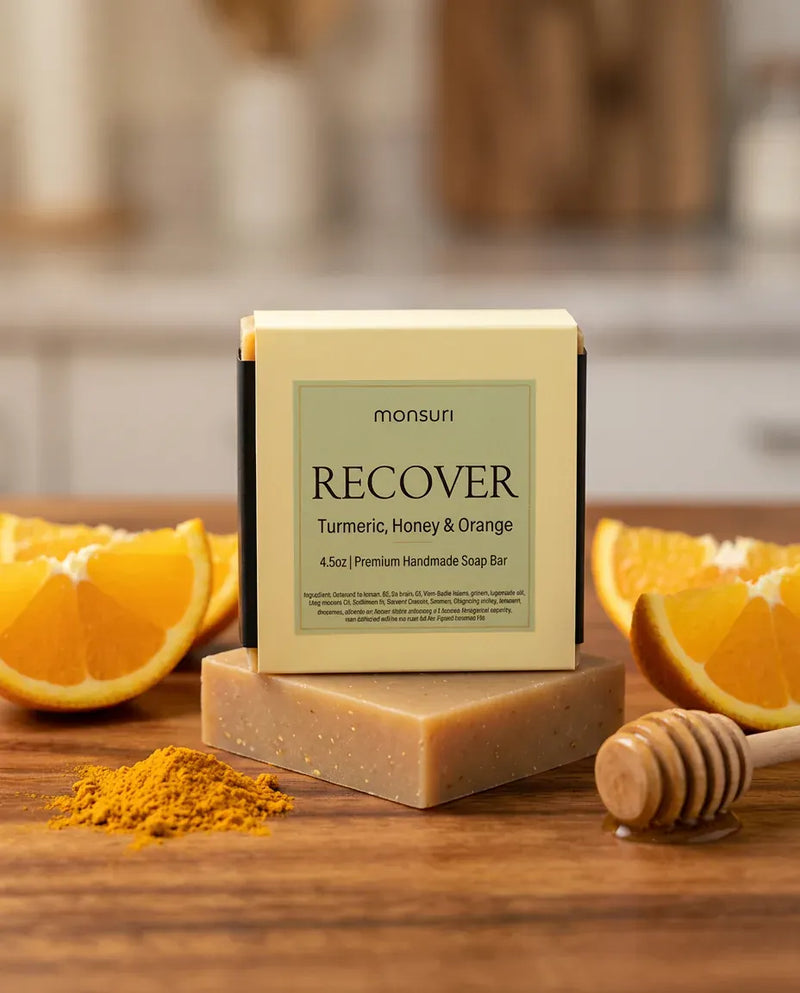
Monsuri Turmeric Honey & Orange handmade soap bar — natural golden bar with real ground turmeric, raw honey, and ground oatmeal, made in the United States in small batches
The Monsuri Turmeric Honey & Orange Soap — handmade in small batches with real ground turmeric, raw US-sourced honey, ground oatmeal, and a base of coconut oil + shea butter. The golden color comes from the turmeric itself.

What turmeric soap actually is (and what gives it the golden color)

Turmeric soap is a bar of natural soap where dried, ground turmeric root has been incorporated as a colorant and active ingredient. The bright orange-gold color isn't a dye or pigment — it's the curcumin compound from the turmeric itself, the same compound that colors curry powder and golden milk.

Real turmeric soap uses about half a teaspoon of ground turmeric per 1 pound of soap base (~3 percent by weight). That's enough for a deep golden color and meaningful skincare effects — without crossing the threshold where the bar becomes too astringent or stains everything it touches.

What makes the soap work, biologically, is well-documented. According to a review published by the National Institutes of Health (PMC), curcumin demonstrates anti-inflammatory, antioxidant, and antimicrobial activity on skin. Translated into practical terms: it calms red, irritated skin; it interrupts melanin overproduction that causes dark spots; and it helps reduce the bacteria that contribute to acne breakouts.

This isn't a 2026 wellness trend. The use of turmeric in skincare in South and Southeast Asia goes back thousands of years — pre-wedding bridal "haldi" ceremonies still center on a paste of turmeric, sandalwood, and rose water applied to skin for a glow. The science caught up. The soap format is just the modern delivery.

Diagram showing turmeric root, ground turmeric powder, and the curcumin molecule — the active compound responsible for turmeric soap's anti-inflammatory, gently brightening, and antimicrobial effects on skin
Curcumin is the single compound responsible for turmeric soap's skincare effects — anti-inflammatory, brightening (through tyrosinase inhibition), and antimicrobial.

The five real benefits turmeric soap delivers (and the ones it doesn't)

Here is what turmeric soap actually does, ordered by how strong the effect is and how quickly you'll notice it.

  1. It calms inflamed and reactive skin. This is the fastest-acting benefit. Curcumin is a measurable anti-inflammatory; within two to three uses, skin that flushes easily or feels reactive after sun, shaving, or harsh products often calms visibly. People with rosacea-prone skin tend to see this first.
  2. It gradually fades hyperpigmentation and dark spots. Curcumin interrupts tyrosinase, the enzyme melanin-producing cells use to make pigment. This doesn't bleach the skin — it slows new pigment formation while normal cell turnover lifts existing pigmented cells. Expect noticeable improvement in 4-12 weeks. Old sun spots and post-acne marks fade first; melasma takes longer.
  3. It helps clear and prevent breakouts. Curcumin has antimicrobial activity against Cutibacterium acnes (the bacteria that contribute to acne) and reduces the inflammation that turns a mild clogged pore into a visible pimple. Best results when used in combination with consistent cleansing and not as a one-time fix.
  4. It provides gentle physical exfoliation (when oatmeal is included). Ground oatmeal — present in our formula and most quality turmeric soaps — gives a soft scrub that lifts dead skin cells without micro-tearing the surface like harsh exfoliants do. This is what produces the "smooth and bright" feeling after one wash.
  5. It seals in moisture (when honey is included). Honey is a humectant. It pulls water from the air into the skin and holds it there. Combined with the natural glycerin produced during soap-making (a byproduct of saponification — the chemical reaction between lye and oil), honey-containing turmeric soaps leave skin softer than most cleansing bars do.

What turmeric soap will not do: permanently bleach your skin (no soap can), cure cystic acne (a topical bar can't penetrate deep enough for that), or replace a complete skincare routine. It's a meaningful supporting actor — not a stand-alone treatment.

The ingredients that actually matter (and why each is there)

This is the operational truth most product pages skip. Here is exactly what is in a quality turmeric soap, what each ingredient does, and what to watch out for. Our own Turmeric Honey & Orange Soap ingredient list is below — you can use it as a yardstick against any other brand.

Coconut Oil, Canola Oil, Soybean Oil, Shea Butter, Water, Sodium Hydroxide (Lye), Olive Pomace Oil, Sunflower Oil, Ground Oatmeal, Turmeric, Fragrance, Honey, Colorant.

  • Coconut oil — the bubble-builder. Creates the rich lather that lifts dirt and excess oil off the skin without stripping it.
  • Canola, soybean, sunflower, olive pomace oils — the conditioning oils. These keep the bar from being too astringent. Most mass-produced soaps skip these and overload coconut oil, which is why drugstore bars often feel "tight" after use.
  • Shea butter — the moisturizer. Adds fatty acids and natural vitamins (A, E, F) that nourish skin during the wash. Shea-butter-rich bars are gentler on sensitive skin.
  • Sodium hydroxide (lye) — the soap-maker. There is no real soap without lye. The lye reacts with the oils in a process called saponification — the lye is fully consumed in the reaction, leaving behind soap and natural glycerin. By the time you use the finished bar, zero lye remains. "Lye-free soap" doesn't exist; products marketed that way are technically detergent bars, not soap.
  • Ground oatmeal — the gentle exfoliant. The mechanical scrub that lifts dead skin cells without tearing them. Also contains avenanthramides, naturally calming compounds that soothe irritated skin.
  • Turmeric — the active. Real ground turmeric root, not "turmeric extract" or "turmeric flavor." Look for soaps that list this as the third or fourth ingredient — that's where it's present at meaningful percentages.
  • Honey — the humectant. Pulls moisture from the air into the skin. Provides additional antimicrobial activity and natural color richness.
  • Water — the dissolving phase. Lye dissolves in water before being added to oils. This water leaves the bar during the multi-week curing process.
  • Colorant + Fragrance — small amounts only. In our formula the colorant supports the turmeric's natural orange-gold; the fragrance is an essential oil blend (orange, primarily) that gives the bar its citrus-warm scent profile.

What to AVOID in a turmeric soap: sodium lauryl sulfate or sodium laureth sulfate (cheap detergents that strip the skin barrier), parabens, synthetic dyes labeled as "FD&C Yellow," palm oil (sustainability concerns), and anything marketing itself as "turmeric soap" but listing turmeric below the 10th ingredient — at that depth, it's a marketing claim, not a meaningful amount.

Close-up of the Monsuri Turmeric Honey & Orange Soap bar showing visible ground oatmeal flecks throughout the golden bar — the texture from real ground turmeric, oatmeal, and honey
A close look at the Monsuri turmeric soap surface: the orange-gold color is the real curcumin from ground turmeric root, and the visible flecks are ground oatmeal — the gentle physical exfoliant.

Why handmade matters for turmeric soap (specifically)

Most cleansing bars on supermarket shelves aren't soap — they're synthetic detergent bars (syndet bars). Industrial production has shifted away from real soap-making because detergents are cheaper to produce, last longer on shelves, and lather faster in hard water.

For most skincare goals, the syndet vs soap distinction is small. For turmeric specifically, it's enormous. Three reasons handmade matters:

  1. Curcumin is heat-sensitive. The active compound in turmeric degrades when soap is processed at high temperatures (the standard industrial method involves heat acceleration to 80-90°C). Cold-process and warm-process handmade soap-making keeps temperatures under 50°C — preserving the curcumin compound that does the actual skin work. A bar that lists "turmeric extract" but was hot-processed is essentially a colored cleanser.
  2. Small batches mean fresh turmeric. Curcumin breaks down with light exposure and oxidation. A bar made last week in a small artisan batch retains far more active curcumin than a bar that's been sitting in a warehouse for 18 months. Look for soap-makers who batch monthly or weekly, not soap-makers who batch annually.
  3. The saponification reaction preserves natural glycerin. Industrial soap-makers extract the natural glycerin (a valuable byproduct of saponification) and sell it separately to cosmetics manufacturers. Their finished bar is glycerin-stripped — which is why drugstore soaps often feel drying. Handmade soap-makers leave the glycerin in the bar. This is the single biggest reason handmade bars feel softer than commercial ones.

The Monsuri bars are made in the United States in small batches, with a 4-6 week cure time between molding and shipping. That cure time is when the water evaporates, the chemistry finishes settling, and the bar reaches its proper firmness. You can't cure a soap faster; commercial manufacturers chemically force-cure with surfactants, which is why those bars never feel the same.

Made in the United States — what that actually means for soap quality

"Made in the US" matters more for soap than for most product categories. Three reasons:

  • Ingredient sourcing accountability. US-made soaps using US-sourced honey, oatmeal, and oils can verify their supply chain in a way that's harder for imports. The Monsuri bar uses US-grown oatmeal, US-sourced honey, and US-supplied coconut and shea butter from certified suppliers.
  • FDA labeling compliance. Real soap (saponified product) is regulated under the FDA's Federal Food, Drug, and Cosmetic Act labeling rules — including a full INCI ingredient list. Imported soaps from less-regulated markets sometimes ship with incomplete or non-INCI ingredient labels. US-made soaps comply by default.
  • Small-batch artisan production survives best in the US. The handmade soap industry in the US (and a handful of European countries) maintained the traditional cold-process method through the syndet bar era. That craft tradition is part of why turmeric soaps made in the US tend to use real turmeric in meaningful amounts.

For the operator notes: the Monsuri Turmeric Honey & Orange Soap is small-batch handmade in our US workshop, with a 4-6 week cure. Each bar is 4.5 oz finished weight; the wrapper is recyclable kraft paper.

How to use turmeric soap: face, body, and frequency

This is the operational protocol. Use it for both face and body, with two adjustments by skin sensitivity.

Frequency by skin sensitivity:

  • Sensitive or reactive skin: twice per week, starting with 30-second contact time. Build up to 45-60 seconds over two weeks if skin tolerates it well.
  • Normal skin: three to four times per week. Skip days are not problems — turmeric soap doesn't require daily use to be effective.
  • Oily or acne-prone skin: can be used up to five times per week, but back off if dryness develops. The bar is more drying than a syndet cleanser.
  • On the face vs body: face use is the same protocol but with more attention to the eye area (avoid). For body, focus on the chest, back, and shoulders — the four zones most prone to breakouts and post-acne marks.
Five-step turmeric soap protocol infographic: wet skin with lukewarm water, lather bar in palms 8-10 seconds, apply lather in gentle circles, leave on 30-60 seconds, rinse with lukewarm water and pat dry — frequency 2x weekly for sensitive skin, 3-4x for normal skin
The five-step turmeric soap protocol. Lather in palms — not directly on the face — to control how much turmeric deposits on skin.

Will turmeric soap stain my skin or my tub?

This is the most-asked turmeric-soap question, and the answer is mostly reassuring. The brief version: a temporary light yellow tint can appear on a wet washcloth and on the side of your soap dish — both rinse away easily. Permanent skin tinting is not a risk from a soap bar.

  • Wet washcloth: will pick up a light yellow tint over 4-6 uses. Rinse the cloth in cool water after each use; wash separately on hot once a week. The tint won't transfer to other laundry if you wash cloths separately the first month.
  • Soap dish: the soapy water that pools around the bar will leave a faint orange ring on glass or ceramic over time. Wipe with a damp cloth weekly. Wood and unsealed stone can hold the tint longer — use a draining dish (slatted or with holes) and the issue stops.
  • Bathtub or shower floor: tile and acrylic don't stain. Limestone, travertine, and some natural stones can pick up a faint tint after months of regular use — wipe down weekly and the tint stays surface-level.
  • Your skin: the yellow rinse-off lasts about 5-15 seconds in the shower. Once you've rinsed and patted dry, no visible tint remains. The only situation that causes lasting skin tint is the traditional "haldi" paste application — concentrated wet turmeric paste left on skin for 30+ minutes — not soap use.

Side effects, allergies, and who should be careful

Turmeric soap is well-tolerated by most people. The handful of situations where extra caution makes sense:

  • Known allergy to turmeric, curcumin, or ginger family plants. Turmeric is in the same botanical family as ginger and cardamom; cross-reactivity is rare but possible.
  • Active dermatitis or open wounds. Wait until the area heals before introducing any active-ingredient soap.
  • Pregnant or breastfeeding. Topical use is generally considered safe; consult your healthcare provider if uncertain.
  • Very dry skin. Reduce frequency to once or twice per week. Real soap is slightly more astringent than a syndet bar.
  • Concurrent use of strong actives. If you're using a retinoid, glycolic acid, or other strong active on your face nightly, alternate days with turmeric soap rather than combining them.

If you've never used a turmeric product before, a 24-hour patch test on the inner arm is the cautious move. Look for redness, itching, or persistent tingling. Mild warmth or a brief tingling on first use is normal — that's the natural antimicrobial activity at work.

None of this article is medical advice. Talk to a dermatologist about persistent skin concerns. The American Academy of Dermatology has good general guidance on choosing skincare products if you want a starting framework.

The Monsuri Turmeric Honey & Orange Soap — what's in our version

Our Turmeric Honey & Orange Soap ($9.50, 4.5oz bar) is the one we built around the principles in this article: real ground turmeric at meaningful percentage (not extract), small-batch cold-process method in our US workshop, full 4-6 week cure, natural glycerin retained in the finished bar, and an orange essential oil blend that pairs the soap's warm citrus scent with turmeric's earthier notes.

Three details that distinguish it:

  • The bar uses raw US-sourced honey rather than a powdered honey-flavor compound. Raw honey carries through natural enzymes and is genuinely humectant — the soap leaves skin softer than a turmeric-only bar would.
  • The orange-scented variant is intentional. Citrus essential oils brighten the bar's heavier turmeric and honey notes; the finished scent is warm, sweet, and slightly resinous — not sharp or perfume-y.
  • Ground oatmeal provides gentle physical exfoliation. Each bar has visible oatmeal flecks rather than a smooth surface; that's the gentle scrub that lifts dead skin cells.

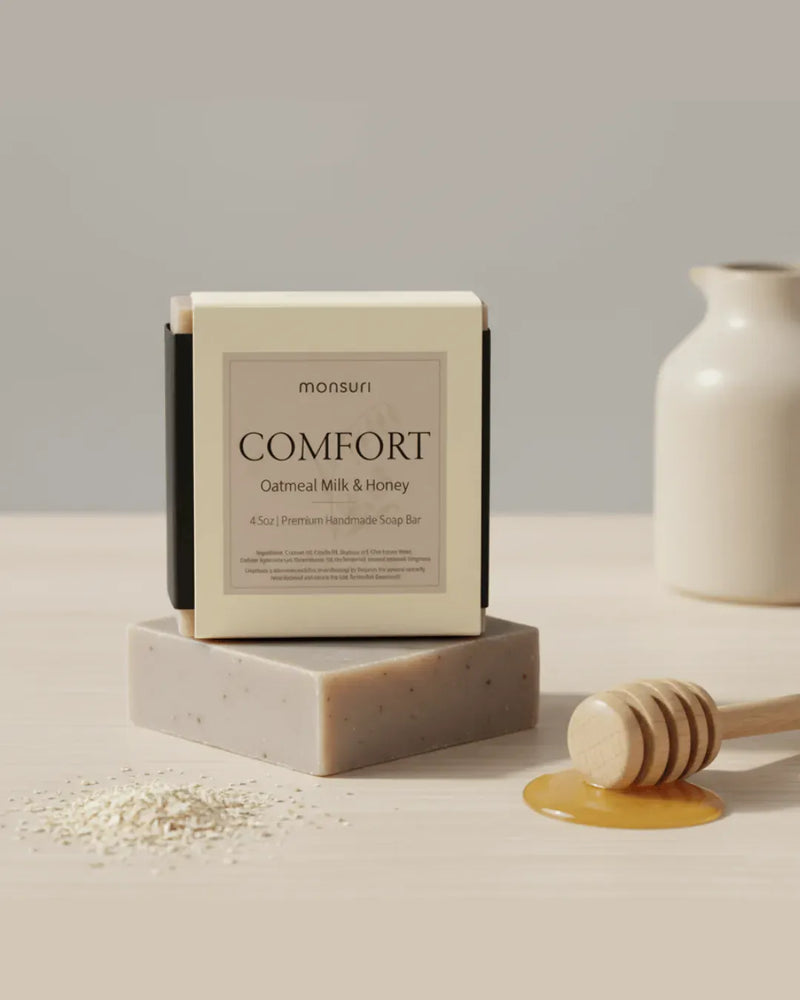
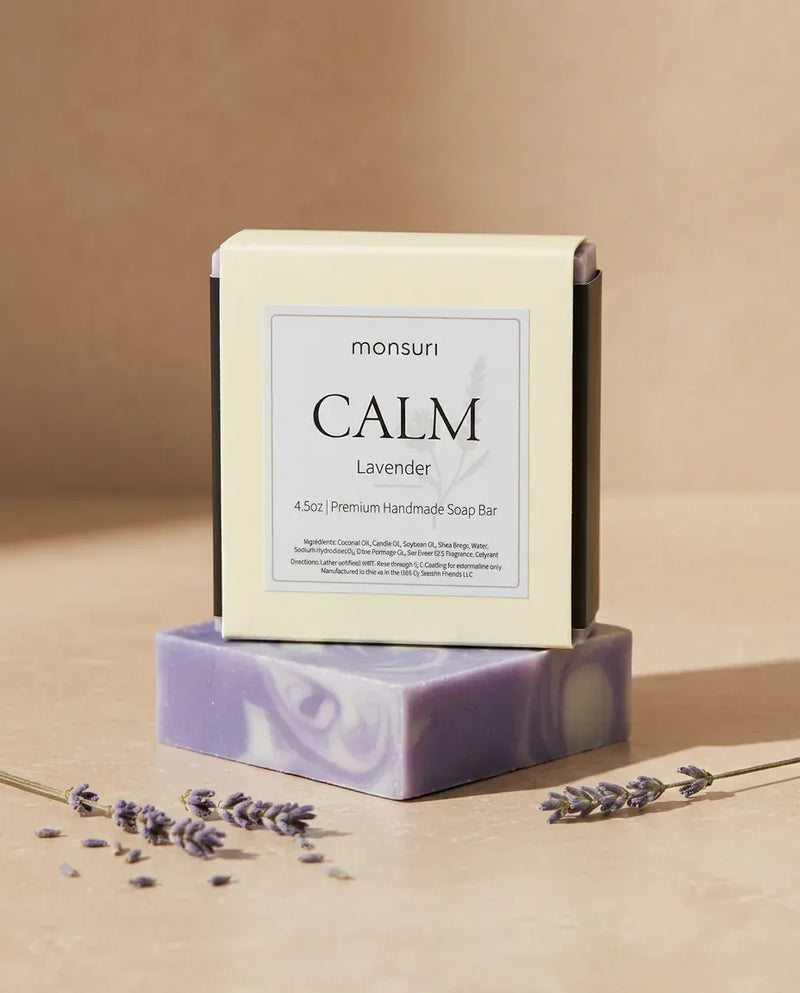
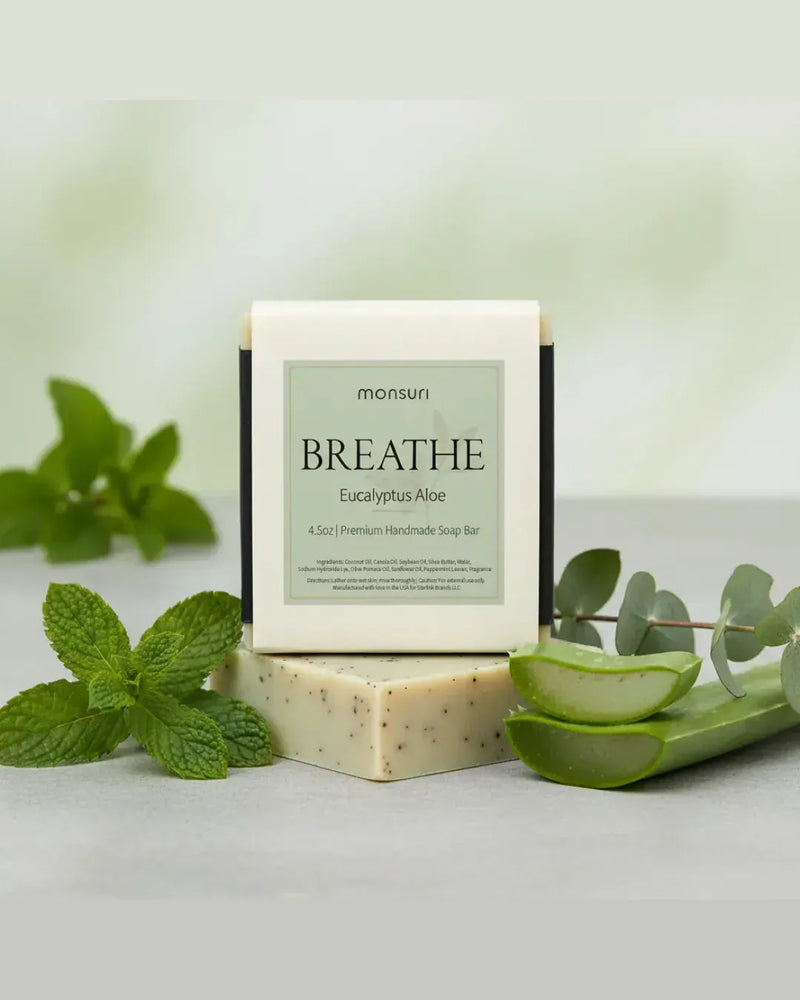
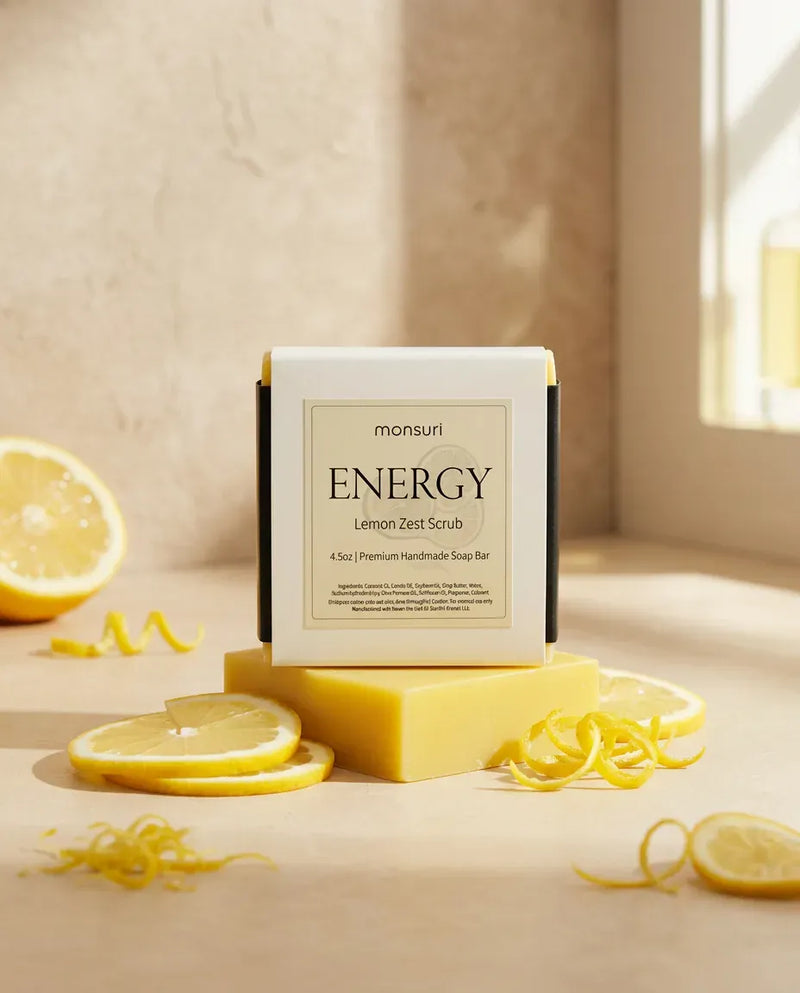
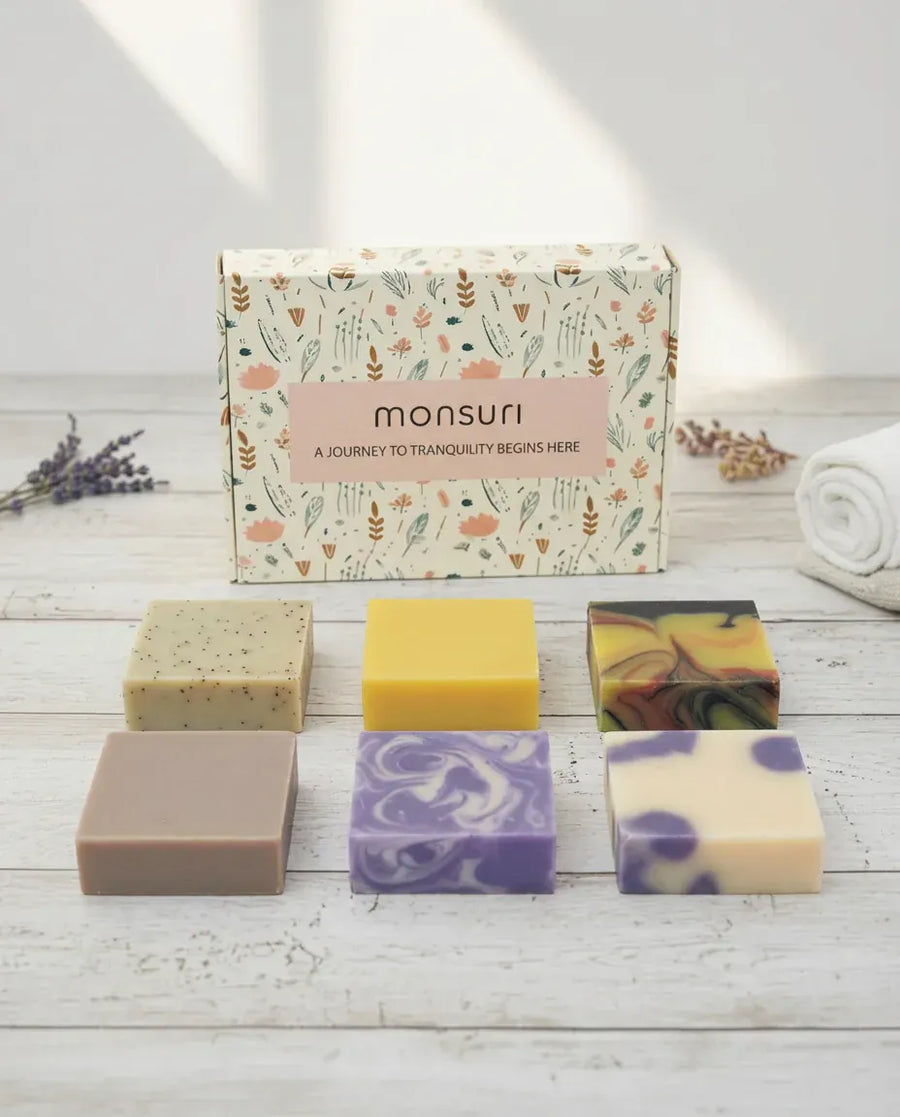
The bar is part of Monsuri's six-soap line, where each variant maps to a different daily-life mood: turmeric (recovery), lavender (calm), eucalyptus (clear-head), lemon zest (energy), oatmeal milk & honey (sensitive-skin comfort), and black raspberry vanilla (renew). If you've tried other Monsuri products — the body oils or bath salts — the soap line uses the same brand framework around scent + mood.

The Monsuri Turmeric Honey & Orange handmade soap bar — small-batch, US-made, 4-6 week cured, with natural glycerin retained in the bar
Small-batch handmade in our US workshop. Each bar cures for 4-6 weeks — the curing time is when water evaporates, chemistry finishes settling, and the bar reaches its proper firmness.

Beyond the bar — the six-soap Monsuri collection

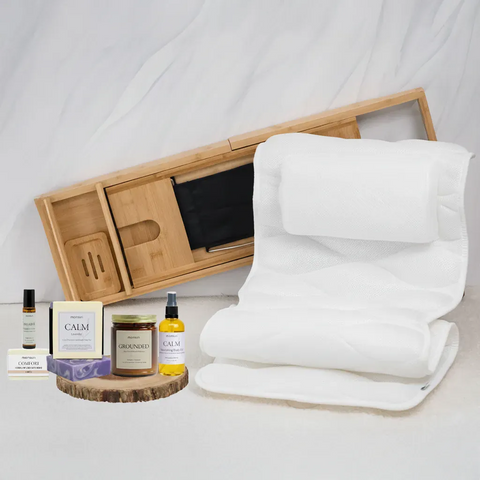
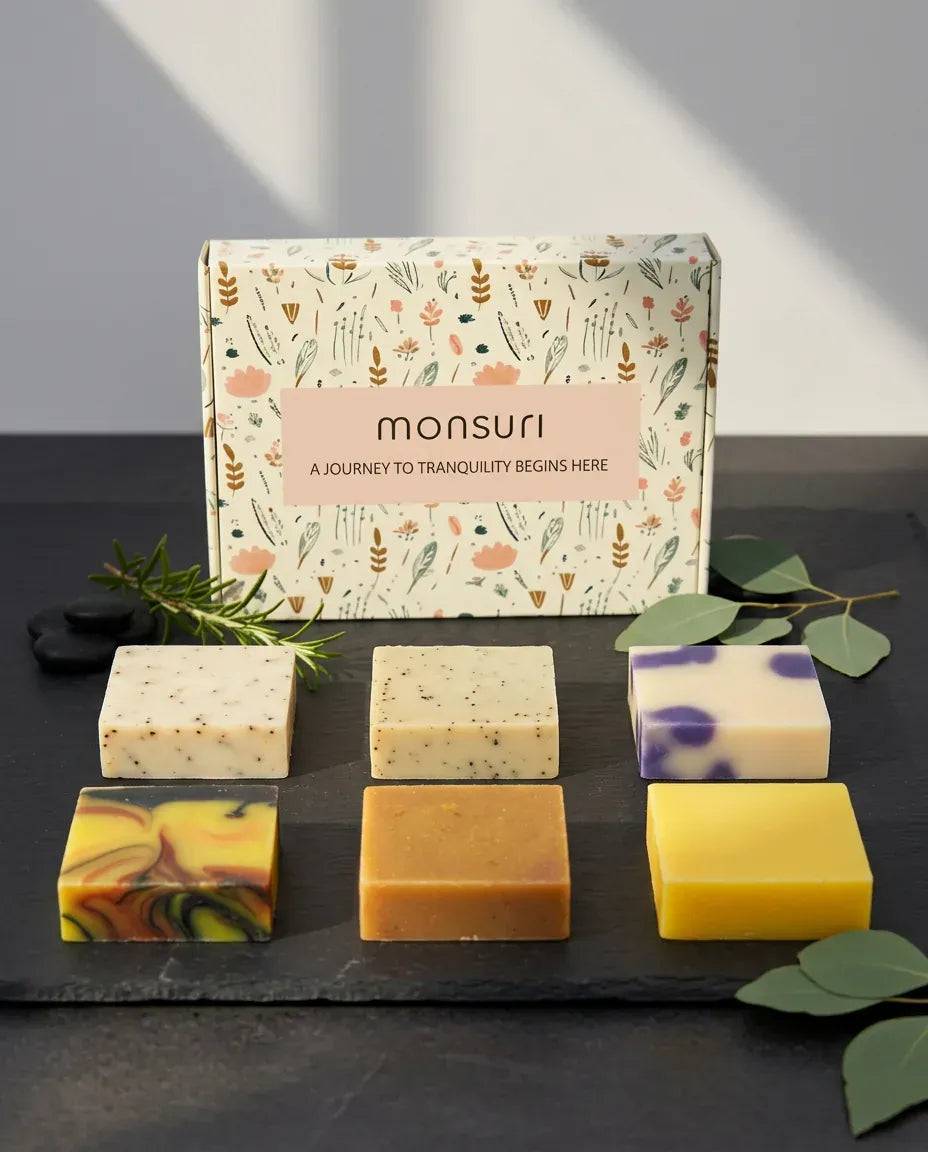
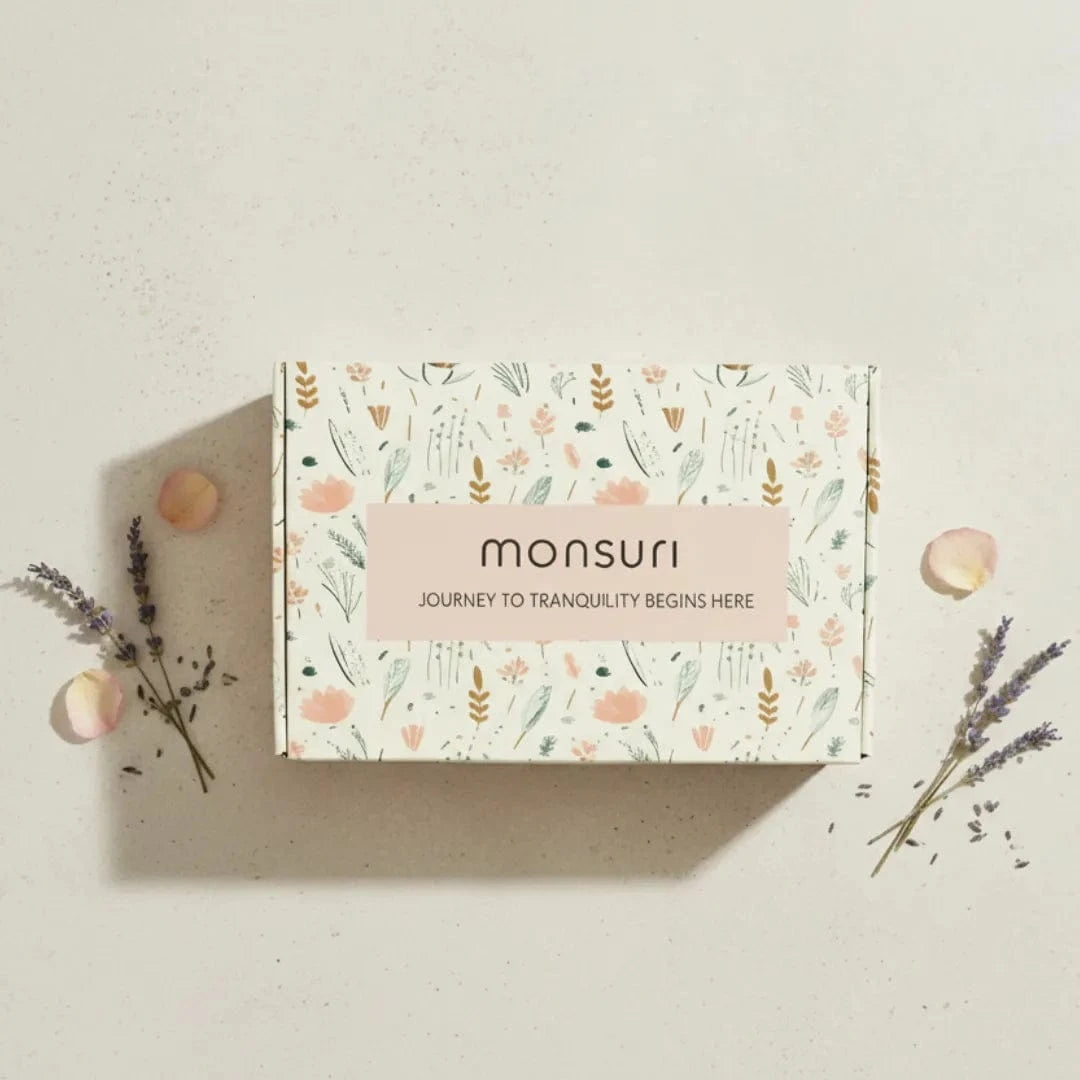
For people who want to rotate through different scents and active ingredients across the week, we offer the Rise & Recover Soap Collection ($44.50) — all six Monsuri handmade soaps, packed in a gift-ready kraft mailer. The collection includes the turmeric bar plus the five others, giving you about 4-5 months of mixed-use soap (one bar lasts most people 3-4 weeks of regular use).

The collection saves $12.50 versus buying the six bars individually ($9.50 × 6 = $57.00). It's also the cleanest way to find which scent register you respond to most — some people gravitate to the lavender (calming, evening), others to the lemon zest (bright, morning), and the turmeric is a clear favorite for skin-active days.

For pairing the turmeric soap with a complementary daily-use bar, we recommend the Oatmeal Milk & Honey Soap ($9.50) — the gentlest bar in the line, intended for sensitive skin or the days you want active recovery without the turmeric's brightening pass. Used together, turmeric bar 2-3 times per week and oatmeal-milk-honey on the other days, you get a complete weekly skincare cleansing rhythm.

For the layered skincare protocol that follows cleansing — body scrub for exfoliation + body oil for the moisture seal — see our two companion guides: how to use body scrub for smooth, glowing skin and body oil before or after lotion. Together with the turmeric soap, those three articles cover the full daily-life skincare protocol most people are missing.

The simple version

Real turmeric soap, used 2-4 times a week for 4-12 weeks, will calm reactive skin, gradually fade dark spots, help reduce breakouts, and gently exfoliate. The ingredient quality matters more than the brand — look for handmade, US-made, real ground turmeric (not extract), shea butter, honey, and oatmeal. Skip anything with sodium lauryl sulfate, parabens, or turmeric listed below the 10th ingredient.

The bar is a daily-life skincare tool, not a magic intervention. Used consistently, it works. Used occasionally, it does very little. The slowest part is the beginning — give it six weeks before judging it.

If you want to start, our Turmeric Honey & Orange Soap is the bar we make to the standards described above. If you want to rotate through Monsuri's whole soap line, the Rise & Recover Soap Collection includes the turmeric plus five other variants in one gift-ready set.

Pinterest pin — Turmeric Soap: Benefits, Ingredients, and the Handmade Difference. Monsuri Golden Turmeric Honey & Orange Soap bar shown with dried orange peel and honey drizzle on natural linen
Save this article on Pinterest.

Frequently asked questions

What is turmeric soap good for?

Turmeric soap is good for calming inflamed or reactive skin, gradually fading dark spots and post-acne marks (over 4-12 weeks of consistent use), helping reduce breakouts, and providing gentle exfoliation when the bar contains oatmeal. The active compound is curcumin, present in real ground turmeric root.

Does turmeric soap lighten skin?

It does not bleach or lighten your natural skin tone. What it does is fade hyperpigmentation — dark spots, post-acne marks, and sun damage — by interrupting tyrosinase, the enzyme that produces excess melanin. The effect appears gradually over 4-12 weeks and only on areas with existing pigment irregularities.

Does turmeric soap help with acne?

Yes — curcumin has measurable antimicrobial activity against Cutibacterium acnes (the bacteria that contribute to acne) and reduces the inflammation that turns mild clogged pores into visible pimples. Best results in combination with consistent daily cleansing. Not a replacement for prescription treatment for cystic acne.

What are the side effects of turmeric soap?

Side effects are rare. Most common: mild dryness if used too frequently on already-dry skin (reduce to 1-2x per week). Rare: allergic reaction in people with known turmeric, ginger, or cardamom sensitivity. A 24-hour patch test on the inner arm is the cautious move for first-time users. Mild tingling on first use is normal — that's antimicrobial activity, not irritation.

Will turmeric soap stain my skin or washcloth?

Your skin: no permanent staining. A faint yellow rinse-off lasts 5-15 seconds in the shower, then rinses cleanly. Your washcloth: yes, a light yellow tint over 4-6 uses — wash separately on hot once a week. Soap dish and tile: a faint surface tint that wipes away. Limestone or unsealed stone can hold the tint longer.

How often should I use turmeric soap?

Two times per week for sensitive or reactive skin (start with 30-second contact time). Three to four times per week for normal skin. Up to five times per week for oily or acne-prone skin if dryness doesn't develop. Skip days are not problems — daily use is not required for results.
— Build the soap collection —

Everything for the week your skin keeps score of.

Six handmade soaps — bundled below, or pick the bar that calls to you.

—Bundle—

The Rise & Recover Soap Collection

Individual $57.00$44.50Six handmade soaps · save $12.50 · arrives gift-ready
From our workshop to your bath
By Monsuri
Small-batch, made in the USA. Written without a hurry.