Your Cart is Empty








Detox Bath Recipe: The Honest Dose, Method & Variations
You came here for the recipe, not the lecture. Two cups of Epsom salt, one cup of baking soda, eight to ten drops of essential oil, twenty minutes at around 37°C. That is the detox bath recipe in one breath — the rest of this article is the why behind each number, the variations when you want something specific, and the honest list of who should skip the soak entirely.
The detox bath recipe, in one breath
Two cups of Epsom salt. One cup of baking soda. Eight to ten drops of essential oil. A standard tub, filled with water at body-warm temperature (around 37°C / 99°F). Soak for twenty minutes. Drink a glass of water before, another after.
- Two cups of Epsom salt is the therapeutic dose. Past four cups the water turns stiff, your skin tightens, and the magnesium absorption plateaus.
- Twenty minutes is plenty. Past thirty the skin starts releasing water back to the bath instead of receiving it.
- Body-warm (37°C / 99°F), not hot. Hot water pulls moisture out faster than the salts can soften the skin.
- "Detox" is the marketing label, not the mechanism. What this bath actually does: muscle softening from magnesium sulphate, pH balancing from baking soda, parasympathetic-nervous-system slowdown from twenty minutes of warmth.

That is the whole thing. The rest of this article exists because the question gets layered in opinion the moment you start searching, and we wanted to keep the recipe on top before any of that.
If your hand pinks but doesn't sting when you test the water, the temperature is right. If it stings, the bath is too hot — that's the water pulling moisture out of your skin instead of the salts pulling magnesium in. Cool it down before you step in.
What's actually in a detox bath, and why each ingredient matters

A "detox bath" is a particular combination of three things in warm water. Each one is doing different work.
Epsom salt (magnesium sulfate)
The lead ingredient. Magnesium is absorbed through the skin in warm water — not in pharmacological doses, but enough that most people notice it in the shoulders within ten minutes. Two cups for a standard tub is the therapeutic dose; past four cups the water gets stiff and the skin gets tight. There's a full piece on the dosing here if you want the longer version.
Baking soda (sodium bicarbonate)
One cup. The baking soda softens the water and balances the slightly acidic surface chemistry of skin after a long day, which is why a bath with baking soda in it feels noticeably different on the way out — less tight, less itchy, especially on legs and shoulders.
Essential oil (eight to ten drops)
The aromatherapy layer. Lavender for evening, eucalyptus when something is congested, chamomile for the nights when the day is still in your jaw. Drop the oil onto the bath salt first, stir it in, then add to running water — oils dropped directly into the tub bead and float, doing little for the steam and a lot for the slippery floor.
Optional: herbal salts and botanical infusions
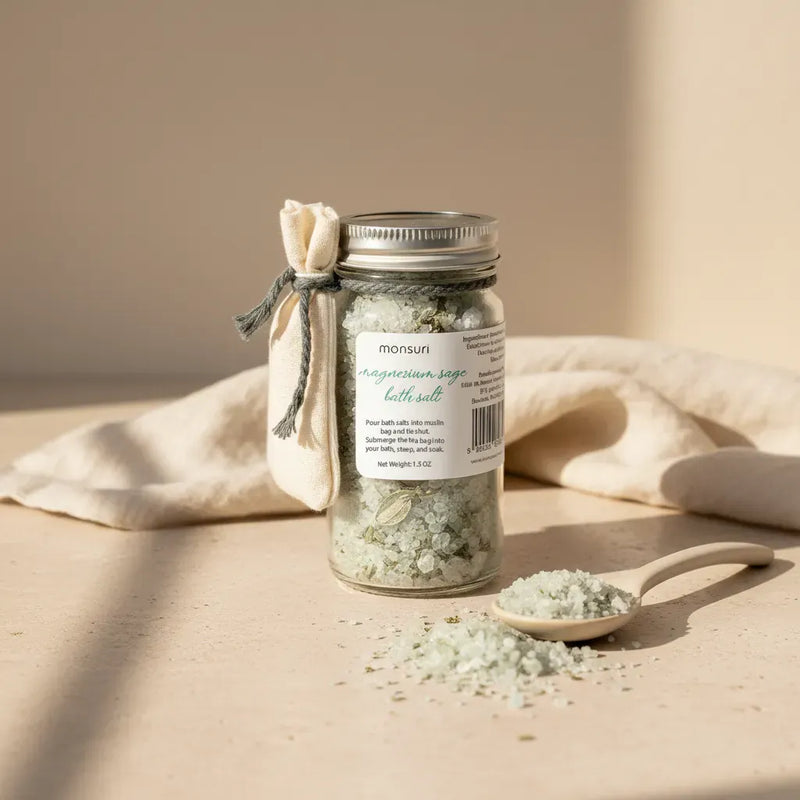
This is the difference between assembling a bath from the kitchen pantry and the version that smells like a warm room for the next hour. Salts steeped with dried herbs — lavender, calendula, sage — carry the scent through the steam in a way that essential oil alone doesn't. Our Magnesium & Sage Bath Salt is the version we use when we want to skip the kitchen step entirely.
How to draw a detox bath, step by step
- Start the water warmer than you want it. The water cools as you fill. Aim for hot-tap warm; by the time the tub is full, it will be the body-warm 37°C you actually want to sit in.
- Pour the salts into the running water, not after. The agitation dissolves them; cold pouring into a still tub leaves a gritty layer on the bottom.
- Add the baking soda next. One cup, sifted in gradually so it dissolves rather than clumps.
- Drop your essential oil onto the salts, not the water. Eight to ten drops; oils float when added straight to the tub.
- Step in. Set a timer for twenty minutes. Drink a glass of water before. Drink another after. That part is non-negotiable — magnesium-rich baths sweat you out more than a regular soak, and dehydration is the most common thing people misread as "I felt weird after."
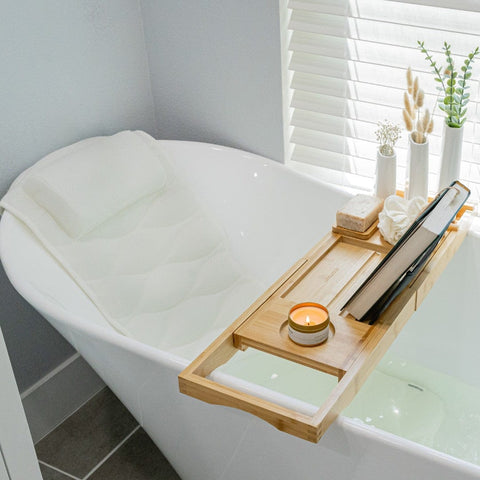
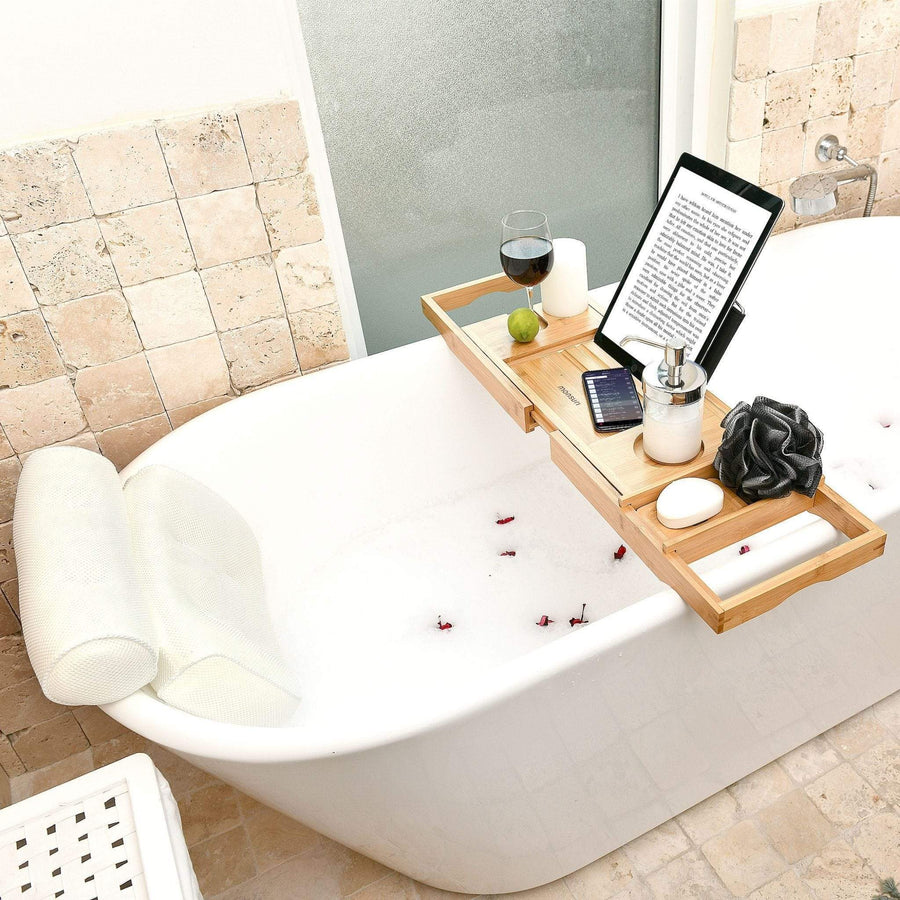
If you cap the tub with a tray once you're in, the water holds heat about ten minutes longer. We sell one of those if you want it. We're not going to pretend bath time is the same with and without it.
What detox baths actually do (and what they don't)
The phrase "detox" gets oversold across the wellness internet. Here is what an Epsom-salt-plus-baking-soda bath is actually doing, in plain language:
- Magnesium absorption. Warm skin absorbs magnesium ions from the bath. Magnesium relaxes muscle tissue and is part of the cascade your body uses to wind down for sleep. Most people are mildly magnesium-deficient. The shoulders dropping ten minutes in is the part you notice.
- Sweating. Twenty minutes in a 37°C bath raises core temperature enough to trigger mild sweating. Sweat carries small amounts of water-soluble waste — the body's own daily housekeeping — out through the pores. This is what people mean when they say a bath "detoxes."
- Vasodilation. The blood vessels in the skin dilate. Circulation increases. The fingers and toes warm up. This is the part that's good for circulation but is also why standing up too fast after a long bath can make the head spin.
- Parasympathetic shift. The nervous system flips from sympathetic ("alert, doing things") to parasympathetic ("digesting, resting"). This is why a bath before bed works on sleep where the same twenty minutes scrolling does not.
What it does not do: pull heavy metals out of your tissues, "cleanse your liver," replace any specific medical treatment. The body has organs for that work. The bath is helping the conditions those organs do their work in. Cleveland Clinic puts the magnesium-absorption claim plainly: "there are no definitive studies showing that magnesium can be absorbed through your skin in sufficient amounts to address potential deficiencies of the mineral." (Cleveland Clinic, Should you take an Epsom salt bath?) A 2016 PubMed study on transdermal magnesium found that absorption is real but facilitated by hair follicles — meaning soak duration and skin surface area matter more than salt concentration alone. (Chandrasekaran et al., 2016)
A detox bath is not a metabolic intervention. It is a twenty-minute parasympathetic intervention with magnesium in it.
Variations: when you want something specific
For a cold or congestion: the eucalyptus version
Swap the eight-to-ten drops of essential oil for eucalyptus. The vapor carries through the steam directly into the sinuses. Add a tablespoon of fresh grated ginger if you want a deeper warming. Twenty minutes still applies; sweating with a cold is fine, just drink twice as much water after.
For sore muscles after a hard day: the magnesium-heavy version
Bump the Epsom salt to a full three cups (still under the four-cup ceiling). Keep the bath cooler than usual — around 35°C — so you can stay in twenty-five minutes without your heart rate climbing. Lavender or sage essential oil pairs with this version.
For feet only: the foot-bath version
Half a cup of Epsom salt and a quarter cup of baking soda in a basin of warm water. Soak for fifteen minutes. This is the version for end-of-shift feet or after a long walk; it's also the version you take when you want the magnesium without the full bath setup.
For kids: the gentle version
Quarter cup of Epsom salt for a child's bath (under 12). No baking soda, no essential oils unless the bottle specifies child-safe dilution. Ten minutes maximum. The point isn't a detox — it's a calming soak with mild magnesium.
How often to take one, and when to skip it
For most adults, two to three times a week is the sweet spot. More than that and you start to dry out the skin faster than the baths help; less than that and you don't get the cumulative magnesium effect that builds over a week or two.
- You're pregnant (consult your provider; warm baths affect core temperature and circulation)
- You have reduced kidney function (the kidneys process the magnesium load)
- You have severe heart disease (vasodilation + warmth affects cardiac demand)
- You have open wounds, sutures, or active eczema flares
- You're running a fever (the bath will raise core temperature further)
The detox bath is gentle for most people and risky for a small few. If you fall in the small few, the bath isn't worth the risk — a foot soak gets you most of the magnesium benefit with none of the cardiovascular load.
The Monsuri version: skip the kitchen-pantry assembly

The recipe above works with any food-grade Epsom salt, any unbranded baking soda, and any essential oil bottle. It's a perfectly good bath. It is also, candidly, fifteen minutes of measuring and tidying that some weeks you don't want.
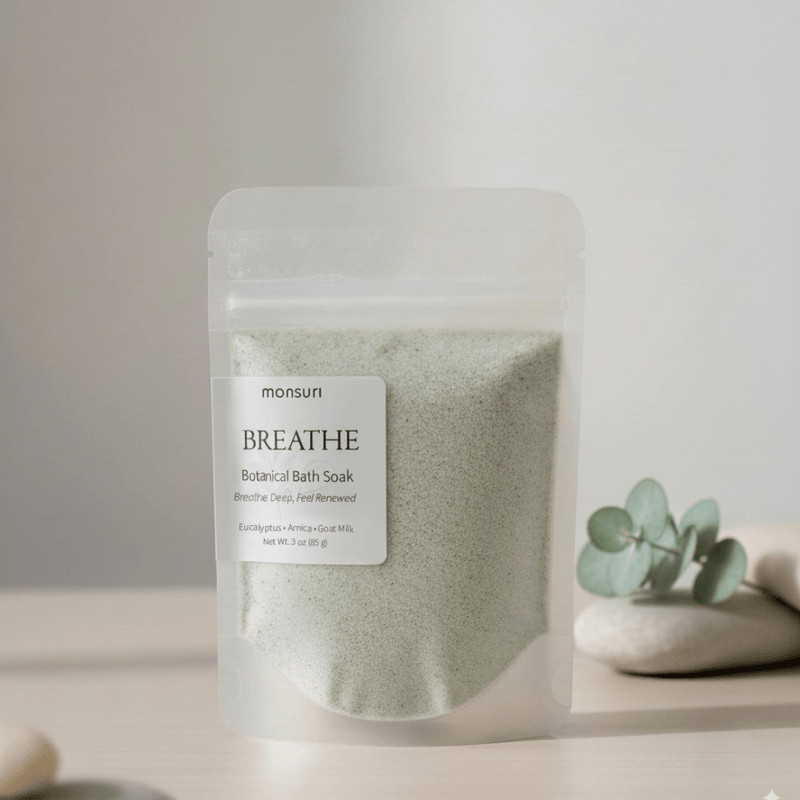
The bath salts in our shop are the assembled version. Magnesium & Sage is the closest match to the recipe above — magnesium-grade Epsom plus dead sea salt, infused with sage and lavender flowers. One scoop into the tub, and you're done with the measuring. The scent is in the salt, so the steam does the aromatherapy work without the essential-oil-drop step.
If you want a different mood, the same dosing logic applies: Lavender for evenings when the day is still in your jaw, Rose for softer afternoons.
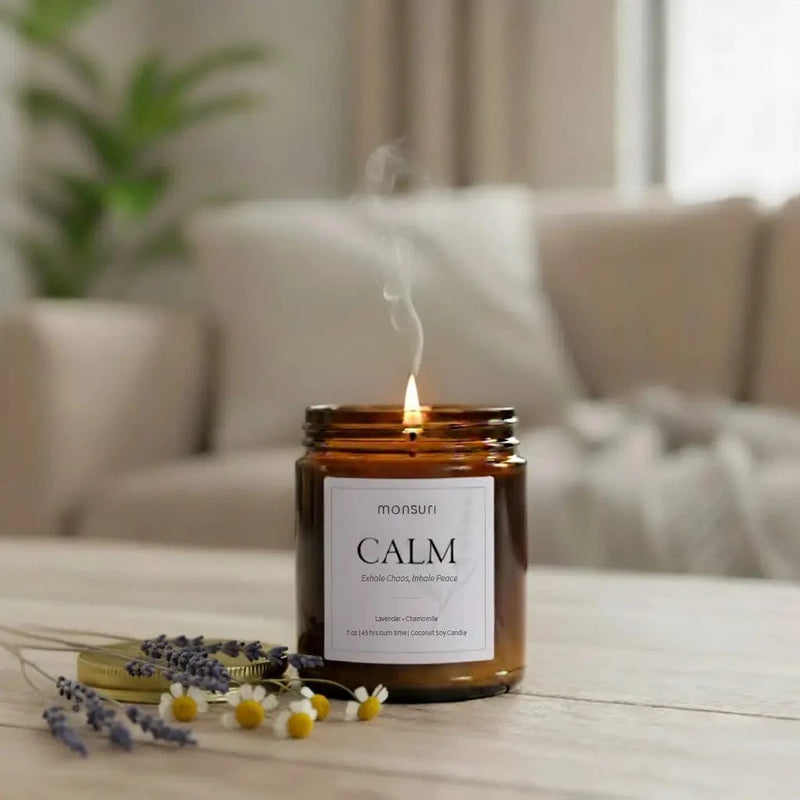
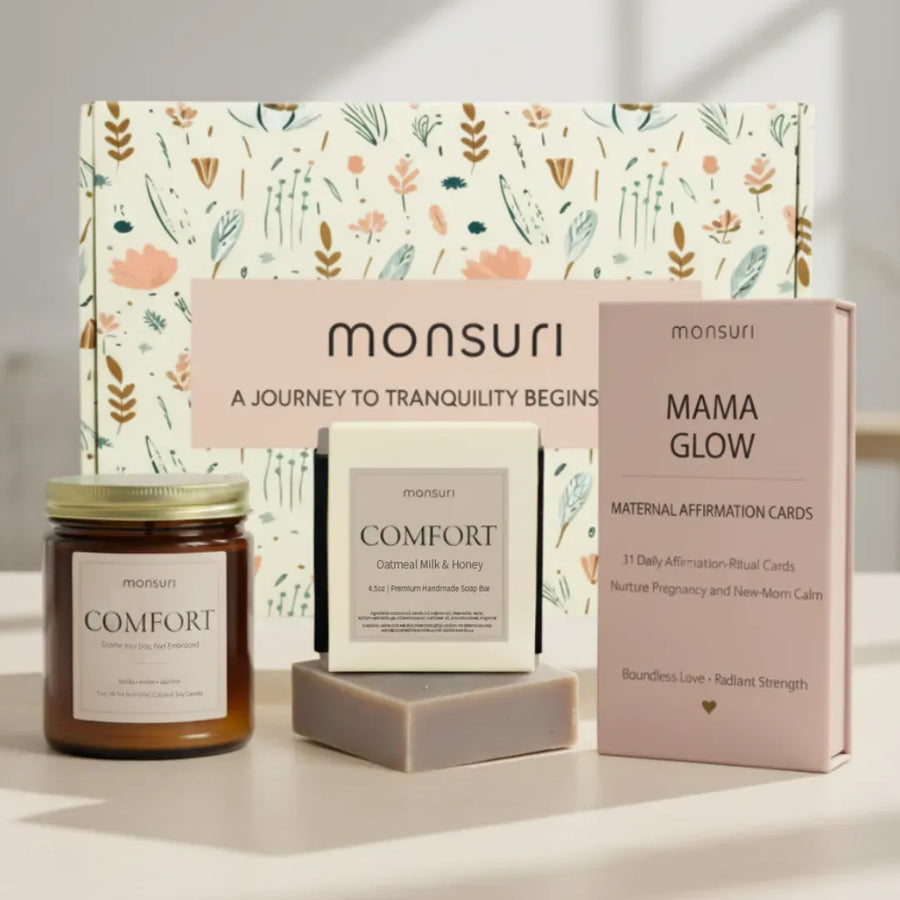
The full ritual — salts plus a candle plus the eucalyptus steam variant for the cold-relief version — lives at the bottom of this page as a bundle.
If you need more context on Epsom salt specifically, the dose deep-dive is here; the magnesium flakes piece is here; the oil-bath alternative is here.

And the bath is here when you want it. Twenty minutes that's actually yours.